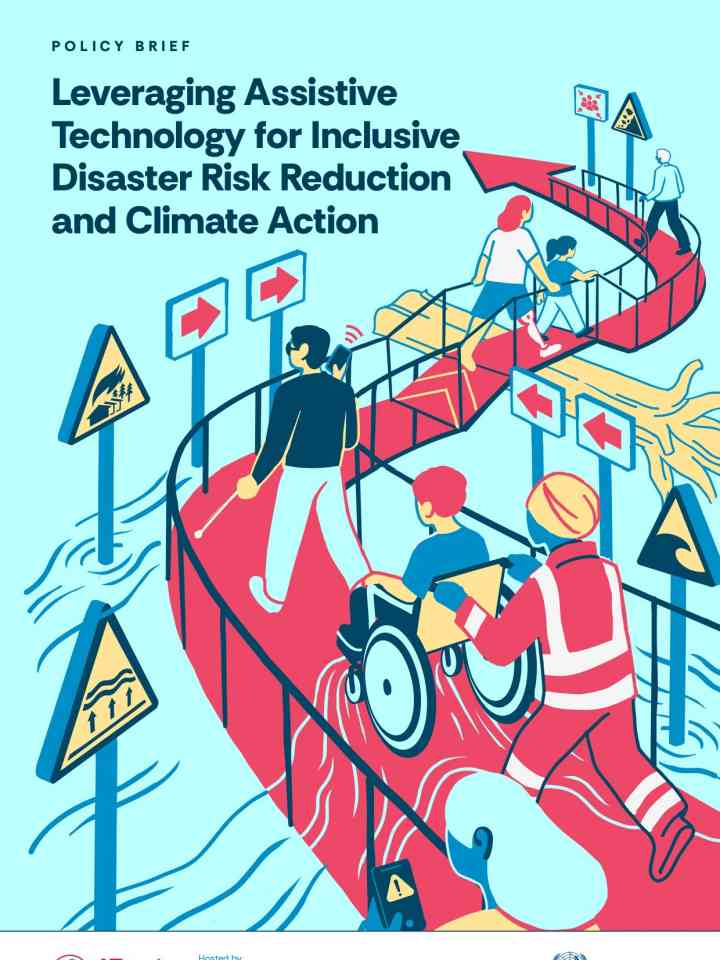
Leveraging assistive technology for inclusive disaster risk reduction and climate action
This brief examines how the rights and needs of assistive technology users can be more effectively addressed in DRR and climate action. The United Nations Office for Disaster Risk Reduction (UNDRR) and ATscale undertook a global study and developed this policy brief to examine how the rights and needs of assistive technology users can be more effectively addressed in DRR and climate action. Assistive technology users are often invisible in data systems, excluded from early warning and preparedness planning, and not facilitated in emergencies due to missing or inappropriate assistive products.
This policy brief outlines clear and actionable steps for governments, humanitarian and development actors, donors, civil society and the private sector.
- Access to assistive technology is a recognized right, not an optional add-on.
- Inclusive prevention is not a luxury—it is a necessity. Inclusive DRR and climate action must begin with proactive measures that protect assistive technology users from foreseeable risks and disruptions.
- Assistive technology saves lives in emergencies, but only when delivered with other essential inclusion measures. Together, they must be recognized as key enablers of inclusive DRR and climate action.
- Assistive technology is a humanitarian and development priority. It helps build resilience, inclusion and independence in everyday life, not just during disasters.
- Governments are responsible to ensure assistive technology is available, accessible and affordable for all who need it.
- Assistive technology users must lead, supported by political will, sustained financing and meaningful systems change.
- Governments and key sectors—including DRR, climate, health, and social protection—must co-design with OPDs and users, especially women and girls with disabilities, solutions should be embedded across preparedness, early warning, and risk communication systems.
- Disasters don’t discriminate—but exclusion does. Failing to include assistive technology users puts lives at risk. Immediate action is not optional.