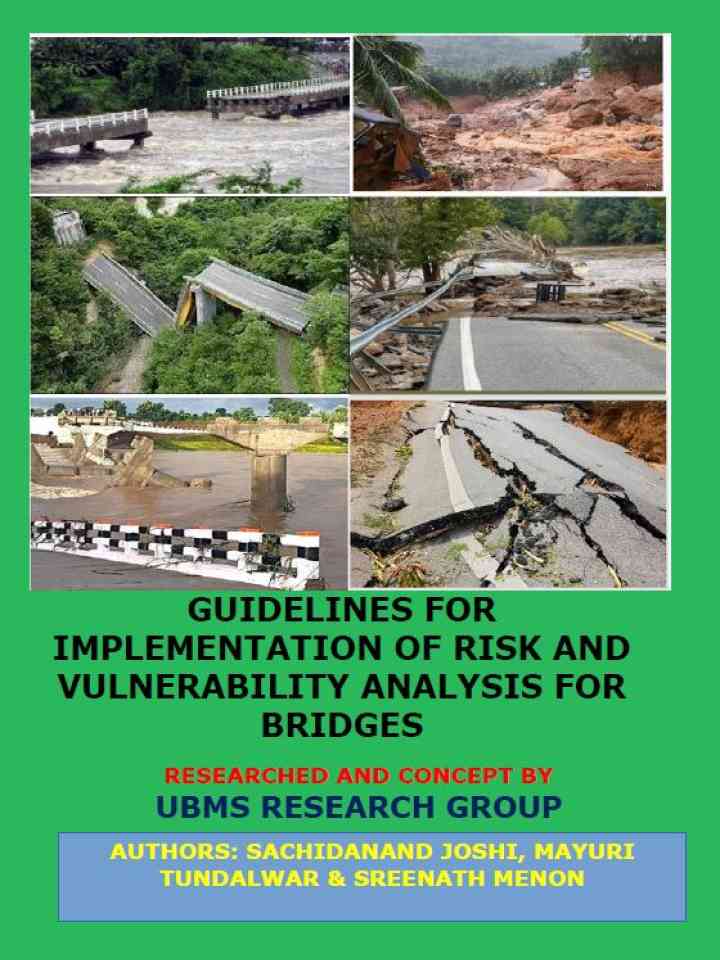
Guidelines for implementation of risk and vulnerability analysis for bridges
These guidelines define the concept of risk and vulnerability of bridges, as well as how climate change and natural hazard occurrences impact them. This leads to the evaluation of exposure conditions and the deterioration process, which are involved in risk and vulnerability analysis. Evaluation of risk heavily depends on the natural hazard. It results in a principle to define the priority for fund allocation. Enhancement in resilience yields sustainability. Finally, the procedure for adopting the Net Zero Roadmap and Action plans to limit carbon emissions and embodied carbon emissions.
Globally, we face the Herculean task of avoiding the impact of climate change and the dynamism in natural hazard severity and frequency. The United Nations Office for Disaster Risk Reduction created awareness towards the avoidance of natural hazards and climate change impacts from becoming calamities or disasters. Bridge fraternity, by and large, has so far maintained its distance and not proactively associated with such efforts. UBMS Research Group is a beacon fully dedicating its research to the efforts of UNDRR within the limited domain of Bridge management. URG's focus on Bridge Management Systems has seen humongous changes in availability of Knowledge base in public domain. BMS implementing authorities can now define the risk and vulnerability of bridges to natural hazard events.
Explore further