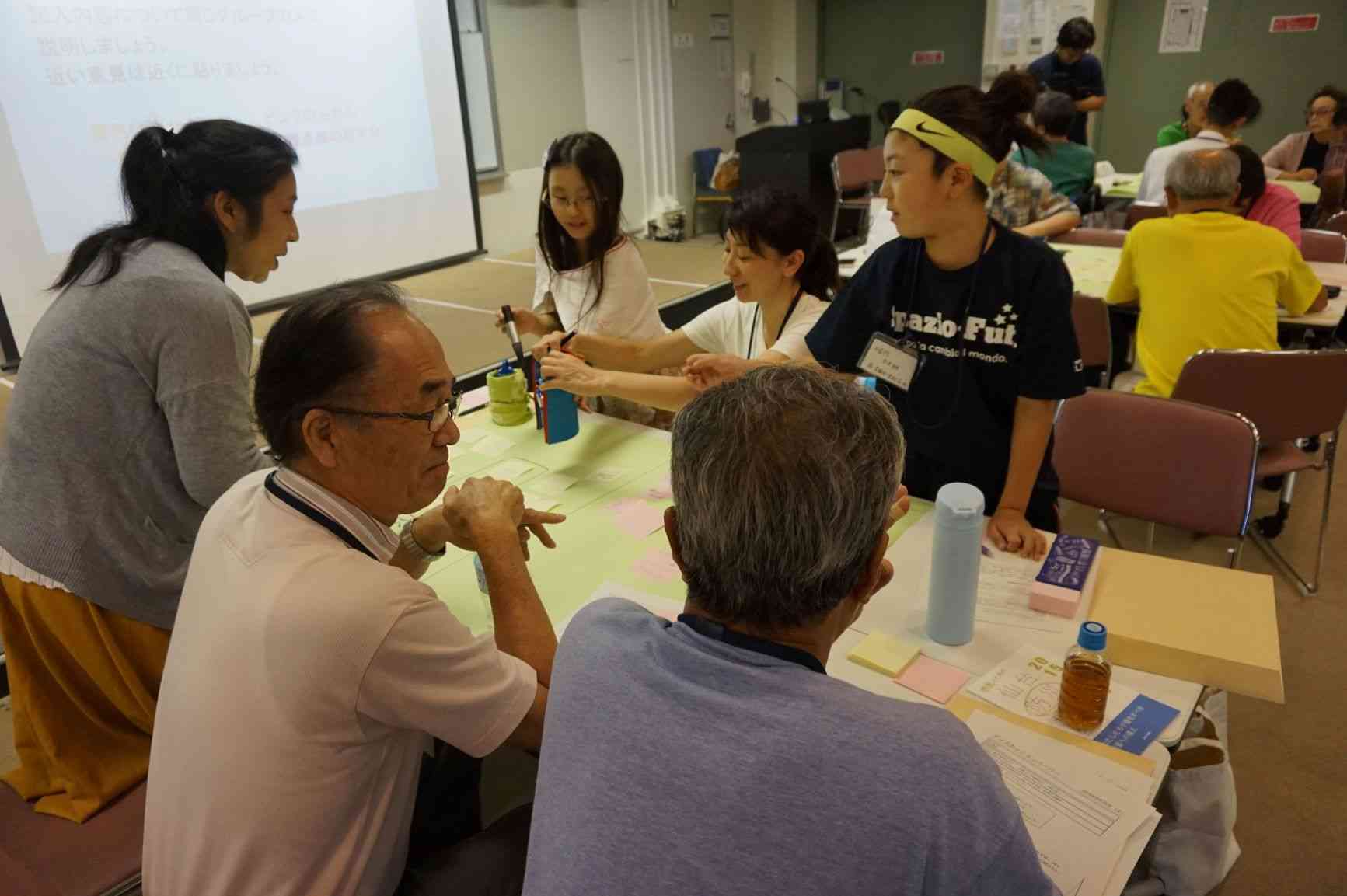
Seminars of the Sendai Framework for DRR for citizens in Sendai City
In cooperation with the International Research Institute of Disaster Science of Tohoku University (IRIDeS), Sendai City hosts “the Sendai Framework for DRR Seminar to provide the citizens” sink in, raise citizen’s awareness towards DRR, as well as to encourage voluntary commitment on DRR activities.
Description
We thought that the Sendai Framework for Disaster Risk Reduction 2015-2030 may be useful as a DRR activities’ guideline for citizens. In that context, we decided to start this open course in 2016 in order to study the Sendai Framework with citizens and discuss what kind of action we, as a citizen, can take or how to incorporate the idea into our everyday life.
This course has jointly been carried out with the International Research Institute of Disaster Science of Tohoku University (IRIDeS). Inviting lecturers such as Professor Fumihiko Imamura, we have held courses every year since 2016 with 674 participants over a total of 8 courses (as of October 2018). Our actual goal is to increase the number of participants to 300 for a course (single year) by 2020 and we are working on achieving this goal. As for the contents of this course, there are three groups in the course; Foundation team, Advanced team, and Leaders team depending on the degree of interest of participants. In the Foundation team, participants mainly work on deepening the understanding of the Sendai Framework such as back ground, purpose, meaning, and priorities for actions. In the Advanced team, we invite past participants to showcase their voluntary commitments for DRR in their communities based on the Sendai Framework, and also prepare various workshops aimed at promotion of voluntary commitments. In 2018, we also opened up the course to the Leaders to provide an opportunity to discuss what it means for citizens’ to study the Sendai Framework and the relationship between DRR activities done by citizens and communities, and the four priority actions which are stated in the Sendai Framework. We will showcase the outcome of the discussion in the symposium which has been held in Sendai every year since 2016 along with the participation of multi-stakeholders. We want to help more citizens to be able to link the Sendai Framework and their own DRR activities and also wish for them to take an important role in sending this message at home and overseas. Therefore we wish to continue offering this course. Furthermore, we think we would like to explore the possibility of spreading these kinds of DRR activities both domestically and internationally.
Did the Sendai Framework change or contribute to changes in your activities/organization? If so, how?
There are particular goals, priorities for actions, and the roles of stakeholders, set in the Sendai Framework. These have impacts on our city’s various areas, making the city more disaster resilient. Particular efforts are; passing down the disaster memories and lessons learned from the disaster to the future generations, building a system of disaster mitigation with multiple defenses against tsunamis or evacuation facilities, and developing a city that is addressing eco-friendly and self-sustaining energy. Also the Sendai Framework contributes greatly as a reminder when we promote the above-mentioned measures with DRR and an Eco-friendly point of view.
What led you to make this commitment/initiative?
What was your position before making this Voluntary Commitment / prior to the Sendai Framework?
We value the Sendai Framework as a communal asset of Sendai citizens. We decided to start this course because we wanted to provide a platform for multi-stakeholders to incorporate each other to promote DRR activities. This course helps citizens to raise awareness and deepen the understanding of the Sendai Framework. We planned the course with the International Research Institute of Disaster Science of Tohoku University (IRIDeS) which actively pursues the realization of the Sendai Framework. One of their particular efforts is to establish and operate the Global Center for Disaster Statistics (GCDS), which aims to evaluate the achievement index of the framework through upgrading disaster damage statistics, and holding a course where the opinions are discussed and can be used as an example.
Deliverables and Progress report
Deliverables
Deliverables are the end-products of the initiative/commitment, which can include issuance of publications or knowledge products, outcomes of workshops, training programs, videos, links, photographs, etc.
Sendai Citizens Utilizing the Sendai Framework is a collection of case studies. We want to spread the idea of why it is important for citizens to learn about the Sendai Framework and encourage for citizens to keep their motivation for learning the Sendai Framework by utilizing it. The collection was created by citizens who participated in the course and it covers topics such as experiences of past disasters, priorities for actions which are set in the Sendai Framework, mainstreaming of DRR, and collaboration among multi-stakeholders. Before putting it all together, they discuss and examine details based on their own experiences and DRR activities. The collection is of six A4 size documents that we will strive to improve its contents, in response to this year’s "The Sendai Framework for DRR Seminar to provide its citizens."
Based on "Our Bosai 2019 - Sendai Citizens Utilizing the Sendai Framework - (Japanese version)" which is a deliverable completed in 2019, we will publish English version of it for the promotion at "World Bosai Forum" to be held on November 9-12, 2019 and other events.
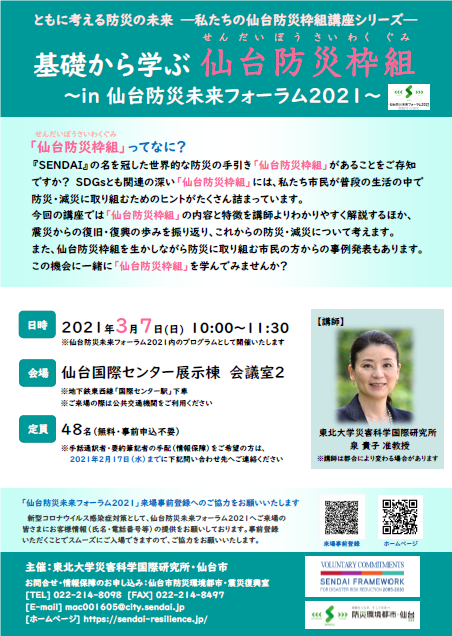
The seminar of the Sendai Framework for DRR, which was initially planned, was unfeasible due to the impact of COVID-19. Therefore, a basic version of the Seminar of the Sendai Framework for DRR was held as one of the programs for the Sendai Symposium for Disaster Risk Reduction and the Future 2021 held in March, 2021.
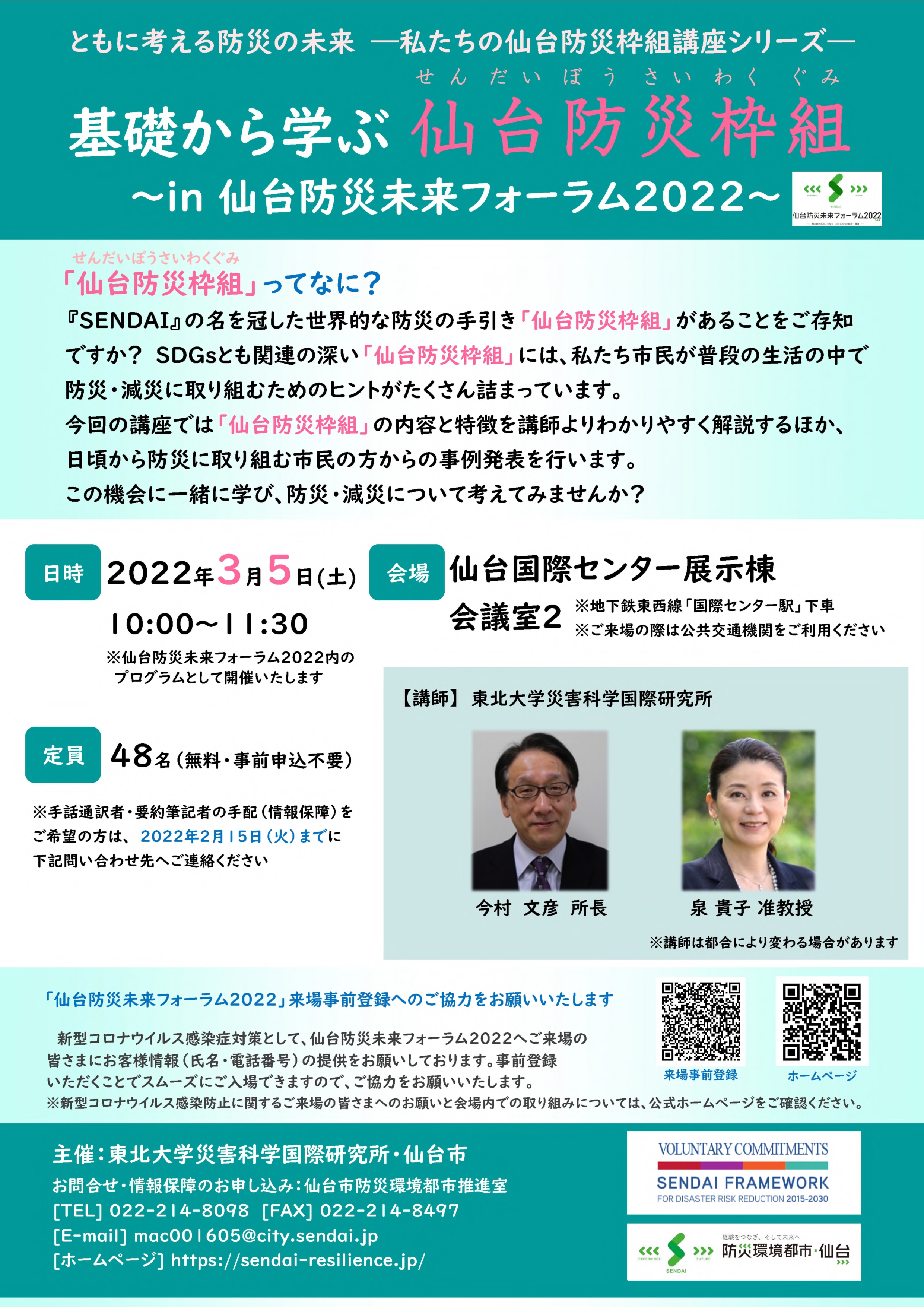
A basic version of the Seminar of the Sendai Framework for DRR was held as one of the programs for the Sendai Symposium for Disaster Risk Reduction and the Future 2022 held in March, 2022.
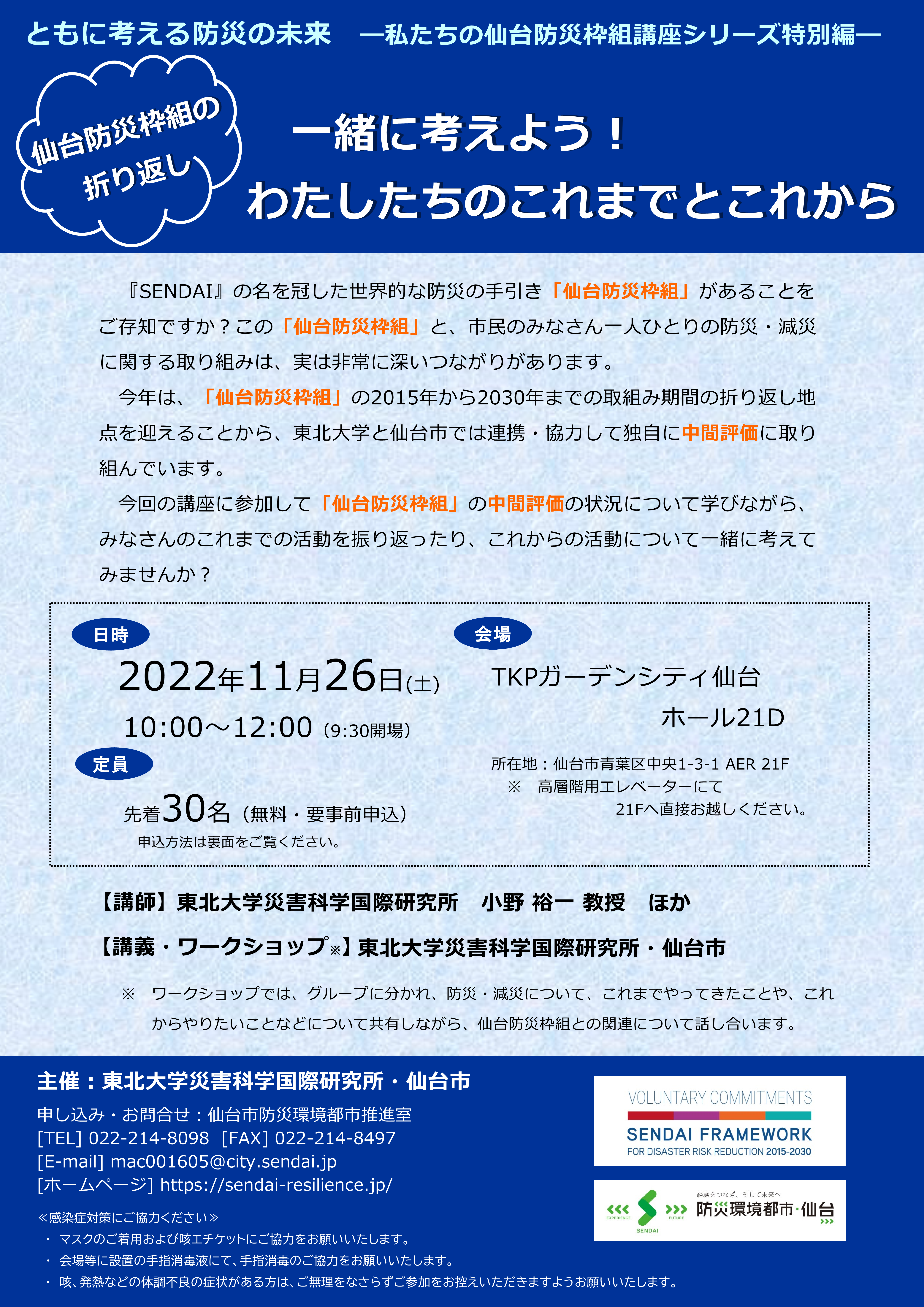
A special version of the Seminar of the Sendai Framework for DRR was held in November, 2022.
A basic version of the Seminar of the Sendai Framework for DRR was held as one of the programs for the Sendai Symposium for Disaster Risk Reduction and the Future 2023 held in March, 2023.
A special edition of the Seminar of the Sendai Framework for DRR was held in November, 2023.
A basic version of the Seminar of the Sendai Framework for DRR is planned to be held in 2024.
Porgress report
In November 2023, we held the special course seminar for the Sendai Framework for Disaster Risk Reduction.
Other than a lecture about the summary of the framework, we conducted a workshop where participants were divided into groups.
During the workshop, there was active discussion regarding daily disaster risk reduction activities, as well as sharing of challenges.
Organizations and focal points
Implementing Organization(s)
- International Research Institute of Disaster Science, Tohoku University 東北大学 災害科学国際研究所
- 仙台市(宮城県) Sendai City
Focal points