Posttraumatic stress dynamics and 15-Year persistence in Great East Japan earthquake survivors
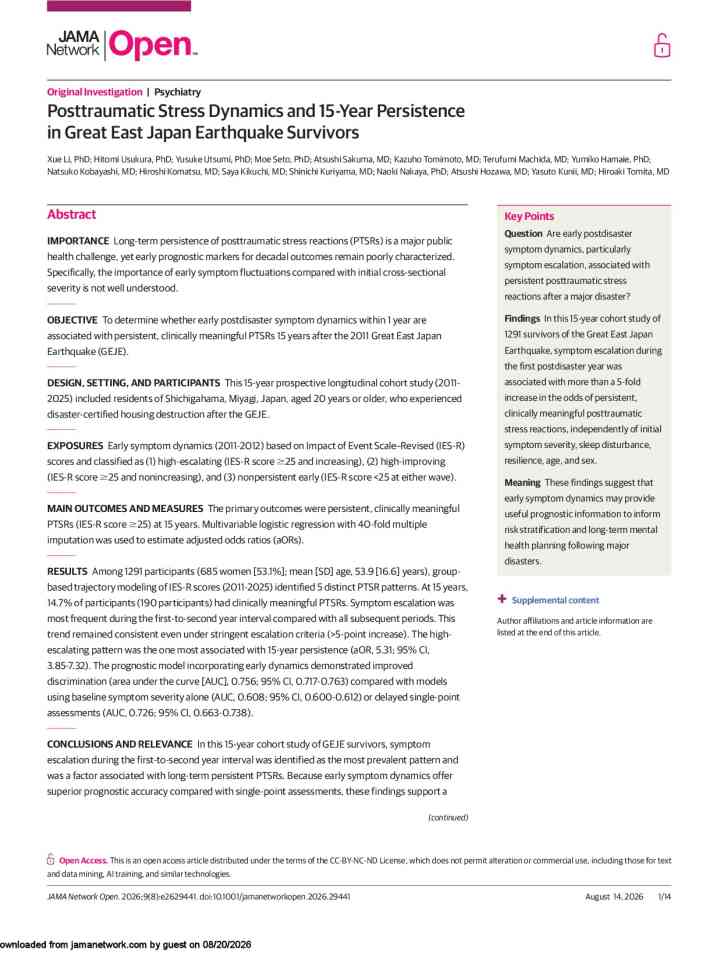
This study examines the long-term psychological consequences of the 2011 Great East Japan Earthquake (GEJE), one of the most devastating disasters in Japan’s history. Drawing on a 15-year longitudinal cohort of 1,291 survivors in Miyagi Prefecture, the research investigates whether early changes in posttraumatic stress reactions (PTSRs) can predict persistent mental health impacts over time.
Researchers identified five distinct posttraumatic stress trajectories and found that symptom escalation during the first two years after the disaster was the strongest predictor of long-term distress. Survivors whose symptoms worsened between the first and second year were more than five times as likely to experience clinically significant PTSRs 15 years later compared with those whose symptoms remained low. Early sleep disturbance and social isolation were also associated with long-term persistence. The findings suggest that monitoring symptom dynamics, rather than relying solely on initial assessments, could improve risk identification and support more targeted mental health interventions following disasters. The study highlights the importance of long-term psychosocial support and sustained recovery planning for affected populations.
Explore further