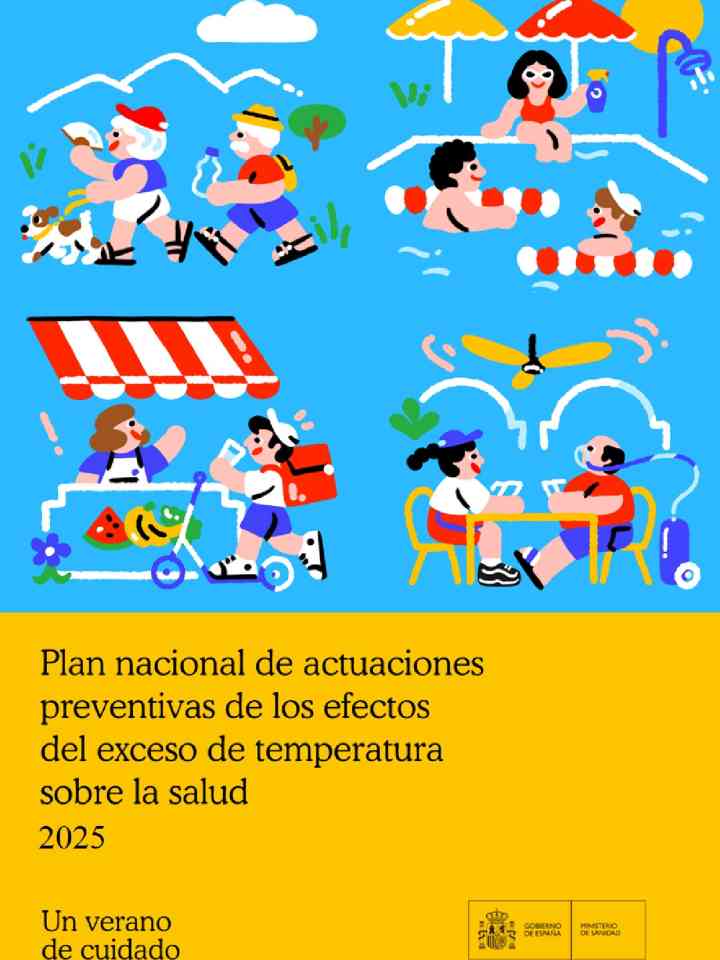
Spain: National plan for preventive actions on the health effects of excessive temperatures
During the summer months of 2003, exceptionally high temperatures were recorded across Europe, leading to a significant increase in morbidity and, as was later confirmed, mortality from causes in which excess temperature acted as a triggering factor. In order to prevent a recurrence of episodes such as those experienced that summer, the Ministry of Health launched the National Plan for Preventive Actions on the Health Effects of Excessive Temperatures in 2004. Since then, the Plan has been activated every summer from June to September.
The implementation of the Plan has fulfilled its primary objective: preventing health impacts caused by excessive temperatures. From a public health perspective, exposure to extreme heat particularly affects children, older persons, and individuals with underlying chronic conditions. From a social perspective, factors such as marginalization, social isolation, dependency, disability, and inadequate housing conditions among lower-income populations add further risk, increasing the vulnerability of groups that, due to their socio-economic circumstances, should in fact receive greater support.
The Plan sets out measures to reduce the effects associated with excessive temperatures and to coordinate the State Administration institutions involved. It also proposes actions that may be undertaken by Autonomous Communities and local authorities. The Plan defines prevention and control actions structured across several levels of intervention, according to the level of risk reached as a result of rising temperatures.
Explore further