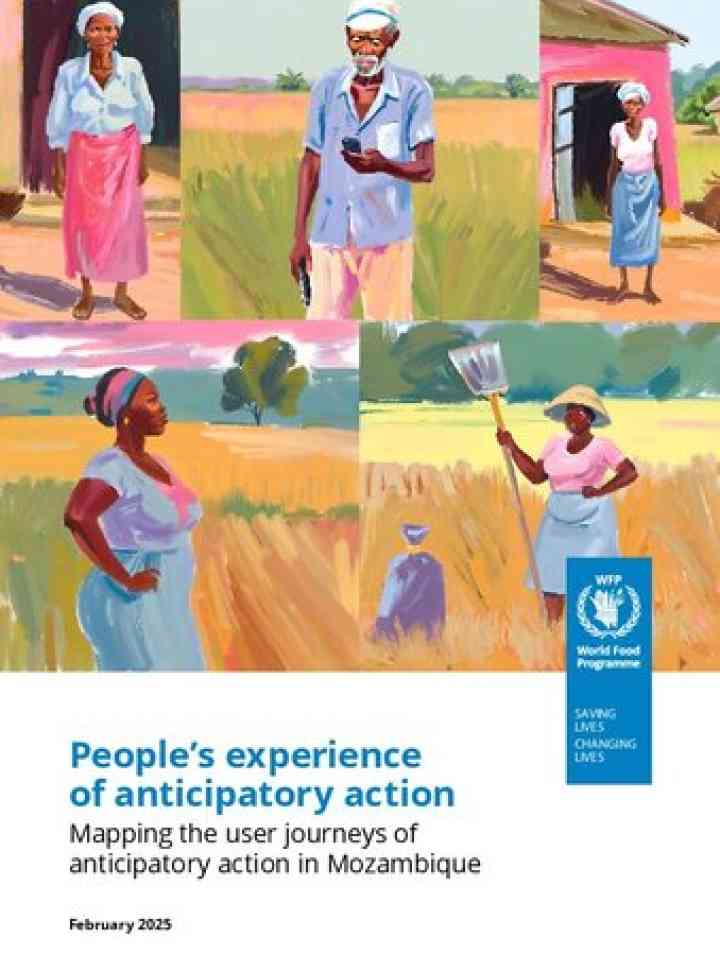
People’s experience of anticipatory action
This report investigates the user experiences of WFP’s anticipatory action programme in Mozambique, focusing on responses to the 2023/24 El Niño-induced drought. It maps out personal narratives from recipients across Gaza and Sofala provinces to assess how anticipatory cash and food assistance affected their lives. Through 30 in-depth interviews, the study explores how different demographic groups—including elderly, disabled, and female-headed households—navigated the assistance process. The initiative aims to shift disaster response from reactive to proactive by delivering early warnings, pre-arranged aid, and mobile money transfers or commodity vouchers before drought conditions peak.
Findings suggest that recipients understood the anticipatory intent of the programme but struggled to act on early warnings due to limited actionable guidance and insufficient agricultural support. While cash was often preferred for its flexibility and privacy, some favored food aid for its certainty. Delays in distribution and unclear targeting caused frustration and pressure to share aid. Despite these issues, recipients showed improved food security and economic coping capacity. Many also appreciated receiving mobile phones, enabling continued access to financial tools like M-PESA beyond the programme. Recommendations include enhancing early warning messaging, integrating farming inputs, improving targeting transparency, and maintaining inclusive, people-centered approaches.
Explore further