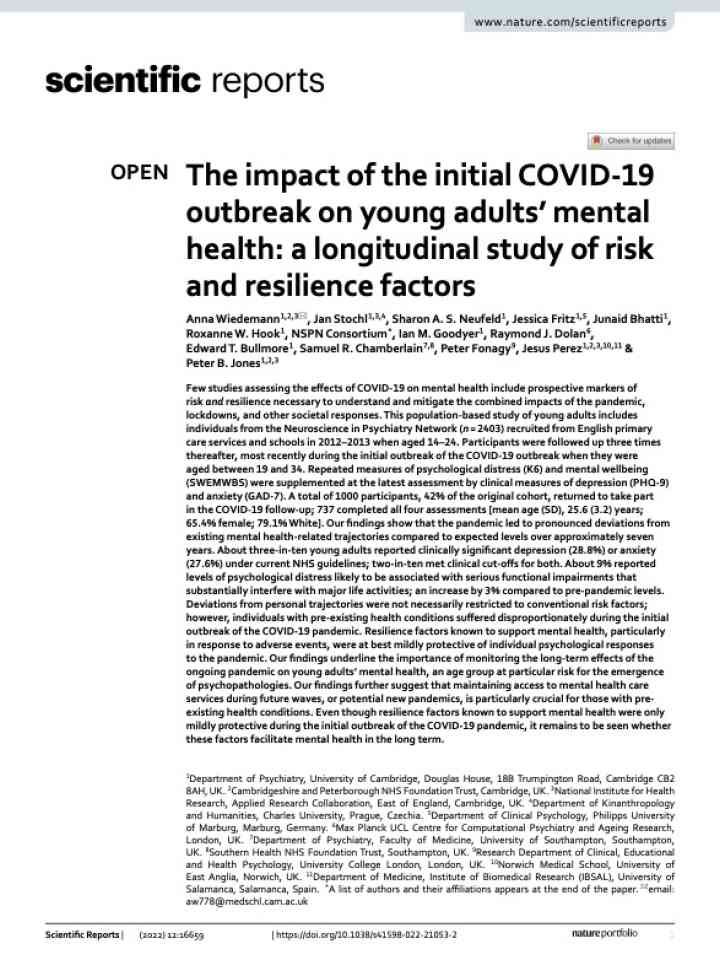
The impact of the initial COVID-19 outbreak on young adults’ mental health: a longitudinal study of risk and resilience factors
This population-based study follows a cohort of young adults from the UK who were first assessed between ages 14–24 in 2012–2013, with follow-ups including during the initial COVID-19 outbreak. It aims to examine how the pandemic, lockdowns, and societal responses affected mental health, using both general wellbeing and clinical measures to track changes over time.
The COVID-19 pandemic significantly disrupted mental health trajectories, with nearly 30% of participants meeting clinical thresholds for depression or anxiety. About 9% reported serious psychological distress affecting daily functioning, a 3% rise from pre-pandemic levels. Individuals with pre-existing health conditions were especially impacted. Traditional resilience factors offered only mild protection, emphasizing the need for continuous access to mental health care during and after health crises, particularly for vulnerable populations.
Explore further