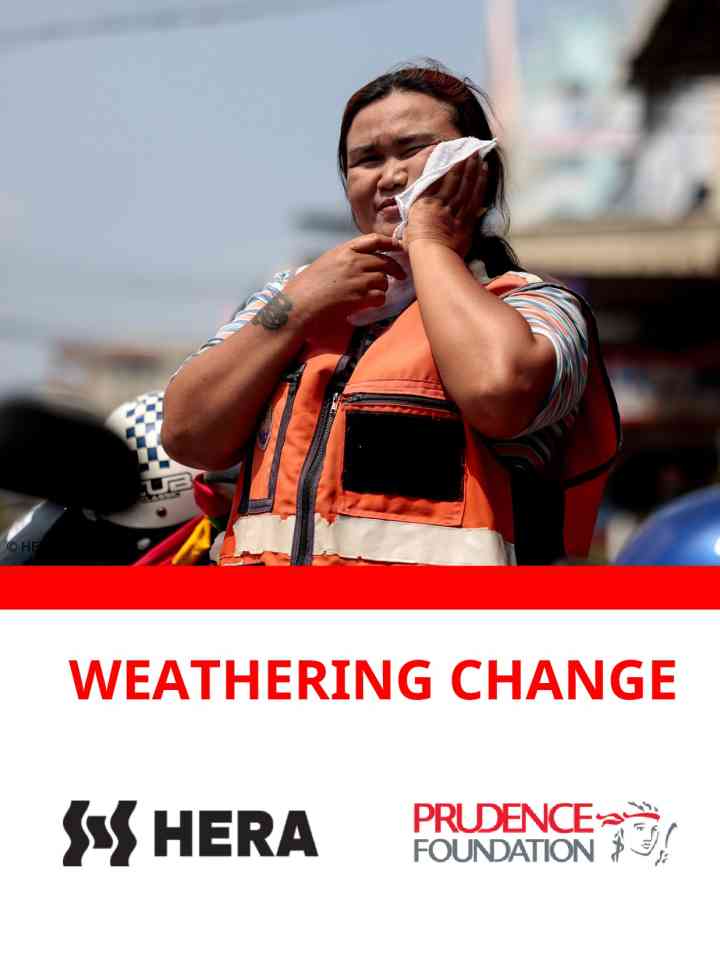
Weathering change: How extreme heat is reshaping women’s lives in Thailand
This report examines how extreme heat is affecting women informal workers in Thailand and documents the impacts on their health, income, and livelihoods. The findings are informed through field-level engagement with women informal workers across Thailand between June and October 2025, using a mixed-methods approach that included surveys, workshops and focus group discussions. HERA, in partnership with HomeNet Thailand and the Just Economy and Labor Institute (JELI), engaged 319 informal workers, of whom 299 were women, across eight provinces. The analysis is based on survey responses, knowledge assessments, workshop participation and personal testimonies.
The report finds that extreme heat is simultaneously a health, financial and social crisis for women informal workers. Women reported dehydration, headaches, dizziness, fainting, heatstroke, rashes, miscarriages, anxiety and depression, while income losses, increased expenses and reduced productivity were widespread. Participants reported losing up to half of their earnings, and many described increased caregiving burdens and safety risks. The report highlights women’s calls for practical cooling solutions, financial protection measures, heat-health education, early warning systems and policy support, and presents the Women’s Climate Shock Insurance and Livelihoods Initiative (WCSI) as a framework for building heat resilience.
Explore further