
Exploration of the preterm birth risk-related heat event thresholds for pregnant women: a population-based cohort study in China
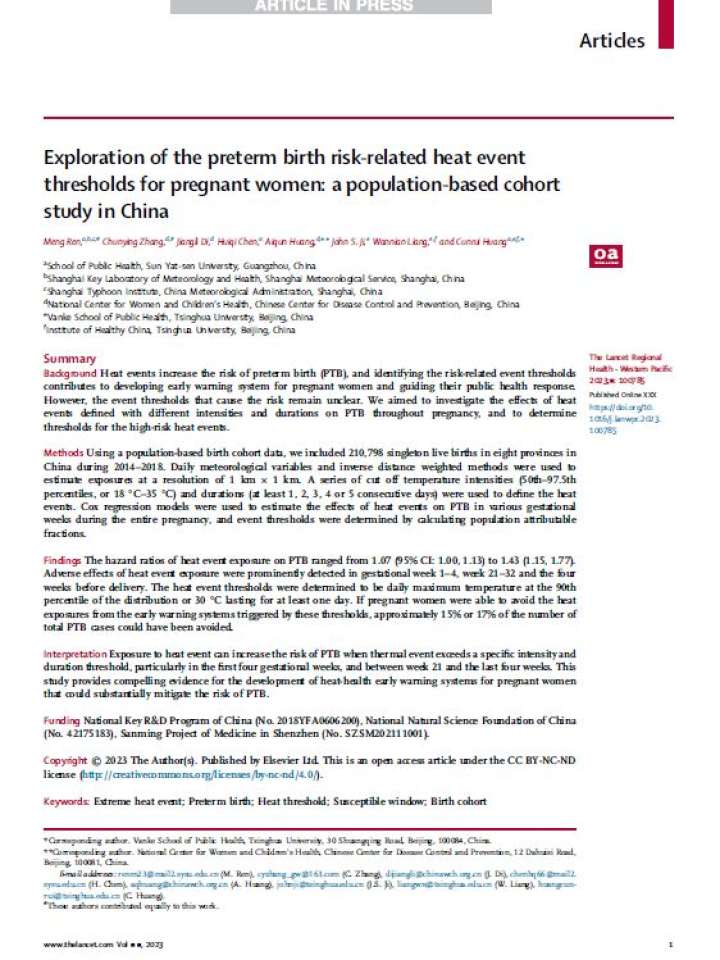
This study aimed to investigate the effects of heat events defined with different intensities and durations on PTB throughout pregnancy, and to determine thresholds for the high-risk heat events. Heat events increase the risk of preterm birth (PTB), and identifying the risk-related event thresholds contributes to developing early warning system for pregnant women and guiding their public health response. However, the event thresholds that cause the risk remain unclear.
The hazard ratios of heat event exposure on PTB ranged from 1.07 (95% CI: 1.00, 1.13) to 1.43 (1.15, 1.77). Adverse effects of heat event exposure were prominently detected in gestational week 1–4, week 21–32 and the four weeks before delivery. The heat event thresholds were determined to be daily maximum temperature at the 90th percentile of the distribution or 30 °C lasting for at least one day. If pregnant women were able to avoid the heat exposures from the early warning systems triggered by these thresholds, approximately 15% or 17% of the number of total PTB cases could have been avoided. Exposure to heat event can increase the risk of PTB when thermal event exceeds a specific intensity and duration threshold, particularly in the first four gestational weeks, and between week 21 and the last four weeks. This study provides compelling evidence for the development of heat-health early warning systems for pregnant women that could substantially mitigate the risk of PTB.
Explore further
Hazards
Heatwave and Extreme Heat
Themes
Gender
Country and region
China
ISBN/ISSN/DOI
10.1016/j.lanwpc.2023.100785 (DOI)
Number of pages
11 p.
Publication year
2023