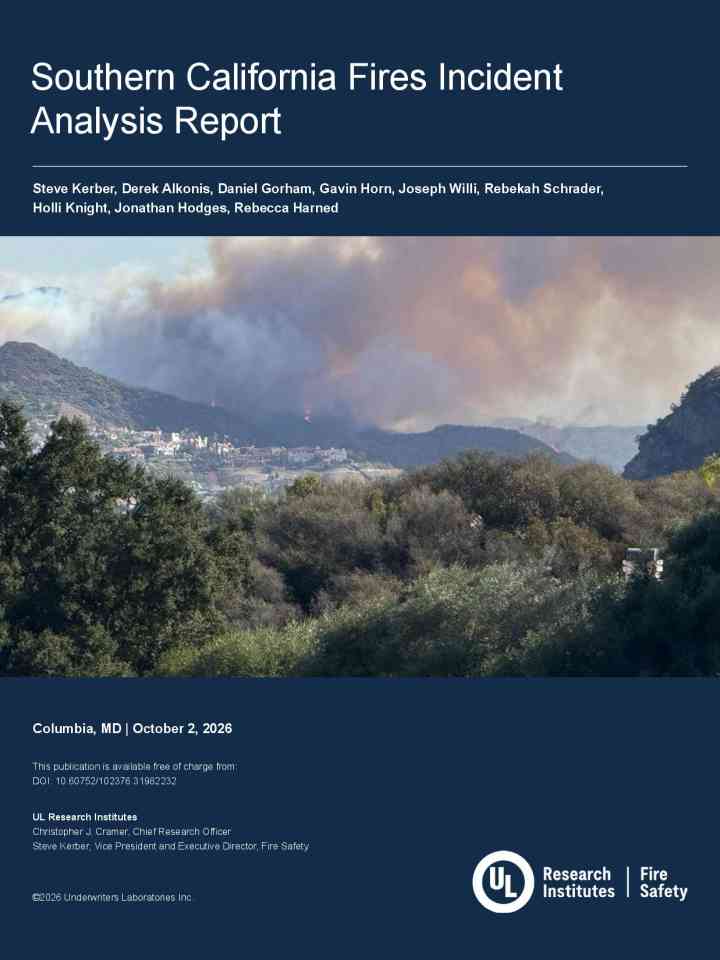
Southern California fires incident analysis report
This report represents the second phase of an independent analysis conducted by UL Research Institutes (ULRI) at the request of the Office of the Governor of California and builds upon the Southern California Fires Timeline Report released in Phase One. This analysis examines the conditions, decisions, actions, and systems that influenced wildfire and community conflagration outcomes before and during the fires. The report applies a systems-analysis methodology using the National Cohesive Wildland Fire Management Strategy as a framework for examining wildfire resilience, preparedness, prevention, evacuation, emergency response, infrastructure, and the built environment.
The findings demonstrate that outcomes were shaped by the interaction of multiple interlinked systems rather than any single factor or failure. California and local jurisdictions had established numerous prevention, preparedness, and response programs prior to the fires, including defensible space inspection programs, fuels reduction efforts, community preparedness initiatives, evacuation systems, mutual aid agreements, and extensive fire suppression resources. The findings demonstrate that outcomes were shaped by the interaction of multiple interlinked systems rather than any single factor or failure.
Explore further