Pastoral adaptation to prolonged drought in Morocco: Household strategies among Amazigh nomadic communities
Source
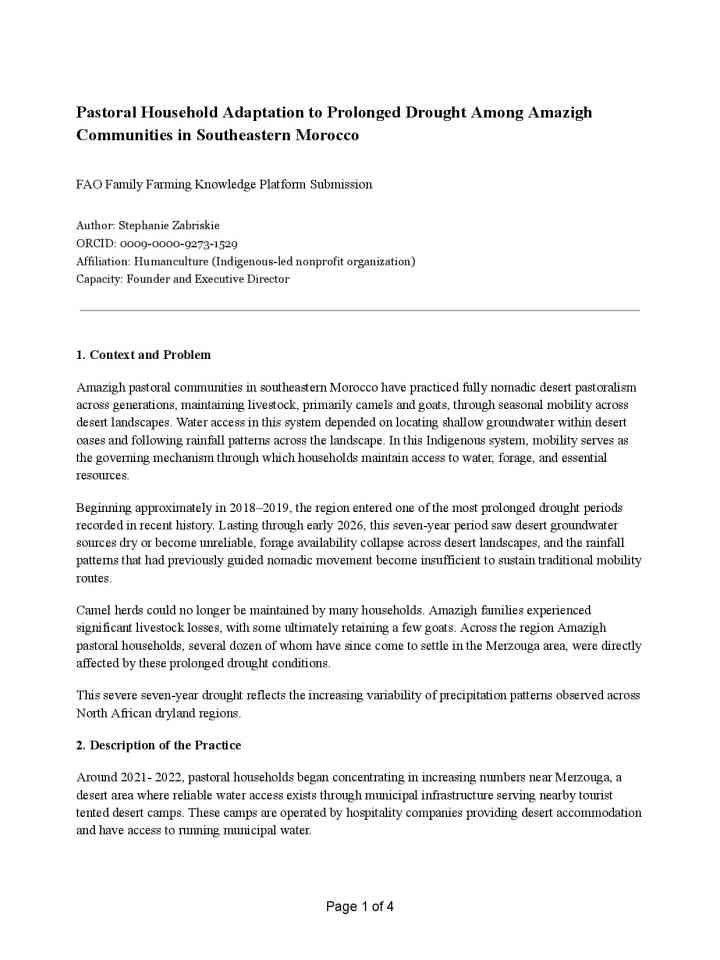
This case study documents how Amazigh pastoral communities in southeastern Morocco adapted their livelihoods during a prolonged seven-year drought that severely disrupted traditional nomadic pastoral systems. The publication examines how recurring water scarcity, degraded forage conditions, and groundwater depletion affected pastoral households dependent on camel and goat herding.
Lessons learned form the analysis include:
- Nomadic pastoral identity and practice can persist through periods of forced concentration when households maintain their material way of life and governance of their own movement decisions.
- Women’s labor is central to household water security in pastoral systems under drought stress, involving daily foot or donkey travel to collect water for both human and livestock use.
- Informal access to water infrastructure associated with non-pastoral land uses can function as a survival resource for pastoral households during extreme and sustained climate stress, even without formal recognition or arrangement, particularly where operators are permissive of access.
- The practices documented here constitute a community-based adaptation system developed in response to prolonged drought conditions and sustained through household labor, pastoral decision-making, and continued access to reliable water infrastructure.
Explore further
Hazards
Drought and Desertification
Country and region
Morocco
ISBN/ISSN/DOI
0009-0000-9273-1529 (ISBN)
Number of pages
4 p.
Publication year
2026