
How does climate change affect educational outcomes? Key pathways
Source
This brief outlines three key impact pathways: damage to school infrastructure, effects on children's health, and impact on household livelihoods. It draws on evidence from low- and middle-income countries (LMICs) to examine these pathways and highlight effective approaches to protecting children's educational outcomes. Human-induced climate change is driving more frequent and intense extreme weather events, which increasingly threaten children's access to education and their learning outcomes.
Key messages include:
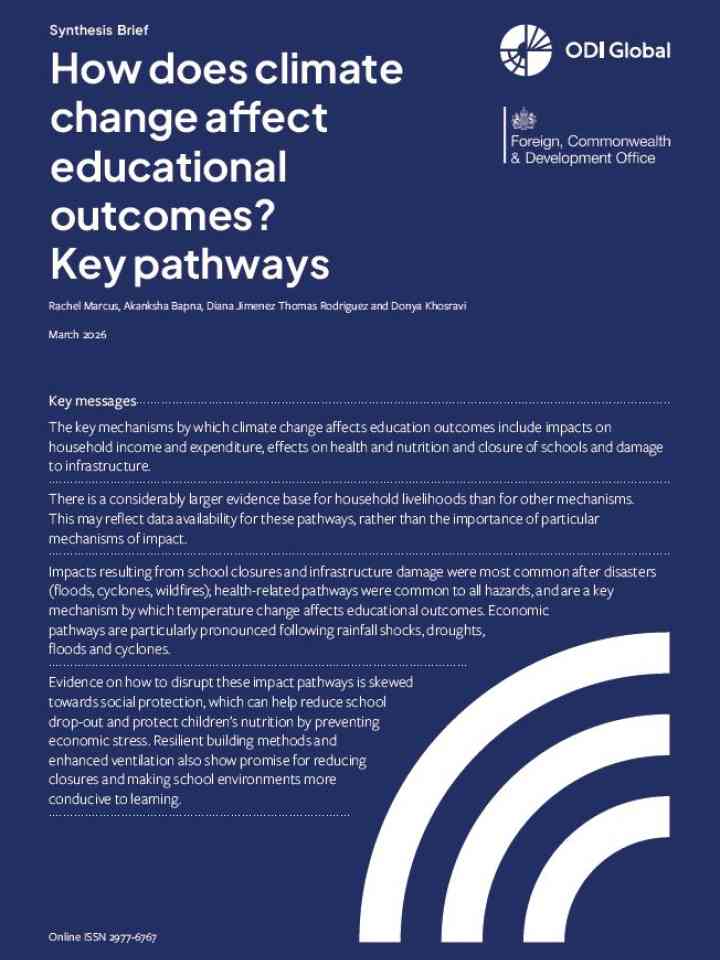
- The key mechanisms by which climate change affects education outcomes include impacts on household income and expenditure, effects on health and nutrition and closure of schools and damage to infrastructure.
- There is considerably larger evidence base for household livelihoods than for other mechanisms. This may reflect data availability for these pathways, rather than the importance of particular mechanisms of impact.
- Impacts resulting from school closures and infrastructure damage were most common after disasters (floods, cyclones, wildfires); health-related pathways were common to all hazards, and are a key mechanism by which temperature change affects educational outcomes. Economic pathways are particularly pronounced following rainfall shocks, droughts, floods and cyclones.
- Evidence on how to disrupt these impact pathways is skewed towards social protection, which can help reduce school dropout and protect children’s nutrition by preventing economic stress. Resilient building methods and enhanced ventilation also show promise for reducing closures and making school environments more conducive to learning.
Explore further
Number of pages
18 p.
Publication year
2026