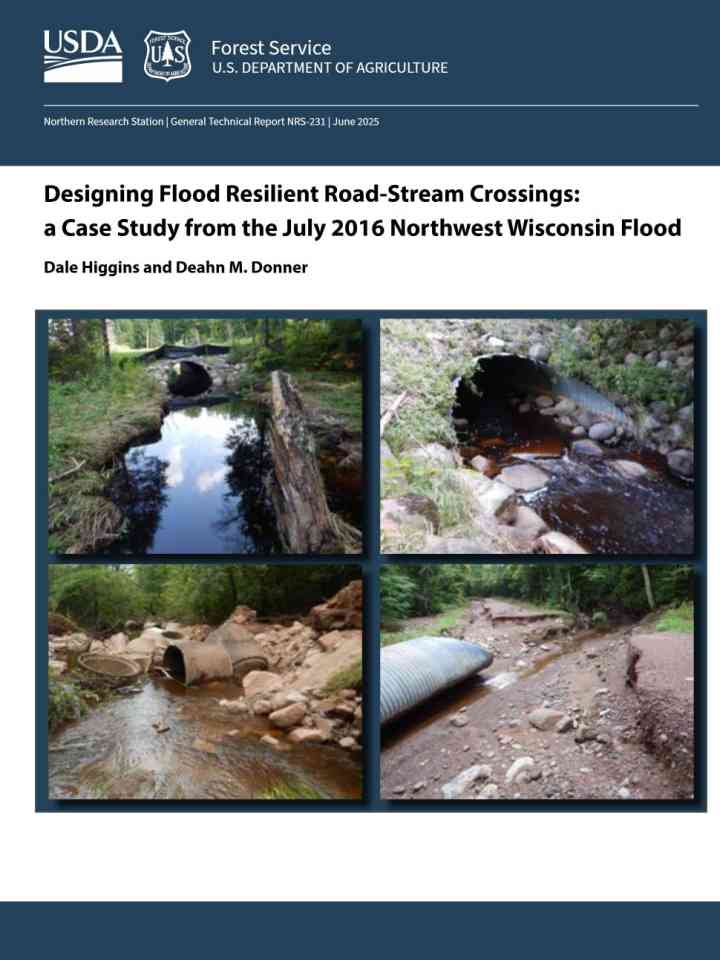
Designing flood resilient road-stream crossings: A case study from the July 2016 northwest Wisconsin flood
The objective of this study was to analyze the impacts of the July 2016 storm by estimating peak flood flows and identifying the factors that influenced both the magnitude of these flows and the performance of road-stream crossings. the study aimed to evaluate the cost-effectiveness of stream simulation (SS) structures compared to their predecessors and offer new insights for designing more flood-resilient infrastructure.
The authors suggest using SS to design culverts and bridges at all road- and trail-stream crossings in rural Wisconsin. Doing so will provide a baseline resiliency for current floods and potential increases in future floods. During design, they recommend evaluating the vulnerability of the watershed to flood flow increases and vulnerability of the site to failure if such floods overtop the road.
Explore further