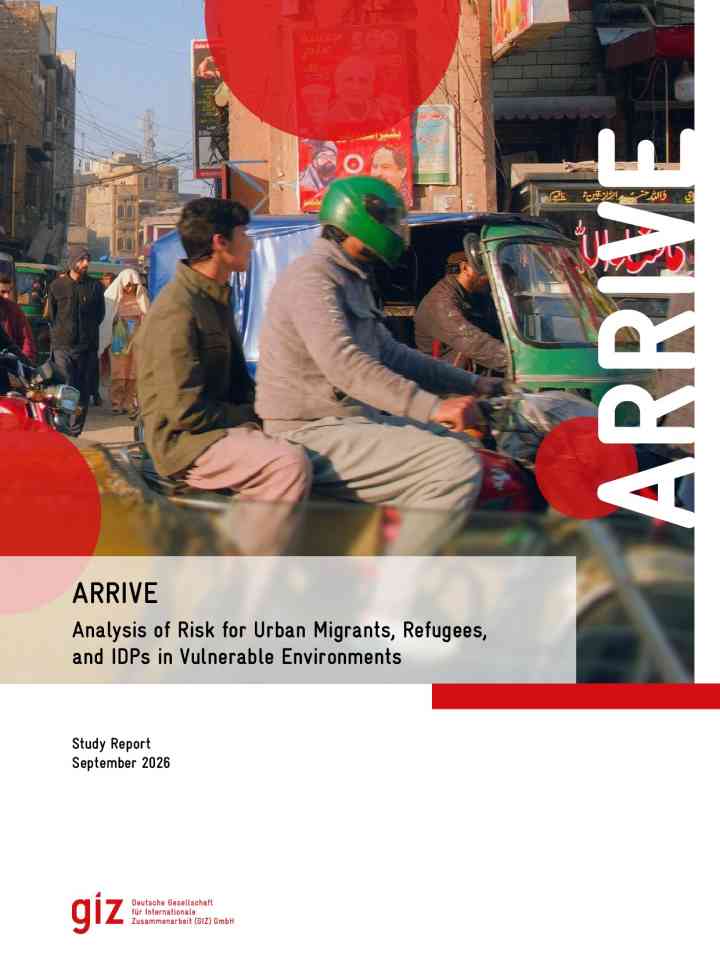
ARRIVE – Analysis of risk for urban migrants, refugees, and IDPs in vulnerable environments
The study examines how secondary cities and development cooperation can better respond to these challenges. Drawing on research in seven cities across Colombia, Pakistan, the Philippines, Côte d’Ivoire and Nigeria, the study uses an “iceberg” framework. It looks past visible outcomes such as informal settlements and flooding to the underlying practices, capacities and paradigms that produce them.
The study finds that urban risk is driven by poor planning, limited services, and unequal access to safe land, rather than by migration itself. Mobile populations often settle in hazard-prone areas because these are the only affordable options. Their vulnerabilities are shared with many host communities and reflect broader weaknesses in urban systems. At the same time, migrants already contribute to local economies, neighbourhood development, and community networks. The main challenge is not a lack of local capacity, but the limited recognition and support these initiatives receive.
Explore further