
Items: 21
The Minister of Cooperative Governance and Traditional Affairs (CoGTA), Velenkosini Hlabisa, has officially launched South Africa’s Early Warnings for All (EW4All) Roadmap to enhance the country’s disaster risk reduction efforts.
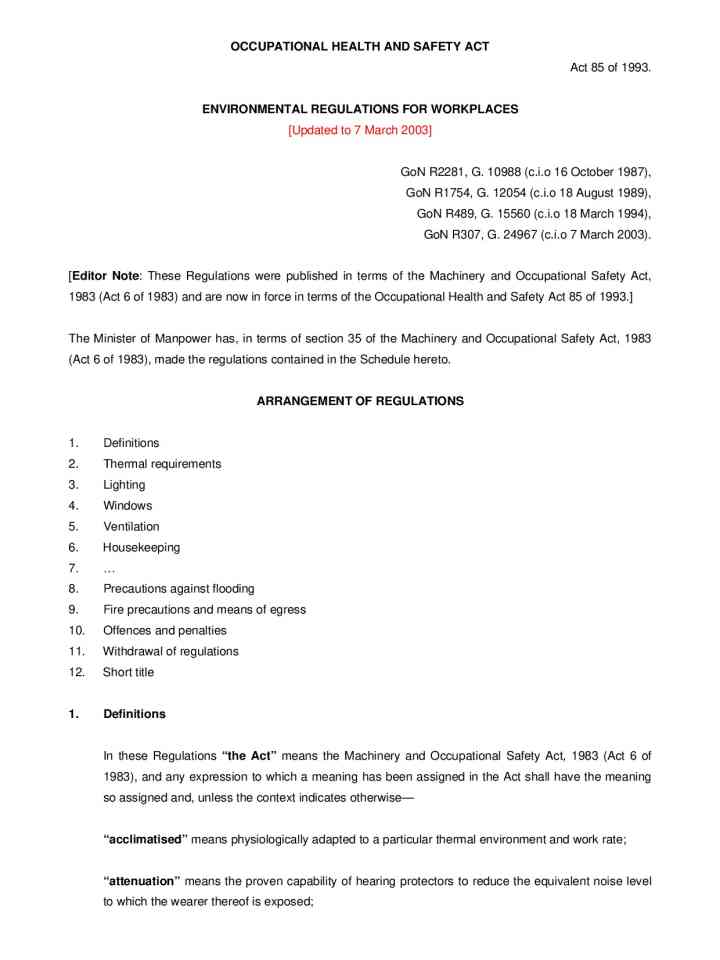
In South Africa, if the average WBGT exceeds 30°C/86°F in a one-hour period employers must take steps to reduce the temperature, conduct annual medical monitoring for heat, ensure workers are acclimatized, and first-aid in the event of a heat stroke.
Guide to extreme heat planning in South Africa for the human health sector: A package of practical, feasible, and low-cost interventions at the individual and community level can assist people to adapt to high temperatures.
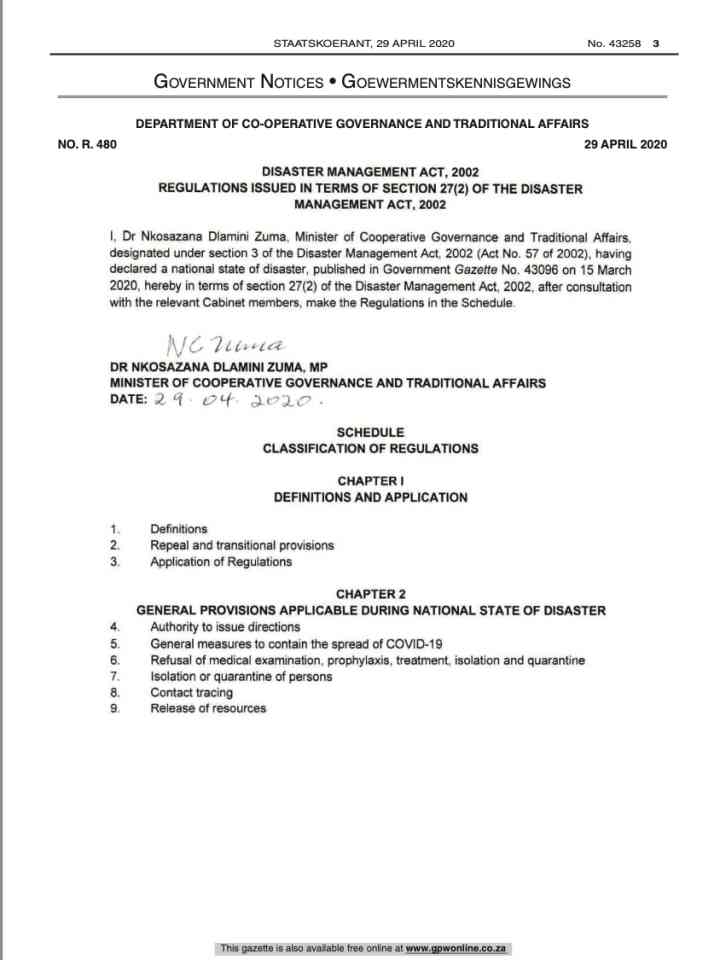
Nkosazana Dlamini Zuma, Minister of Cooperative Governance and Traditional Affairs, invokes section 27(2) of the Disaster Management Act, 2002, to issue regulations following the national state of disaster declaration on 15 March 2020.
This guideline, developed in terms of Section 19(a) of the Disaster Management Act, 2002 (Act No.
This bill amends the Disaster Management Act, 2002.
This plan aims to provide a broad framework for health sector action toward adaptation to climate change.
This document discusses the national policy on disaster risk management in South Africa and the problems with current mechanisms for its implementation.
Voluntary Commitments
The organization has no registered commitments.
The Sendai Framework Voluntary Commitments (SFVC) online platform allows stakeholders to inform the public about their work on DRR. The SFVC online platform is a useful toolto know who is doing what and where for the implementation of the Sendai Framework, which could foster potential collaboration among stakeholders. All stakeholders (private sector, civil society organizations, academia, media, local governments, etc.) working on DRR can submit their commitments and report on their progress and deliverables.