
Items: 128
According to the New York Times, Chinese leaders scrambled on Thursday to contain the fallout from an apocalyptic fire in this major port city that appeared to reflect an enormous regulatory failure, caused by a witch’s brew of toxic chemicals housed within a mile of thickly populated areas...
Every year, the United States foots a multi-billion dollar bill for the economic and insured losses incurred from natural disasters, reports the New York Times. In 2014, the costs reached $25-billion with certain regions of the country more prone to calamity than others. So what disasters are the most common and how much do they cost? These videos breaks down the natural disasters by region...
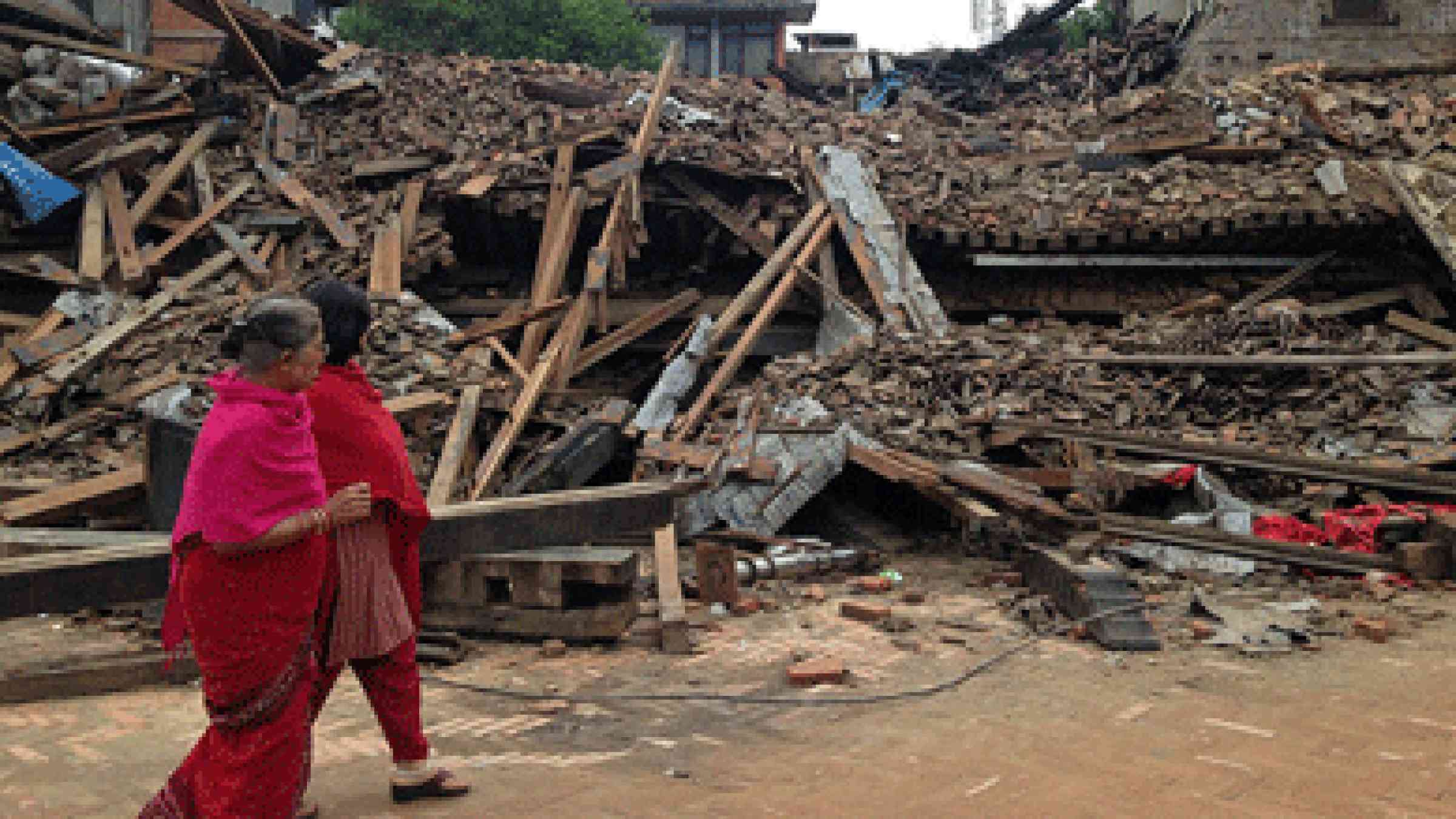
'A global system of disaster insurance would of course not be perfect and would take time to implement, but could save many lives and livelihoods in the years ahead, and help vulnerable low-income countries like Haiti and Nepal chart a path to sustainable development,' writes Jeffrey Sachs in an op-ed in the New York Times...
Preparedness have helped to reduce casualties, Jukes Nunez, an Albay special operations officer, said that nearly a day after Hagupit hit, Albay had yet to record a storm-related death or serious injury. 'Disaster preparedness, we want to make it part of daily life, just like brushing your teeth'...
NYT Opinionator Georgia Levenson Keohane writes 'with extreme weather becoming routine and public resources stretched thin, governments across the world — particularly at the local (and sea) level — are taking note' of NYC's Mass Transit Authority work with its 'captive' insurer to obtain reinsurance by issuing the world’s first 'catastrophe' bond designed specifically to protect against storm surge...
'We’ve reached a stage where we cannot adapt anymore,' said Ronald Jumeau, the United Nations representative for the Seychelles, who is his country’s chief negotiator at the 19th conference of the United Nations Framework Convention on Climate Change...
'Cuba has an enormous amount of deteriorated buildings that can’t withstand natural disasters,' said Ricardo Mena, Head of UNISDR's regional office in the Americas. He added that while a hospital, for example, might need rebuilding, 'that’s very costly and they don’t have the resources to do it'...
US, Japanese and Indonesian academics have been working in collaboration to establish an academic network; a 'Disaster University.' 'Something like 80 percent of disasters over the last couple of decades have been in the Asia-Pacific, and one of the problems is we’ve been in response mode and recovery mode, and not in preparation mode,' said M.R.C. Greenwood, president of the University of Hawaii...
Voluntary Commitments
The organization has no registered commitments.
The Sendai Framework Voluntary Commitments (SFVC) online platform allows stakeholders to inform the public about their work on DRR. The SFVC online platform is a useful toolto know who is doing what and where for the implementation of the Sendai Framework, which could foster potential collaboration among stakeholders. All stakeholders (private sector, civil society organizations, academia, media, local governments, etc.) working on DRR can submit their commitments and report on their progress and deliverables.
Contact information
Fax:
+41-22-917-8076