Items: 37
New research warns that damage from floods due to climate-induced sea level rise could globally reach up to U.S. $482 billion by 2100. Emphasising long-term planning, the researchers say this damage could be reduced by 60 to 70 percent if 1-metre high dikes were to be built, but the cost of construction could be as much as $203 billion.
A new Mainichi Shimbun poll finds that as many as 38 percent of current and planned evacuation centres are located in flood danger areas in Tokyo and 20 other cities. In some areas, all designated centres are expected to flood. Moreover, the warning measures that some wards are introducing do not account for the challenges associated with other disasters.
In a national first, all 46 members of the Iwate Prefectural Assembly in northeast Japan are trying to acquire a special disaster prevention qualification, building on the lessons from the deadly Great East Japan Earthquake and tsunami that struck the prefecture in March 2011. The qualification is course-based and also involves a lifesaving training session.
Researchers are developing sensors that can detect the earthy smell said to emanate before a landslide occurs. The researchers hope that this unusual type of sensor could alert people to the threat of a landslide at an early stage and help them evacuate before disaster strikes.
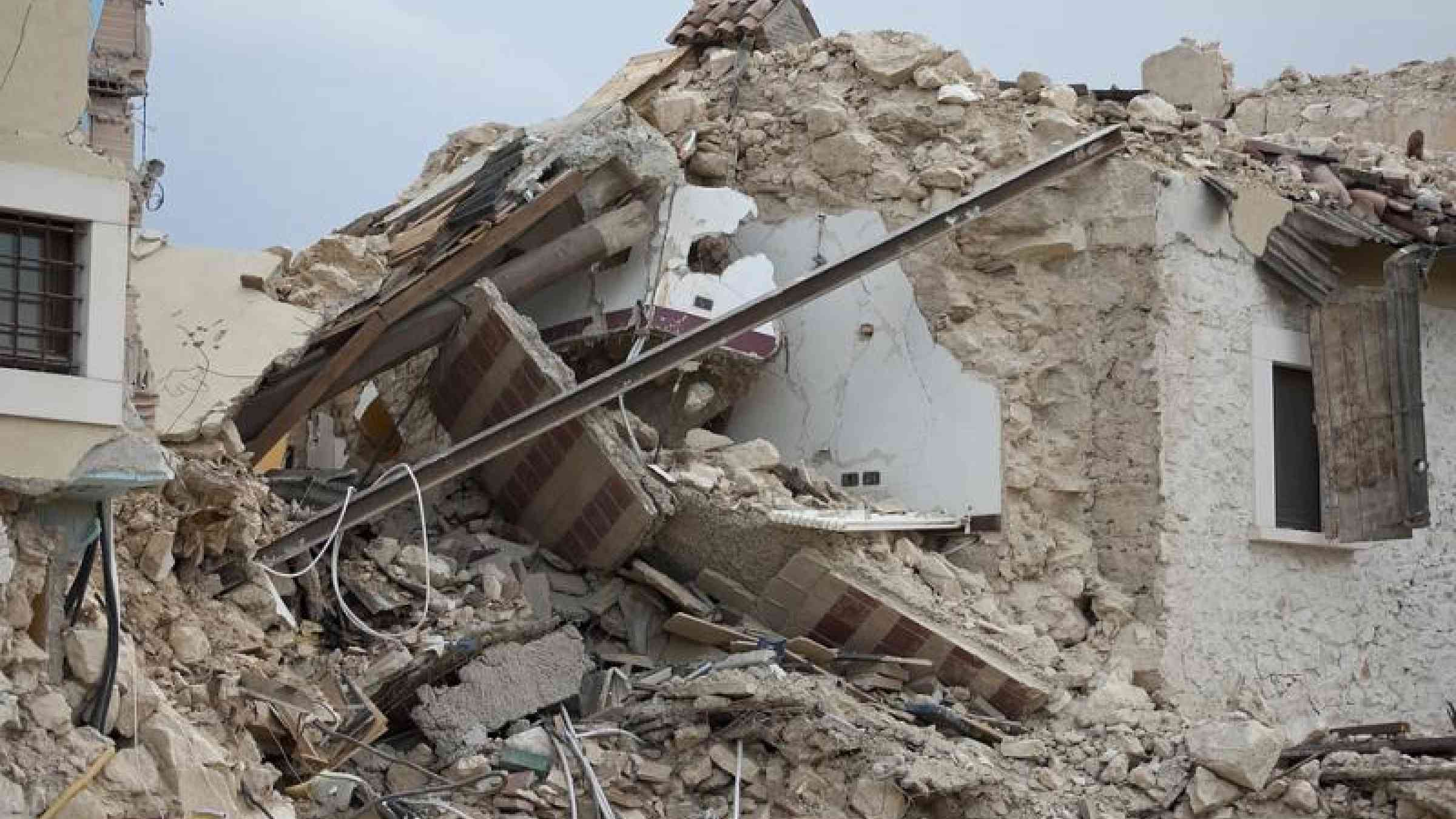
A recent survey has found that only 25% of universities in areas expected to suffer heavy damage from a potential Nankai Trough earthquake in central to southern Japan have plans to protect their research equipment and historic records. The poll covered 37 national universities in 24 prefectures that are expected to be affected by a mega earthquake.
The Japanese government will be financing the development of disaster-prevention robots, according to Mainichi newspaper. The robots could be helpful in tasks such as checking infrastructure and could prepare against disasters like the one Fukushima nuclear power plant meltdown or be involved in reconstruction...
'We need to be fully aware that forecasting is a difficult task to implement, before working out ways to make effective use of what little information we have,' said Hiroshi Niino, of the University of Tokyo's Atmosphere and Ocean Research Institute...
The latest predictions, described as a 'worst possible scenario,' presents more realistic suppositions than those released in late March. 'The latest damage predictions should serve as food for thought for each and every resident over what they should do'...
Voluntary Commitments
The organization has no registered commitments.
The Sendai Framework Voluntary Commitments (SFVC) online platform allows stakeholders to inform the public about their work on DRR. The SFVC online platform is a useful toolto know who is doing what and where for the implementation of the Sendai Framework, which could foster potential collaboration among stakeholders. All stakeholders (private sector, civil society organizations, academia, media, local governments, etc.) working on DRR can submit their commitments and report on their progress and deliverables.