
Items: 38
High-intensity tropical cyclones have been moving closer to coasts over the past 40 years, potentially causing more destruction than before.
This paper presents the possible trade-off between the education sector and other economic sectors in the control of SARSCoV-2 transmission.

News research suggests naturally formed balancing boulders could be used to help scientists to forecast large earthquakes more precisely.
Scientists have tracked a ‘boomerang’ earthquake in the ocean for the first time, providing clues about how they could cause devastation on land.
To understand the epidemic trends and control measures of the coronavirus disease 2019 (COVID-19) in China, between mid-January and March 2020, the authors carried out data collation and descriptive analysis in 31 provinces and municipalities
The Patient Experience Research Centre (PERC) at Imperial College London is developing research to explore and understand people’s views about, experiences of and behavioural responses to the outbreak in the UK and elsewhere.
In response to the coronavirus disease 2019 (COVID-19) pandemic, countries have sought to control transmission of SARS-CoV-2 by restricting population movement through social distancing interventions, reducing the number of contacts.
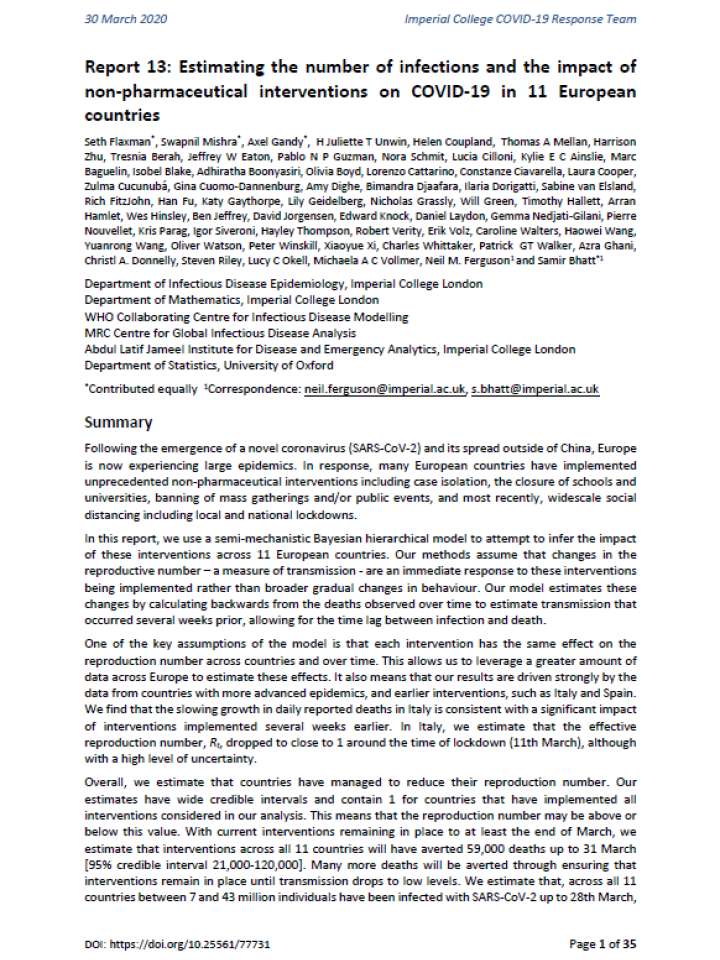
Following the emergence of a novel coronavirus (SARS-CoV-2) and its spread outside of China, Europe is now experiencing large epidemics.
Voluntary Commitments
The organization has no registered commitments.
The Sendai Framework Voluntary Commitments (SFVC) online platform allows stakeholders to inform the public about their work on DRR. The SFVC online platform is a useful toolto know who is doing what and where for the implementation of the Sendai Framework, which could foster potential collaboration among stakeholders. All stakeholders (private sector, civil society organizations, academia, media, local governments, etc.) working on DRR can submit their commitments and report on their progress and deliverables.