My account
Navigation loading…
  • Add
  • Your experience on PreventionWeb

    Please help us improve PreventionWeb by taking this brief survey. Your input will allow us to better serve the needs of the DRR community.

    See the survey

    Global Water Security & Sanitation Partnership (World Bank)

    GWSP
    United States of America
    UN & International Organizations
    Propose an edit Upload your content

    Mission

    Water touches nearly every aspect of development. It drives economic growth, supports healthy ecosystems and is fundamental for life. However, this critical resource can harm as well as help. Water-related hazards such as floods, storms, and droughts are responsible for 9 out of 10 natural disasters. Climate change is expected to increase this risk and place even greater stress on scarce water supplies.

    New challenges and new contexts require new responses. That’s why the World Bank, together with its partners, has launched a new partnership for a water-secure world, the Global Water Security & Sanitation Partnership (GWSP). Building on a nearly half-century of collaboration driven by the Water and Sanitation Program (WSP), the Water Partnership Program (WPP) and others, the GWSP aims to provide action equal to the ambition articulated within the Sustainable Development Goals (SDGs.)

    The GWSP primarily focuses on advancing knowledge and building capacity. It supports client governments to achieve the water-related SDGs through the generation of innovative global knowledge and the provision of country-level support, while leveraging World Bank Group financial instruments and promoting global dialogue and advocacy with key partners and clients to increase reach and impact. This Partnership will provide new opportunities to test and scale-up innovations, build country capacity where needed and influence client demand and World Bank operations.
    Show more
    Latest additions
    Items: 7
    Cover
    Documents and publications
    7 February 2023
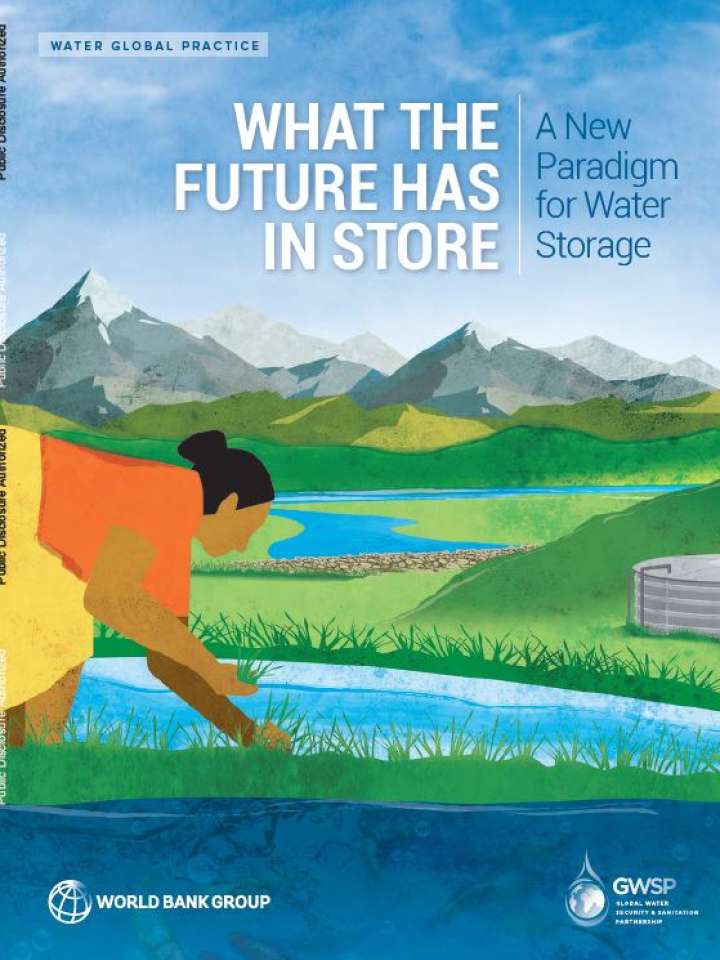
    What the future has in store: a new paradigm for water storage

    This report unpacks the importance of water storage, recent trends in the availability of storage, and sets forth a new integrated planning framework to guide water managers through.

    World Bank, the
    Global Water Security & Sanitation Partnership (World Bank)
    This report unpacks the importance of water storage, recent trends in the availability of storage, and sets forth a new integrated planning framework to guide water managers through.
    This image shows the first page of the publication.
    Documents and publications
    4 April 2022
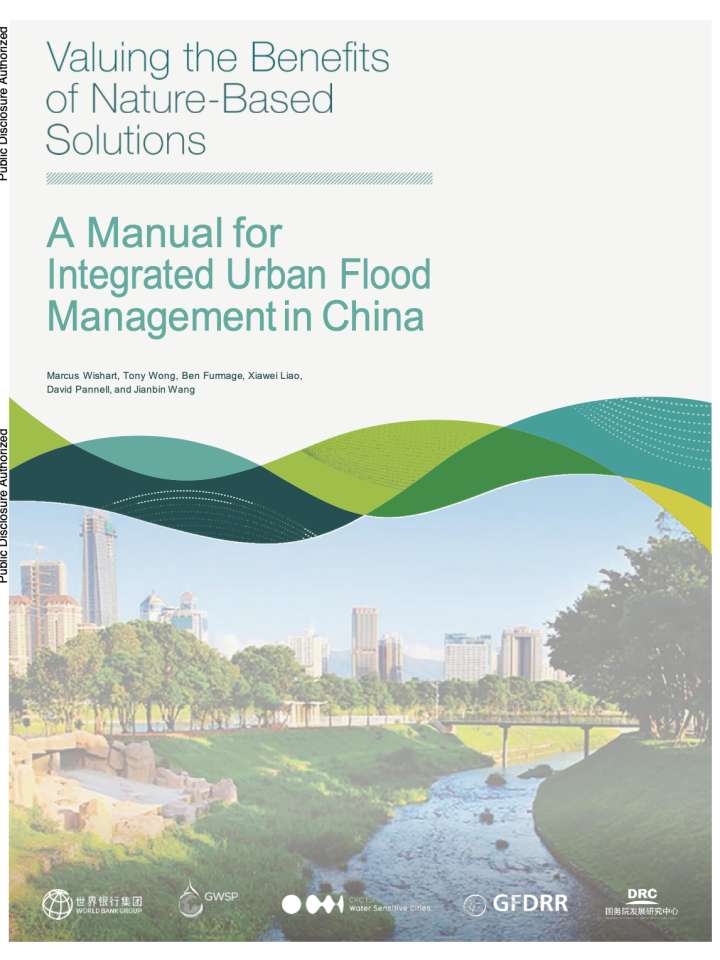
    Valuing the benefits of nature-based solutions: A manual for integrated urban flood management in China

    This report outlines a comprehensive framework for valuing the benefits associated with NbS for IUFM to facilitate the identification of appropriate and sustainable financing mechanisms to realize those values.

    World Bank, the
    Global Facility for Disaster Reduction and Recovery, the (GFDRR)
    Global Water Security & Sanitation Partnership (World Bank)
    This report outlines a comprehensive framework for valuing the benefits associated with NbS for IUFM to facilitate the identification of appropriate and sustainable financing mechanisms to realize those values.
    Documents and publications
    17 June 2021
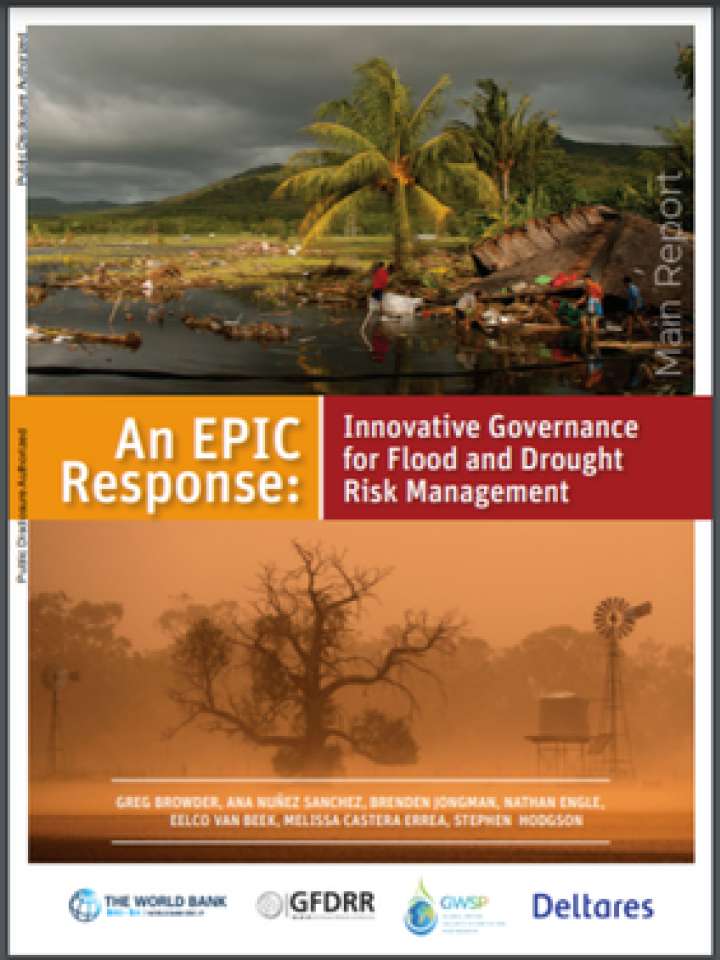
    An epic response: Innovative governance for flood and drought risk management: main report

    This report presents a new framework for creating a more effective system of managing hydro-climatic risks, a system that has the potential to dramatically reduce the future human and economic toll from these events. This report is intended to bring

    World Bank, the
    Global Facility for Disaster Reduction and Recovery, the (GFDRR)
    Deltares
    Global Water Security & Sanitation Partnership (World Bank)
    This report presents a new framework for creating a more effective system of managing hydro-climatic risks, a system that has the potential to dramatically reduce the future human and economic toll from these events.
    Documents and publications
    3 May 2021
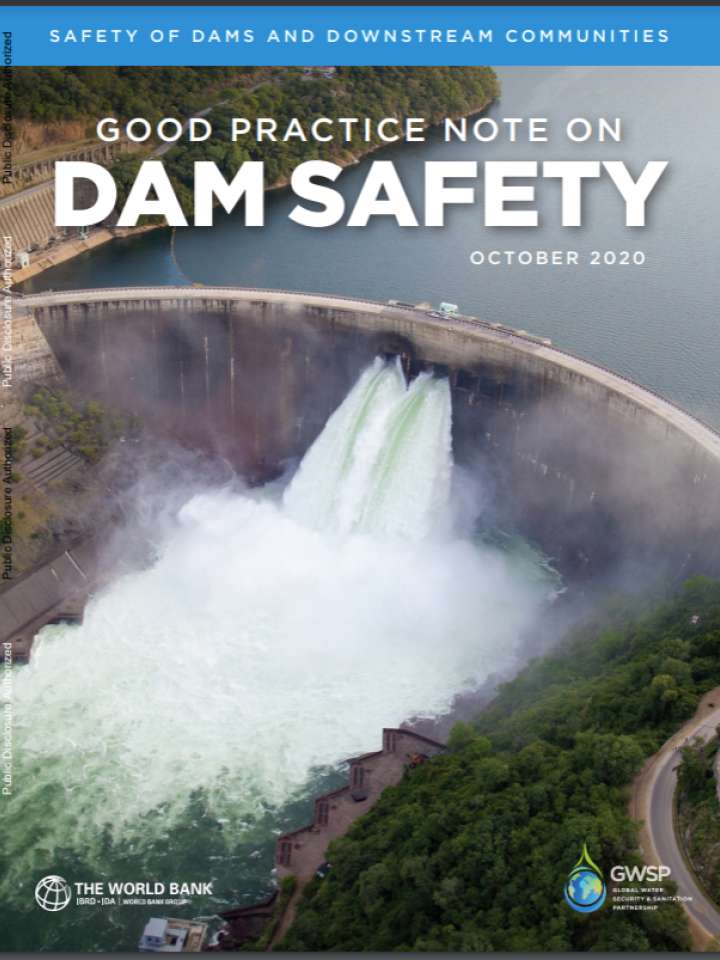
    Good practice note on dam safety: new guidance on managing risks associated with dams

    This Good Practice Note (GPN) provides guidance on using a risk management approach to the application of the dam safety requirements. The GPN pertains to:

    1. the construction of new dams or dams under construction (DUC) under investment project financing

    World Bank, the
    Global Water Security & Sanitation Partnership (World Bank)
    This Good Practice Note (GPN) provides guidance on using a risk management approach to the application of the dam safety requirements. The GPN pertains to:
    Documents and publications
    3 May 2021
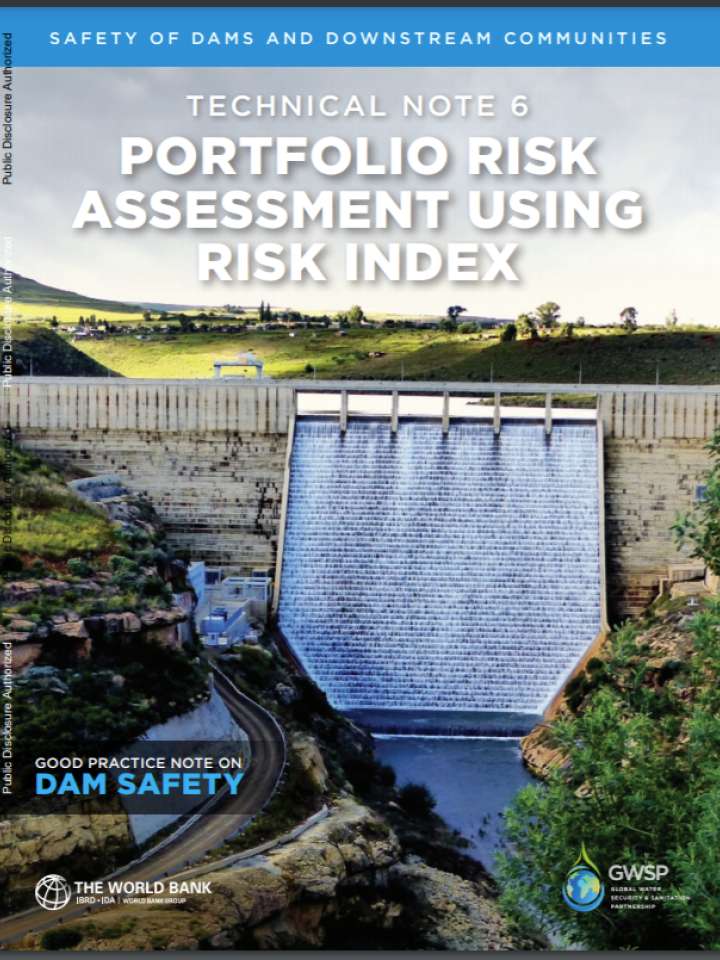
    Portfolio risk assessment using risk index

    Before the mid 1990s, a few organizations in International Commission on Large Dams (ICOLD) member countries started to practice risk analysis in the context of dam safety programs. Since that time, several methods and frameworks have been introduced into

    World Bank, the
    Global Water Security & Sanitation Partnership (World Bank)
    Before the mid 1990s, a few organizations in International Commission on Large Dams (ICOLD) member countries started to practice risk analysis in the context of dam safety programs.
    Documents and publications
    3 May 2021
    Geotechnical risk

    Geotechnical hazards are derived from and linked with broader geological hazards surrounding dam sites and reservoir areas. Geologically, no two sites will be the same; many different geological processes and interactions can create complex sites and the

    World Bank, the
    Global Water Security & Sanitation Partnership (World Bank)
    Geotechnical hazards are derived from and linked with broader geological hazards surrounding dam sites and reservoir areas.
    Documents and publications
    3 May 2021
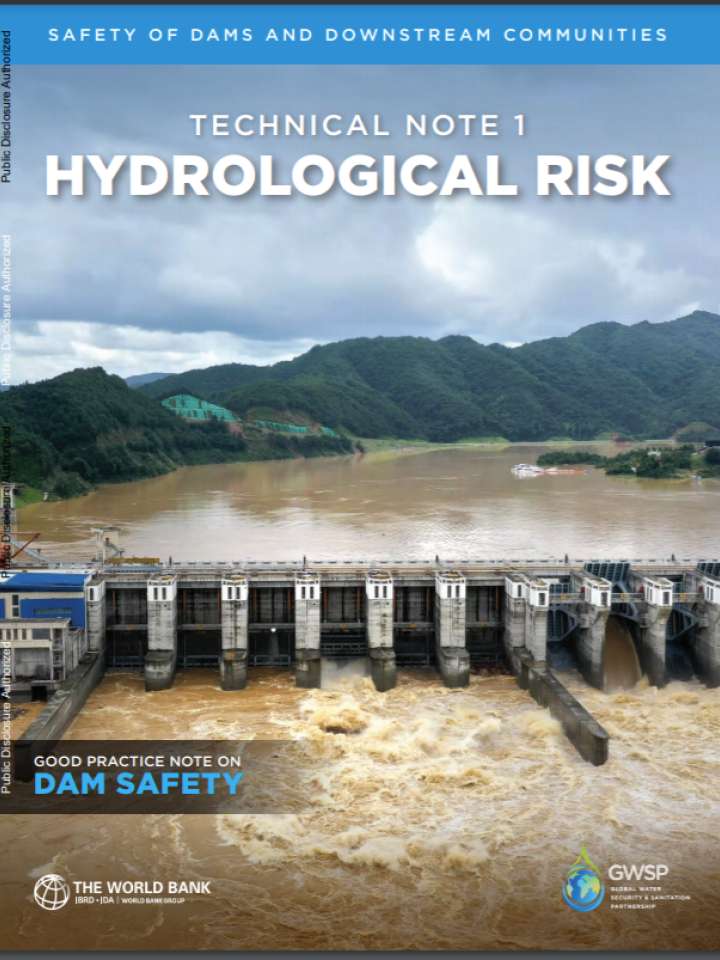
    Hydrological risk

    Hydrology and dam safety management are dynamic subjects featuring continuing advances. In recent decades, advances in formal risk analysis of hydrological hazards affecting dam safety has led to the development of methods and techniques capable of

    World Bank, the
    Global Water Security & Sanitation Partnership (World Bank)
    Hydrology and dam safety management are dynamic subjects featuring continuing advances. In recent decades, advances in formal risk analysis of hydrological hazards affecting dam safety has led to the development of methods and techniques capa

    More content for this organization may be available on PreventionWeb or on the site search.

    Voluntary Commitments

    The organization has no registered commitments.

    The Sendai Framework Voluntary Commitments (SFVC) online platform allows stakeholders to inform the public about their work on DRR. The SFVC online platform is a useful toolto know who is doing what and where for the implementation of the Sendai Framework, which could foster potential collaboration among stakeholders. All stakeholders (private sector, civil society organizations, academia, media, local governments, etc.) working on DRR can submit their commitments and report on their progress and deliverables.

    Contact information

    http://www.worldbank.org/en/programs/global-water-security-sanitation-partnersh…
    [email protected]
    +44 20 7542 7015

    Is this page useful?

    Yes No
    Report an issue on this page

    Thank you. If you have 2 minutes, we would benefit from additional feedback (link opens in a new window).

    PreventionWeb is the global knowledge sharing platform for disaster risk reduction (DRR) and resilience.

    • Newsletter
    • Submit your content
    • Blog pitches
    • Submission and publishing policy
    • About PreventionWeb
    • Contact us

    Hazards

    • Avalanche
    • Cold Wave
    • Cyclone, Hurricane and Typhoon
    • Drought and Desertification
    • Earthquake
    • Epidemic and pandemic
    • Flood
    • Heatwave, extreme heat and heat stress
    • Insect infestation
    • Land subsidence
    • Landslide
    • Nuclear, biological, chemical (NBC)
    • Sea level rise
    • Technological hazard
    • Thunderstorm
    • Tornado
    • Tsunami
    • Volcano
    • Wildfire

    Regions

    • Africa
    • Americas
    • Asia
    • Europe
    • Oceania

    Themes

    Understanding & managing risk

    • Preparedness
    • Early warning
    • GIS and mapping
    • Data and information management
    • Risk identification and assessment
    • Small Island Developing States
    • Earth Observation

    Natural environment

    • Climate change
    • Environment and ecosystems
    • Food security and agriculture
    • Water

    Cross-cutting

    • Systemic risk
    • Recovery

    Human development

    • Capacity development
    • Children and youth
    • Civil society / NGOs
    • Community-based DRR
    • Cultural heritage
    • Gender
    • Human mobility
    • Inclusion
    • Social impacts and resilience

    Science, knowledge & advocacy

    • Disaster risk communication
    • Traditional and Indigenous knowledges
    • Science-policy-practice interface

    State, governance & economy

    • Financing DRR
    • Fragility and conflict
    • Governance
    • Insurance and risk transfer
    • Private sector

    Infrastructure & critical services

    • Critical infrastructure
    • Education and school safety
    • Health and health facilities
    • Structural safety
    • Urban risk and planning
    Loading