
Shifting wind patterns are posing greater climate risks for smallholders in West Africa
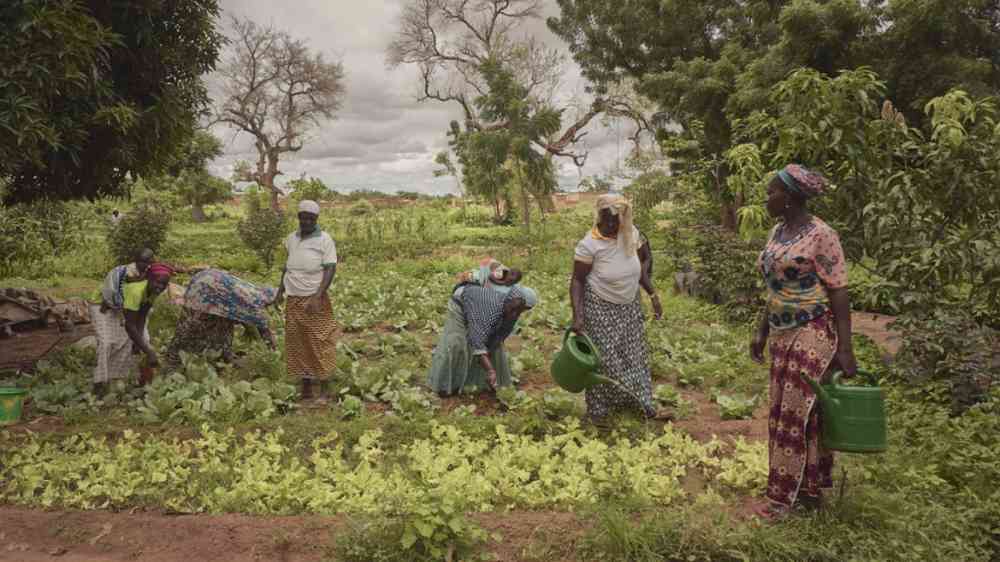
Farmers rely on stable climate rhythms to plan their farming activities. Shifting patterns of seasonal cycles like the Harmattan can significantly impact agricultural productivity and income stability as much as extreme weather. To improve livelihood resilience, these risks must be given greater attention in climate policy and adaptation planning, write Pyemo Afego, Prolay Saha, and Daiju Narita.
Changes in seasonal conditions that farmers experience every year can disrupt agricultural activities and threaten food security. These changes are not sudden or dramatic like floods or droughts, but they are significant enough to weaken livelihood security and community resilience.
One example is the Harmattan, a wind that blows cool, dry air and dust from the Sahara across West Africa every year, typically from late November to March. West Africa experiences two main alternating seasons, the Harmattan dry season and the rainy season. Changes in one will affect the other, whether through a later or earlier onset, a shortening or lengthening of the period, or both.
In this region, only about 10 per cent of the land suitable for irrigation is actually equipped for irrigation, and in several countries, including Benin, Ghana, and Togo, less than 1 per cent of cultivated land has any form of irrigation or water management system. Agriculture is thus predominantly rain-fed, with farmers relying on rainfall and the natural rhythm of the seasons. The arrival of the Harmattan signals the end of the rains and the onset of the dry period; the point at which soil moisture begins to decline and no further rainfall can be expected. With no irrigation to fall back on, farmers depend heavily on this seasonal cue to judge when to harvest, how to manage whatever moisture the rains have left behind, and when to begin preparing land for the next planting cycle.
Any disruption to the Harmattan’s familiar rhythm therefore carries significant risks for farmers. Future drier and hotter conditions in the region could lead to changes in both the predictability and overall structure of the Harmattan, which can impact crop production. West Africa experiences two main alternating seasons, and changes in one will affect the other. Shifts in the timing of these seasonal cycles are expected across the region under future climate change, meaning the Harmattan may end later than farmers have historically come to expect and the start of the rains may be delayed as a result, affecting the planting of staples like maize or cassava, which are usually planted at the onset of the rainy season (around March–June) and harvested later in the year (around September–November). Additionally, an increase in the Harmattan’s wind intensity can lead to rapid loss of soil moisture and harm the production of cash crops such as cocoa, whose main crop harvest occurs from October to March and a smaller harvest from May to August. While a weakened or shortened Harmattan could also disrupt the dry-season cues that farmers depend on for harvesting and land preparation, current evidence points more strongly toward a hotter, drier and less predictable season.
Smallholder and family farms supply over 80 per cent of the agricultural and agrifood products that are consumed and exported in West Africa. Consequently, even small changes in Harmattan patterns can affect crop production and influence livelihood security, food prices, and food availability.
Monitoring changes in the Harmattan will also be crucial for understanding its broader implications for public health and regional climate systems.
While extreme events such as floods or droughts dominate public discourse and climate policy debates due to their immediate visibility and alarming consequences, slow-shifting seasonal changes are also critical to understand.
However, these slow-onset changes are often under-prioritised in policy frameworks, which tend to focus on immediate, high-impact events like extreme weather. As a result, many climate policy frameworks, such as early warning systems and adaptation finance, still focus responses on extreme events rather than long-term, slow-onset changes in seasonal cycles. This neglect risks overlooking the cumulative and complex impacts of gradual shifts in seasonal systems, which are equally critical for regional resilience and climate adaptation.
In Nigeria, the arrival of the Harmattan is already becoming less predictable, and in Sierra Leone, it is warmer than communities have traditionally expected.
The need for adaptation strategies
Climate policy in the region must begin to incorporate seasonal shifts into adaptation planning frameworks. Policymakers should consider how changes in the Harmattan affect agricultural calendars, crop management, and food security. This means moving away from reactive disaster responses toward long-term strategies that reduce vulnerability and protect livelihoods.
Two related but distinct effects of climate change on seasonal cycles need to be recognised. The first is reduced predictability, where changes in the timing or intensity of the Harmattan make it harder to anticipate its arrival or behaviour from one year to the next. The second is shifts in pattern, where the overall profile of the season itself changes in a directional way, such as a permanently shorter or later dry season, which can have long-term impacts on soil moisture and crop production.
These two effects call for different adaptation measures. Where predictability of the Harmattan is the concern, better climate risk information systems, such as improved seasonal forecasts and early warning tools, are critical and can help farmers make more informed decisions about planting, harvesting and resource allocation. Where the pattern itself is shifting, longer-term structural responses such as climate-resilient crop varieties or investment in irrigation infrastructure may be necessary to sustain agricultural productivity and food security.
These measures are not interchangeable: directing resources toward new crop varieties will do little if the farmer cannot tell when the season will arrive or how it will behave from one year to the next; equally, early warning tools alone cannot help a farmer adapt to a Harmattan that has permanently shifted.
Effective adaptation will also require closer collaboration between climate scientists, agricultural experts, and local communities. In many West African communities, local farmers have long relied on seasonal cues to guide their agricultural practices. Involving them in the co-production of climate information can improve the relevance, trust, and uptake of adaptation strategies, while ensuring that traditional knowledge is not lost in the transition to new ways of farming.
Building futures
The experience of West Africa with the Harmattan offers important lessons for climate adaptation planning not only in Africa but in smallholder-dominated agrarian economies around the world. As we address climate change, it is crucial to pay closer attention to gradual climate shifts alongside extreme events.
Shifts in precipitation patterns and atmospheric circulation are altering traditional seasonal cycles worldwide, affecting food production, economic stability, and community resilience, particularly among smallholder farming households in developing countries. Changes in the arrival or duration of such seasonal cycles have far-reaching implications for agricultural decision-making and livelihood security. When these cues shift or become less predictable, agricultural calendars are thrown off track. Such disruptions can weaken resilience in communities and regions where food security is already fragile and where farmers lack access to advanced weather monitoring tools or financial buffers.
As climate change continues to affect our weather patterns and challenge traditional ways of life, the future of agriculture, and indeed the future of food security, depends on our ability to adapt. By integrating seasonal shifts like the Harmattan into climate policy and tailoring adaptation measures to specific risks such as predictability and pattern changes, policymakers can foster more resilient agricultural systems that support smallholder farmers and ensure a food-secure future.