
Preventing and managing climate-related insecurity: lessons from the lake Chad basin regional strategy
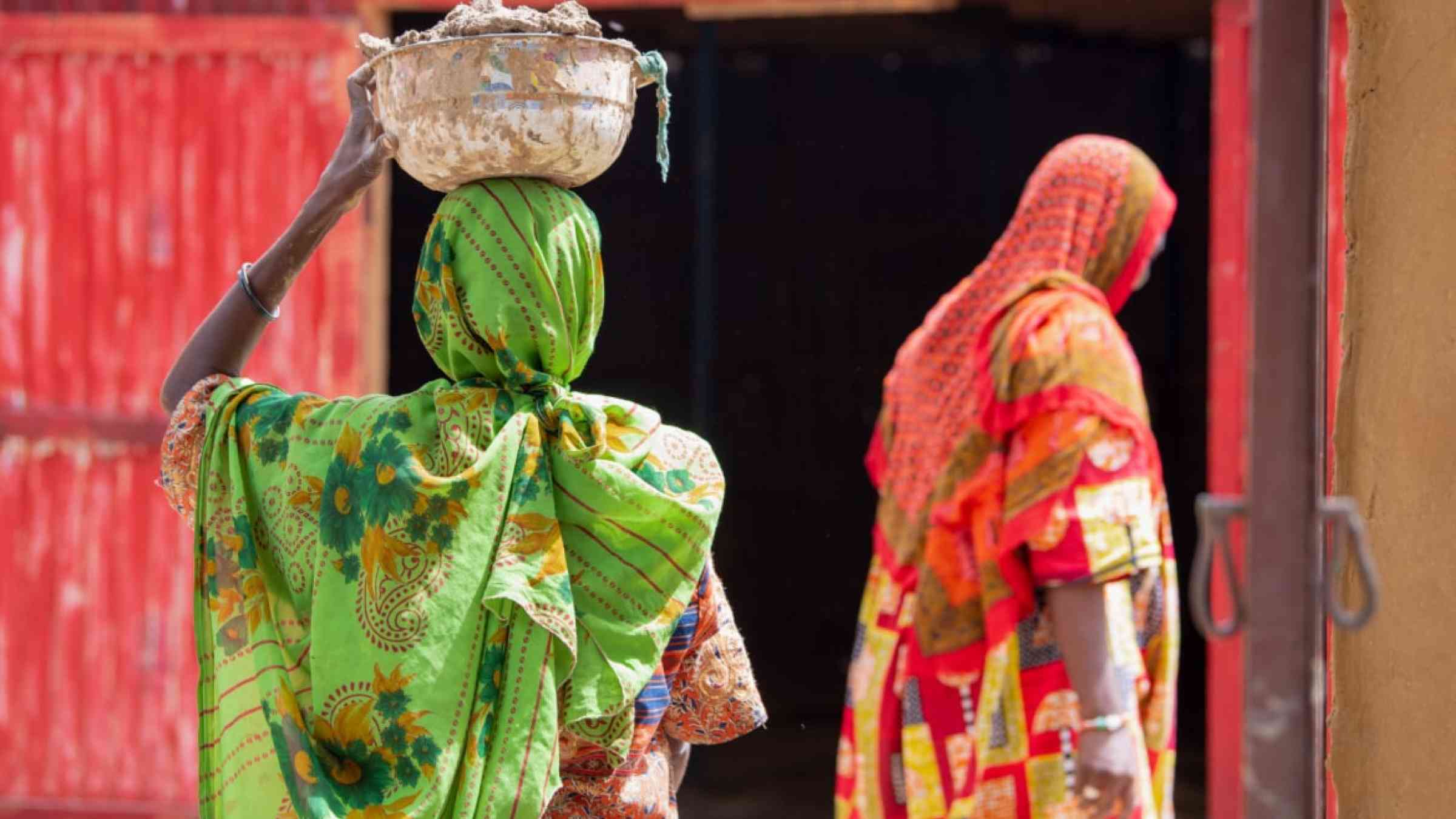
The lives and livelihoods of local communities in the borderlands of the Lake Chad Basin are disrupted by both climate change and conflict , which are mutually reinforcing. Conflict undermines social cohesion and public trust and degrades the ability of communities to adapt to the effects of climate change. At the same time, climate change adds additional stress on food, land, and water security, reinforcing the political and socioeconomic conditions that drive armed conflict. In the context of a long history of marginalization, underdevelopment, and weak governance in the region, this conflux can drive people to turn to armed groups in search of alternative governance structures, economic incentives, and spiritual and social dignity and meaning.
Over the past decade, countries in the Lake Chad Basin have adopted a regional approach to respond to these developments. We conducted research to gain insights into how these countries have come together to try to improve stability, resilience, and recovery in the face of climate-related threats to peace and security.
A regional strategy for stabilization, resilience, and recovery
In 2018, Cameroon, Niger, Nigeria, and Chad adopted a Regional Strategy for the Stabilization, Recovery and Resilience of the Boko Haram–Affected Areas of the Lake Chad Basin Region (RS-SRR). The first phase of the strategy ended in 2024, and a new adjusted strategy is now being implemented for 2025–2030. The strategy is complemented by a regional security cooperation agreement, the Multinational Joint Task Force (MNJTF). The RS-SRR and MNJTF aim to address both the symptoms and the underlying drivers of instability through a joint, holistic approach.
This regional approach is a multi-stakeholder effort driven by the governors of the territories bordering the Lake Chad Basin along with traditional leaders and civil society. Other stakeholders at the national, regional, and international levels provide political, technical, and financial support. The United Nations and a number of donor partners are supporting the strategy via a . The World Bank’s Lake Chad Region Recovery and Development Project also contributes to implementing the strategy.
Our initial rapid evidence assessment found that the first phase of the RS-SRR achieved a significant political milestone by bringing together political, humanitarian, development, civil society, and community actors to develop a shared understanding of the problem and to adopt a common strategy.
It was impressive in its ambition to holistically address the underlying drivers of the instability. It managed to link local communities and civil society with provincial authorities, national governments, subregional organizations, the African Union, and international partners. It has contributed to the revitalization of the Lake Chad Basin Commission—a body established by the countries in the region to manage Lake Chad and the sustainable use of its resources—and, more broadly, helped mobilize regional commitment to cooperate in resolving shared challenges. Compared with attempts to establish similar initiatives in the Great Lakes or Horn of Africa, the RS-SRR is unique in the way it is anchored at the level of governors, traditional leaders, and civil society, as well as in its ability to mobilize political, security, and financial support from regional and international partners.
The strategy has also contributed to security and enabled broader stabilization and recovery. We found that the activities of the regional programs implemented under the strategy facilitated the construction of road infrastructure, rehabilitation of state facilities, and renovation of basic facilities like schools, hospitals, marketplaces, and other infrastructure that were damaged or abandoned due to the activities of Boko Haram. The recovery projects undertaken under the auspices of the strategy have also helped bring some of the refugees and internally displaced people back to areas where stability has improved. In addition, they helped improve humanitarian access to the affected areas, despite some disruptions to aid delivery, which contributed to better data for early-warning systems. Overall, the strategy has demonstrated how regional-level funding and financing facilities can help stabilize regions that are often neglected while bringing more international and regional attention.
The missing link to climate
At the same time, the effort, energy, and funding for the RS-SRR have not been sufficient to make a significant impact on local communities across the region. In essence, while it was the right strategy, it ultimately lacks adequate scale, reach, and scope.
This is in part because the strategy has not given sufficient attention to the influence of climate change on insecurity in the region. Local communities experience the effects of climate change, such as flooding and desertification, as having had a severe impact on their ability to sustain their livelihoods. Climate change has reduced agricultural productivity, and some extreme weather events have eroded livelihood systems. This has contributed to unemployment, particularly among youth. Women and girls have been disproportionately affected, spending more time sourcing water, food, and fuel under increasingly difficult conditions, which in turn affects household stability.
The climate–conflict nexus in the Lake Chad Basin is not a simple story of climate causing conflict; it is a more complex and multidimensional interaction of stressors. Climate-related livelihood shocks reduce household coping capacity. Scarcity and displacement increase competition over land and water. Insecurity and weak governance enable opportunistic violence and criminality. The compounding effects create an environment where local disputes over grazing routes, farmland boundaries, water points, markets, or services can escalate rapidly, especially where mediation capacity is weak or where youth feel excluded from employment opportunities. Together, insecurity and climate change heighten the vulnerability of affected populations, in some cases resulting in maladaptation, leading people to engage in smuggling and other criminal activities or to join armed groups as a coping behavior.
To address these shortcomings, resilience and recovery strategies should explicitly prioritize the restoration of adaptive productive capacities such as farming, fishing, herding, and small trading. In the Lake Chad Basin, such capacities often depend on the management of a variety of natural resources. Without access to productive assets, households remain vulnerable to climate stress and displacement even where violence has declined.
We found that women-led cooperatives make a critical difference in enhancing the resilience of many communities. Many women have adopted coping strategies such as mutual saving mechanisms, food sharing, and other forms of mutual support, which have helped prevent social breakdown. Integrating women’s perspectives into early-warning, dispute-resolution, and livelihood-diversification initiatives would strengthen household and community-level resilience while addressing underlying gendered vulnerabilities.
Environmental peacebuilding through conflict-sensitive natural resource management—especially water access and control—should also be an important aspect of the strategy. Government and implementing partners should scale up support for natural resource management and local dispute-resolution mechanisms in affected communities to strengthen social cohesion and societal resilience.
Positioning climate change at the core of the strategy’s analysis and placing livelihood resilience and adaptive productive capacity at the center of its theory of change on conflict prevention and stabilization could reenergize the second phase of the strategy. A strategy with conflict-sensitive climate adaptation at its core would be more relevant to both the population of the region and the stakeholders involved in its implementation and generate new opportunities for networking and mobilizing .
There are a few lessons we can draw from the Lake Chad experience that may be useful for other regions suffering from climate-related insecurity. First, a shared vision or strategy is necessary but not sufficient. To have an impact, a strategy needs to be anchored politically from the local to the regional level. It also needs mechanisms to mobilize resources and coordinate, track, and assess implementation in order to facilitate iterative adaptation. Second, security actions need to be integrated with a holistic, multi-sectoral approach that is anchored in community resilience, not state security. Third, security gains are not sustainable if communities are not able to live with dignity. Resilience and adaptive capacity to climate-related stress on livelihoods and related cultural practices are thus critical for any strategy that aims to achieve and sustain stability.