
Getting post-disaster housing recovery right

“Good housing recovery programmes are all alike; every bad housing recovery programme is bad in its own way.” – Adapted from the opening lines of Leo Tolstoy’s novel Anna Karenina
A sense of recovery after a disaster only begins to seep in once people’s homes begin to take shape. This I saw firsthand when I started working as a freshly graduated architect rebuilding houses after an earthquake in the Indian Himalayas. It was a privilege to work with homeowners and local artisans to design simple rural houses that were earthquake resistant, drawing on the wisdom of vernacular building traditions while blending in modern materials and methods.
That early experience shaped my understanding of housing recovery, and laid a foundation for my approach to disaster risk reduction. I learnt that successful housing reconstruction is not just about the buildings: it sits at the intersection of culture, beliefs, livelihoods, social relations, local governance and economy, finance, building materials, skills, and the natural environment.
Architects and builders are not the central figures in this process. Starting with the affected families themselves, housing recovery involves many stakeholders: governments, community mobilisers, social workers, financiers, artisans, materials suppliers, and many others.
This lesson extends far beyond housing. Any approach that focuses solely on physical outputs – whether in post-disaster recovery, preparedness, or risk reduction– rarely delivers lasting results.
In (re)building a house, the process is as important as the product. As people’s homes start taking shape, recovery becomes tangible. The process can restore their agency, leading to better houses, more resilient recovery, and a sense of wellbeing. This, in fact, is a well-developed area of work within disaster risk management.
Since Ian Davis wrote Shelter after Disaster in the late 1970s, much has changed –mostly for the better. A substantial body of guidelines,manuals and training programmes is now available to support more holistic approaches to post-disaster housing recovery, alongside a growing body of longitudinal studies tracking recovery outcomes over time.

Gentle Reader,
I offer little new to this body of work. I write this because, despite decades of experience and guidance, housing recovery programmes still too often lose their way.
Here are five ways they falter, and some fixes:
Not talking about where to rebuild
Conversations about where to rebuild are difficult. Damage to housing in disasters is often due to location – flood plains, unstable slopes, or proximity to the coastline – and immediately after a disaster there is strong social pressure to move to safer locations.
However, over time, these demands evolve. Communities weigh catastrophic risk, such as a 1-in-50-year flood or a 1-in-100-year earthquake, against everyday risks around livelihoods, education and access to health services when homes are relocated far from workplaces, schools or hospitals. Land availability and the cost of infrastructure – roads, water, sanitation, power –also shape these reconsiderations.
In the absence of wide public consultation that addresses community aspirations, future risk, implications for livelihoods, costs, and all the other wider societal considerations of a community, the outcome is often worse than what was there before a disaster.
I have seen examples where entire relocated settlements of solidly built houses were completely abandoned by communities because of the impracticalities of day-to-day living far from livelihoods and social infrastructure. At the other extreme, I have seen houses being rebuilt in exactly the same high-risk locations, waiting to be impacted by the next event.
To make the right choices that avoid these pitfalls, we need to come up with methods that enable open, informed public conversation and consultation on these issues in the aftermath of a disaster. Government needs to lead this difficult conversation, but it has to be an open and informed discussion which includes the voices of all involved, including experts and community members.
Forgetting that no house is an island
… it is part of a habitat. Houses exist in relationships with their neighbours, with open spaces, with areas of economic activity, with community infrastructure, and with the natural environment.
This social fabric is the essence of placemaking. Yet housing recovery projects are still laid out as uniform rows of houses: each one well designed and solidly built, but in a dull relationship with its neighbours and disconnected from its surrounding landscape.
How can we approach housing recovery as an urban design challenge, rather than merely as a collection of houses? How can we develop methods of citizen engagement that allow residents to shape the settlement tissue that they want?
If we can foster such a conversation, we stand a better chance of delivering good houses as part of a dynamic habitat, infused with an overall sense of wellbeing.
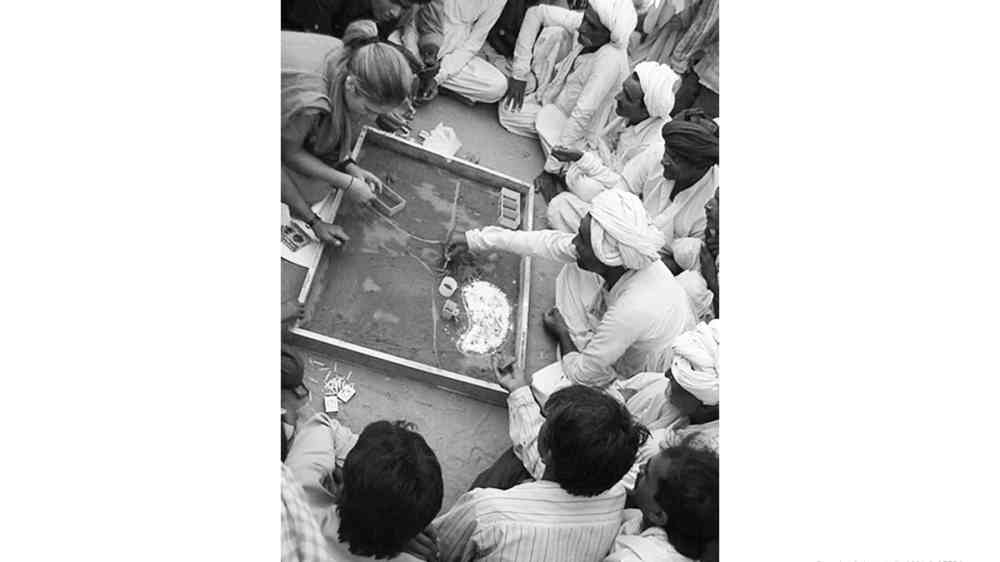
Community consultation led by SEEDS in a housing recovery project after the 2001 earthquake in Gujarat, India.
Not thinking enough about money for housing recovery
Housing reconstruction typically accounts for 35 to 50% of overall recovery needs after disasters. Yet, barring major disasters that attract international attention and support from international financial institutions (IFIs), housing reconstruction is often underfunded. As a result, much of the recovery cost is borne by individual homeowners, tipping many into a spiral of post-disaster economic vulnerability.
There is a crisis of imagination in financing post-disaster housing recovery.
We need to explore the expansion of the grant assistance available to households, and how it can be complemented by other sources – private capital, insurance payouts, concessional loans – so that a critical volume of funding is directed specifically towards resilient housing recovery. Governments should lay down clear policies and norms for post-disaster housing recovery, preferably as part of broader strategies for post-disaster recovery preparedness.
Not putting money in the hands of homeowners
Owner-driven reconstruction has become more widely accepted during the past two decades. Experience shows that allowing affected families to take charge of rebuilding their own houses – exercising their own resourcefulness, initiative and imagination – leads to better outcomes. When homeowners can access not only financial support but also technical assistance and capacity building, the results are stronger still.
For local administrations, working with thousands of individual households may be messier than managing a handful of building contractors, but the overall outcomes are far better. When funding flows only into the hands of government-appointed contractors, reconstruction does little to revitalise the local economy, and, in many cases, can feed corruption, graft and cronyism.
At the same time, owner-driven reconstruction is not always feasible. Some families face constraints that limit their capacity to rebuild on their own, so this approach should not become the new dogma for housing recovery. Each situation calls for a tailored mix of owner-driven and externally assisted approaches – but always placing the residents’ needs at the centre.
Not thinking about choice of technology
The history of housing reconstruction is full of examples where a new technology was introduced without sufficient consideration. One example is introducing ferrocement membranes for earthquake resilience, which, when used in hot climates, turn homes into furnaces. The result is houses that are safe from disasters but useless for everyday living. Such technologies are quickly rejected by local builders and residents, and so never achieve traction beyond the reconstruction programme.
A reconstruction programme is an opportunity to upgrade, or even transform, the local building industry. But this opportunity must be handled with care. We need to ask key questions: Will the technology make long-term financial sense? Are there sufficient local skills and capacity to extend its use and bring it to scale? Will it meet everyday needs, beyond providing safety? Will it have the momentum to influence incremental construction over the years and decades to come?
Gentle Reader,
By building on four decades of global experience in housing recovery, and by systematically avoiding these five mistakes, we can achieve a step change in post-disaster housing recovery.
We must stop treating housing as a series of construction projects and start delivering it as social infrastructure. This will require a multidisciplinary approach, using teams with expertise in all aspects of recovery, not just building.
Getting post-disaster housing recovery – and resilient housing more broadly – right would significantly reduce the number of people affected by disasters, advancing Target B of the Sendai Framework, where progress has stalled over the past decade.
In my next post, I will turn to a larger challenge: preventing losses in the housing sector. How can housing be planned, financed, and delivered so that resilience is embedded as a default, rather than added as an afterthought? Addressing the housing crisis in a way that ensures disaster resilience will require a structural shift across the development sector – but more about that soon!