
Between dust and deluge: The women on Brazil’s water frontlines
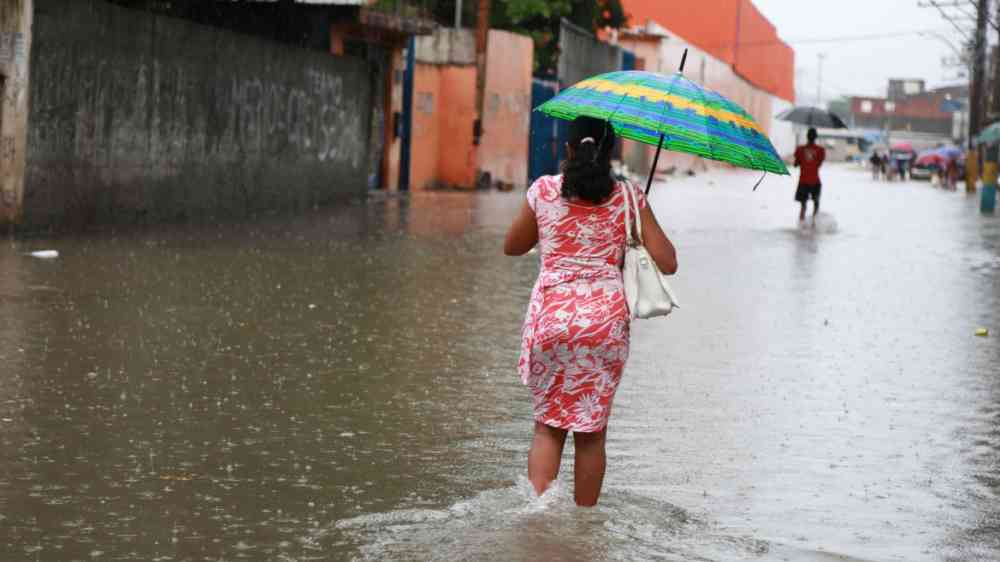
In the drought-stricken backlands of the sertão and the flooded river communities of the Amazon, women lead their households and communities through survival and recovery. They stand at the frontline of these climate extremes—when water comes too quickly, and when it doesn’t come at all.
I move between two Brazils shaped by water and crises: the dry backlands of the Sertão afflicted by drought and the river communities of the Amazon inundated by floods. In both instances, women stand on the frontline of these extreme climate events.
In the semi-arid northeast, drought is more than a weather pattern; it is a slow emergency that structures daily life. Thousands of kilometers away, on the Amazon floodplains, torrential downpours cause the rivers to overflow, swallowing homes and devastating communities.
In this photo story, I walk between these two landscapes with my camera following the women carrying the burdens of water scarcity and excess.
Sertão is the most populated semiarid region in the world located in Northeastern Brazil comprising parts of nine states. Here, women wake before dawn to walk long distances with buckets on head; their time and bodies consumed by the search for every possible litre.
The women are both heads of households and managers of scarcity, while the men migrate seasonally in search of income. Mothers and grandmothers calculate what each bucket can do: cook food, bathe children, wash clothes, care for the elderly.
People try to make a living on small clearings. What is referred to as formal employment doesn't exist in the rural northeast. If there’s no water, there are no crops, nor any earnings or anything to eat. In many cities, the state can only provide limited food and aid. Malnutrition becomes a constant threat. Forced migration through the dusty plains becomes a terrifying alternative.
Women and girls ration every glass of water while also holding their families and communities together. Mothers, grandmothers, daughters carry the weight of survival on their backs. Drought here is not an isolated disaster, it is a permanent negotiation of time, health, and opportunity.
While drought is cyclical in this region, the years surrounding 2005 marked a turning point where water scarcity began to metastasize from a regional hardship into a continental crisis. In 2005, the Amazon experienced a once-in-a-century drought. Driven by anomalous warming in the Tropical North Atlantic rather than the Pacific , the Amazon and Solimões rivers fell to historic lows, and the rainforest—usually a carbon sink—became a net source of carbon due to tree mortality.
By 2007, the severity of the drought in the Sertão had worsened. A temporary reliance on water trucks and rationed supplies in towns like Soledade evolved from an emergency measure into a chronic, structural reality.
The crisis prompted international interventions like the ' Gente de Valor ' project. Yet, for many, these measures came too late. Families were forced onto the roads as climate refugees . For too many, food shortages also meant the dread of monitoring their child's weight every day.
While drought drives away families in Sertão, flash floods force out families in the Amazon floodplains. As rivers overflow, homes built on stilts are still swallowed by brown water that rises into bedrooms and kitchens. Families evacuate to relatives’ houses, churches, school buildings–waiting days or weeks for the waters to recede.
In early 2015, the Acre River rose to a historic 18.40 meters—more than four meters above the critical overflow point— submerging 53 neighborhoods and displacing nearly 90,000 people . Described as the worst flood in 132 years, the event paralyzed infrastructure and proved that the region's hydrological volatility had exceeded all historical baselines. Floods remain a recurring threat in the area.
When the families return, women often lead the silent work of recovery. They scrape mud off the walls of their wooden houses, wash clothes in contaminated water, sort out what can be saved from soaked mattresses, school books, and family photographs.
They protect children from snakes and infections, and cook in improvised kitchens while their partners look for informal jobs using makeshift boats to traverse the submerged streets.
These events are no longer isolated anomalies but signals of a permanent climate-driven biome shift . Researchers have noted that the Sertão “ is under severe risk due to agriculture collapse .” Simultaneously, the broader Amazon region faces “weather whiplash,” swinging from the deluge of 2015 to the record dryness of 2021. Drought and flood impacts take years to heal. Compounded with timber extraction and habitat fragmentation, and fires , the women on the frontlines must navigate a landscape that is becoming increasingly hostile to human habitation.
This project aims at showcasing the rise in frequency and severity of these events, deepening existing inequalities in water access. The photos also reveal stories of resilience and solidarity. They also serve as a stark warning against complacency, reminding us that the stable climate, safety, and wealth we enjoy are fragile privileges. Each image invites us to look on with humility, to recognize that fair and sustainable water solutions must start by listening to and supporting the women who already lead every day at the edge of too little or too much.