1. Home
  2. Knowledge Base | PreventionWeb

Research briefs

Keep up to date with the latest research on disaster risk and resilience on the PreventionWeb knowledge base.

Explore cutting-edge research on disaster risk reduction and resilience through PreventionWeb's dedicated research briefs section. Our platform curates and highlights the most recent academic studies, providing valuable insights into disaster risk management. Each research brief distills key findings from peer-reviewed journals and academic publications.

Submit a research brief.

These briefs are designed to keep you informed about the latest scientific advances. Links to the full publications are always included, ensuring easy access to in-depth knowledge. Please note that this section exclusively features academic research, distinct from reports by international organizations or Non-Governmental Organisations.

Uploaded on
Research briefs

A team of researchers from the Seismology Group of the Department of Physics "Ettore Pancini," has reconstructed in detail how the Earth's crust changed after a 6.2-magnitude earthquake.

University of Naples Federico II
Research briefs

Researchers at Northeastern University used machine learning to aggregate nearly five decades of weather data to better understand the factors that lead to New England flooding.

Northeastern University
Women covering her head from the sun
Research briefs

Machine learning-based approach can help inform targeted public health interventions.

University of California, Irvine
Research briefs

Heatwaves in India are associated with increased home births, with differential susceptibilities across regions and populations, threatening maternal and newborn health.

Eos - AGU
Research briefs

The study uses two event definitions to understand the factors that contributed to flooding in the south-east. The first looks at the two-day rainfall event affecting Dublin, Wexford, and Wicklow, which were under an orange warning.

Maynooth University
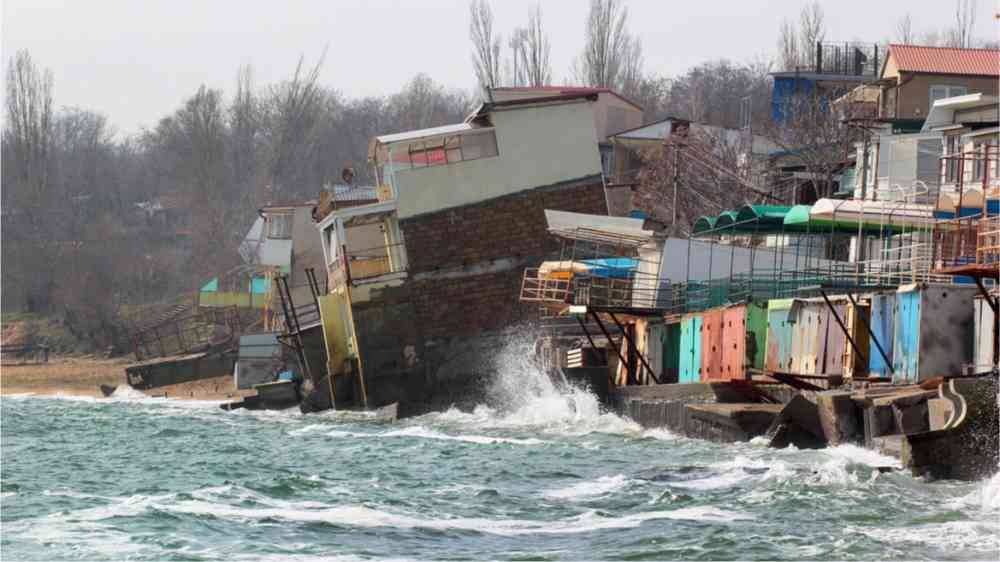
Houses being washed away through coastal erosion and sea level rise.
Research briefs

When polar ice sheets melt, the effects ripple across the world. The melting ice raises average global sea level, alters ocean currents and affects temperatures in places far from the poles.

Conversation Media Group, the
Research briefs

A new review shows how rising demand, shrinking supplies, and policy decisions together shape when groundwater use peaks and what can be done to avoid long-term depletion.

Eos - AGU
Research briefs

Earthquake forecasting tools powered by artificial intelligence (AI) can forecast the risk of aftershocks seconds after the initial tremor, a study by BGS, the University of Edinburgh and University of Padua suggests.

British Geological Survey