1. Home
  2. Knowledge Base | PreventionWeb

Research briefs

Keep up to date with the latest research on disaster risk and resilience on the PreventionWeb knowledge base.

Explore cutting-edge research on disaster risk reduction and resilience through PreventionWeb's dedicated research briefs section. Our platform curates and highlights the most recent academic studies, providing valuable insights into disaster risk management. Each research brief distills key findings from peer-reviewed journals and academic publications.

Submit a research brief.

These briefs are designed to keep you informed about the latest scientific advances. Links to the full publications are always included, ensuring easy access to in-depth knowledge. Please note that this section exclusively features academic research, distinct from reports by international organizations or Non-Governmental Organisations.
Uploaded on
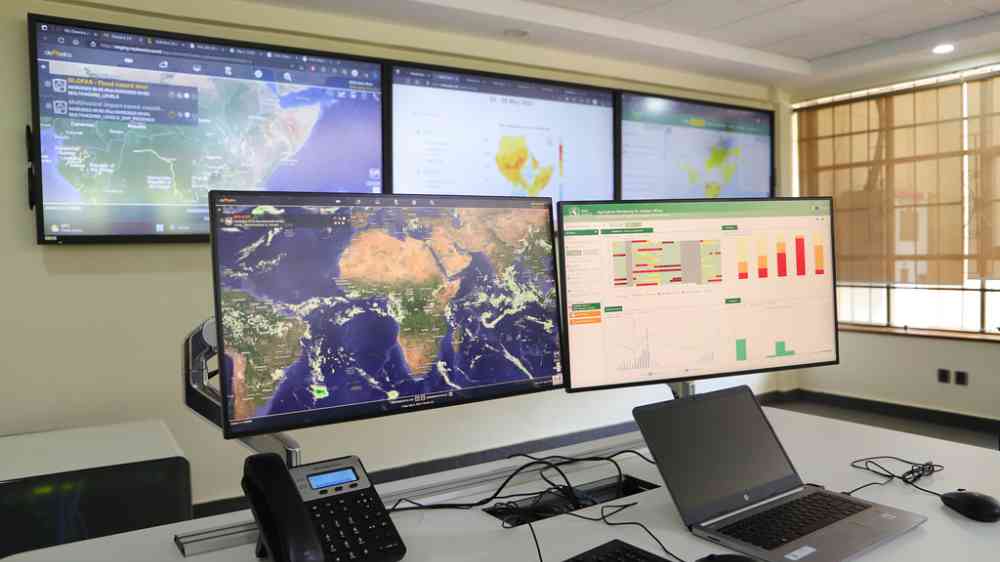
Computer screens showing maps and data
Research briefs

Researchers at the Institute of Industrial Science, The University of Tokyo (UTokyo-IIS) have developed a real-time data assimilation system that substantially improves streamflow and flood forecasting accuracy across Japan.

University of Tokyo 東京大学
Wave surge during a storm in northern France, in 2019.
Research briefs

Spring storms forming over the North Atlantic have become more common than they were 80 years ago, and this is due to climate change.

University of Gothenburg
Bulk sub-sea industrial glass fiber optic cable on a metal spool on a ship's stand. The yellow data line is coiled around a black reel in a storage yard. Internet communications spool storage yard.
Research briefs

Research led by the National Oceanography Centre has revealed that the greatest risks to subsea telecommunications cables serving small island nations are often concentrated close to island coastlines, where natural hazards and human activity overlap.

National Oceanography Centre
Person stretching arm for an Earth model at COP
Research briefs

Our novel artificial intelligence model can predict extreme storm surges with high accuracy, including under future climate conditions.

Conversation Media Group, the
Research briefs

Extreme weather events have increased in frequency and severity. A study shows that one proposed partial explanation may not be capable of explaining any of this increase in severe weather events.

Harvard John A. Paulson School of Engineering and Applied Sciences (SEAS)
Research briefs

Climate change is making southern Africa hotter. While much attention has focused on climate impacts like droughts, floods and food insecurity, another crisis is unfolding quietly inside classrooms.

Conversation Media Group, the
Man in an informal settlement in Ethiopia
Research briefs

Nearly a quarter of the land in Ethiopia is degraded. It has lost its quality and can no longer grow crops, support plant life, or hold water as it used to.

Conversation Media Group, the
Research briefs

Two new studies shed light on how hail might change as the world warms.

Conversation Media Group, the