1. Home
  2. Knowledge Base | PreventionWeb
  3. Themes

Inclusion

Ensuring an all-of-society engagement and partnership for DRR through empowerment and inclusive, accessible and non-discriminatory participation, paying special attention to people disproportionately affected by disasters, especially the poorest.
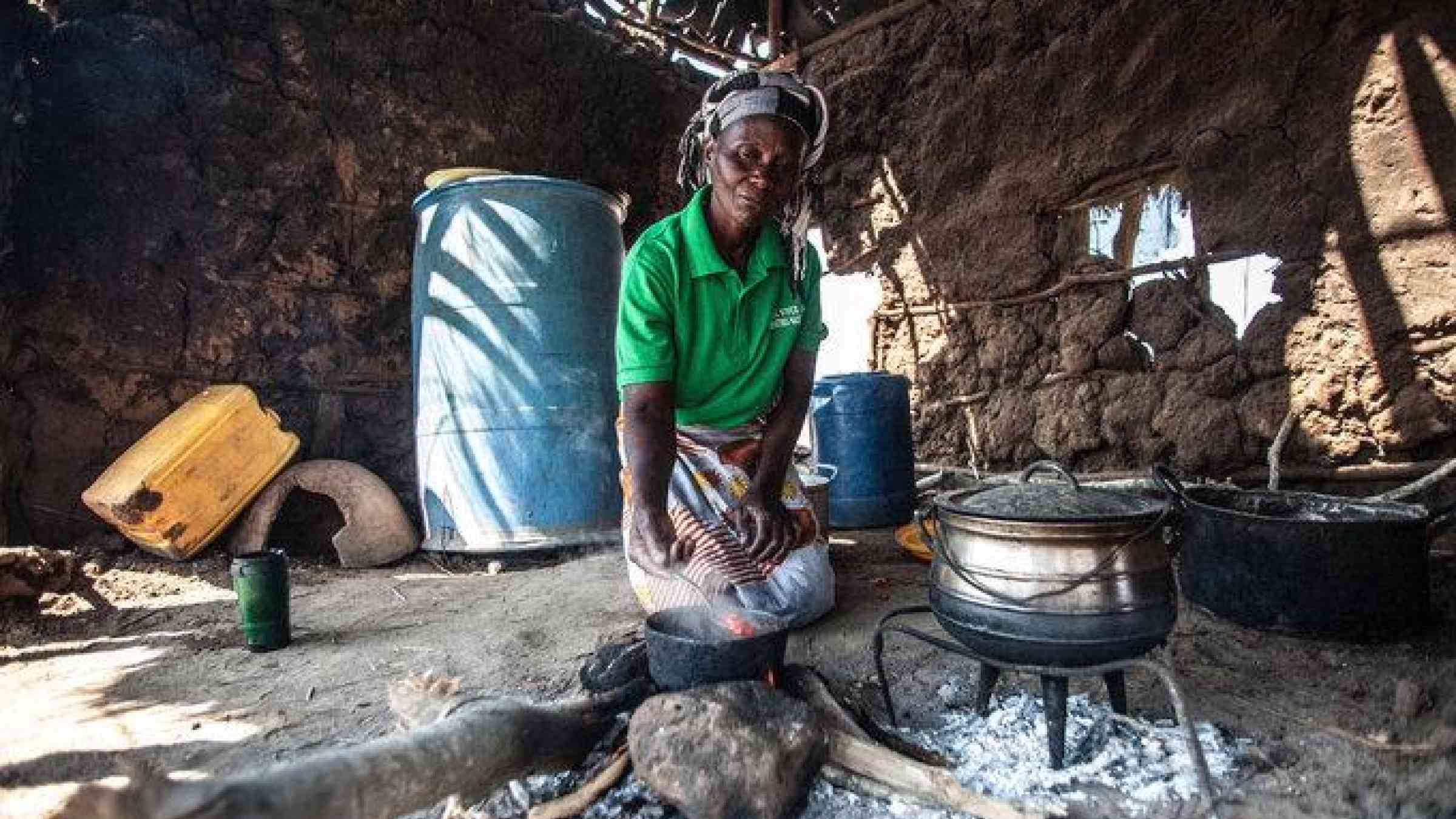
Here are five ways countries ensure persons with disabilities are not left behind when the next disaster strikes.

Latest Inclusion additions in the Knowledge Base

Uploaded on
Update

The Committee on the Elimination of Discrimination against Women is currently elaborating a General Recommendation on the Gender-Related Dimensions of Disaster Risk Reduction in a Changing Climate. The Committee has invited all interested parties to submit comments in writing by December 13, 2016.

Office of the United Nations High Commissioner for Human Rights
Update

The World Disasters Report 2016 warns only 40 cents in every $100 of development aid is spent on preparing for disasters and making them less likely to happen. At the same time, the world faces growing challenges that cannot be resolved by responding to humanitarian emergencies after they arise.

Thomson Reuters Foundation, trust.org
Documents and publications

This document discusses a project to set up an End-to-End Early Warning System to reduce the intensity of floods and resultant flood damage to Surat, India, especially within the Tapi river catchment. This paper is intended for stakeholders from national

TARU Leading Edge Pvt Ltd
Surat Municipal Corporation
Photo by Flickr user International Federation of CC BY-NC-ND 2.0 https://flic.kr/p/MJoKRy
Update

As we mark International Day of Disaster Risk Reduction it is important to ask why gender-based violence (GBV) increases during disasters? The destruction of homes forces families to relocate to temporary shelters, which can be crowded, badly designed and can exclude important safety measures. But where does our consistent failure to address GBV in disasters stem from?

International Federation of Red Cross and Red Crescent Societies (IFRC)
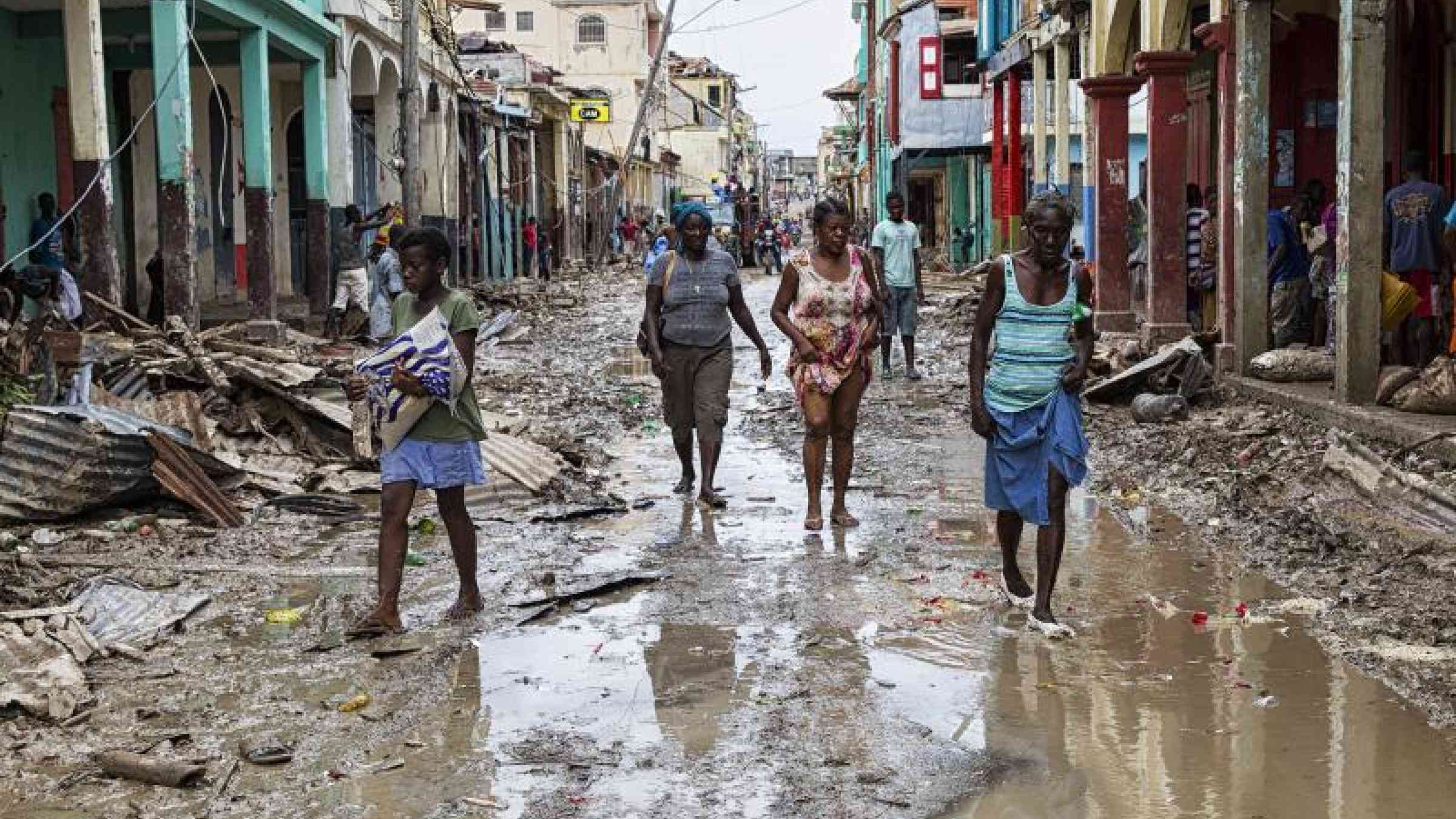
UN Photo/Logan Abassi
Update

The suffering that continues long after disasters strike, is not inevitable. International Disaster Reduction Day calls for a renewed focus on reducing disaster mortality, but the impact on survivors is of equal concern. Much more can be done to ensure peoples’ livelihoods are protected and action is taken in advance of a crisis to be better prepared.

Thomson Reuters Foundation, trust.org
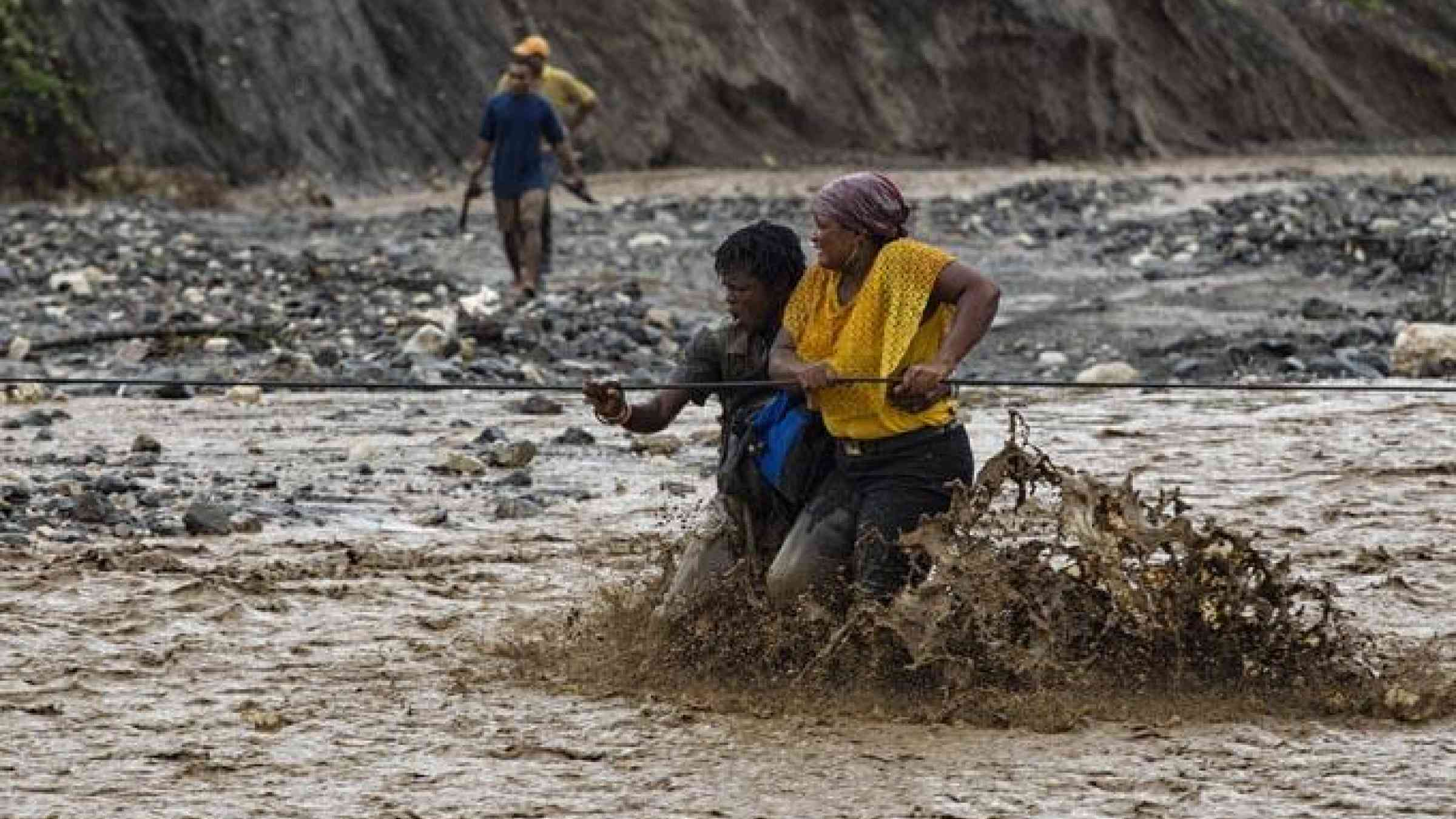
UN Photo/Logan Abassi
Update

Worldwide, women and girls are more likely than men to die in a disaster. What’s the solution? That was the question posed during a recent BRACED online debate, ahead of this year's International Day for Disaster Reduction. But what we first need to understand is how and why men and women are affected differently when disasters hit.

Building Resilience and Adaptation to Climate Extremes and Disasters
Documents and publications

This report analyses EM-DAT data of the Centre for Research on the Epidemiology of Disasters regarding disaster mortality and vulnerability around the world. Of the 1.35 million people killed by natural hazards over the past 20 years, more than half died

Centre for Research on the Epidemiology of Disasters (CRED)
United Nations Office for Disaster Risk Reduction (UNDRR)
Update

On 21-30 October 2016 the Arbeiter-Samariter-Bund (ASB) Nepal and Read Information and Resource Center (READ) together with the community resource centers and Disabled Peoples Organizations (DPOs) are joining the “Sendai Seven” campaign by launching series of inclusive-community based DRR initiatives and awareness raising campaigns across Nepal.

Arbeiter-Samariter-Bund Deutschland e.V.
Uploaded on