1. Home
  2. Knowledge Base | PreventionWeb
  3. Themes

Inclusion

Ensuring an all-of-society engagement and partnership for DRR through empowerment and inclusive, accessible and non-discriminatory participation, paying special attention to people disproportionately affected by disasters, especially the poorest.

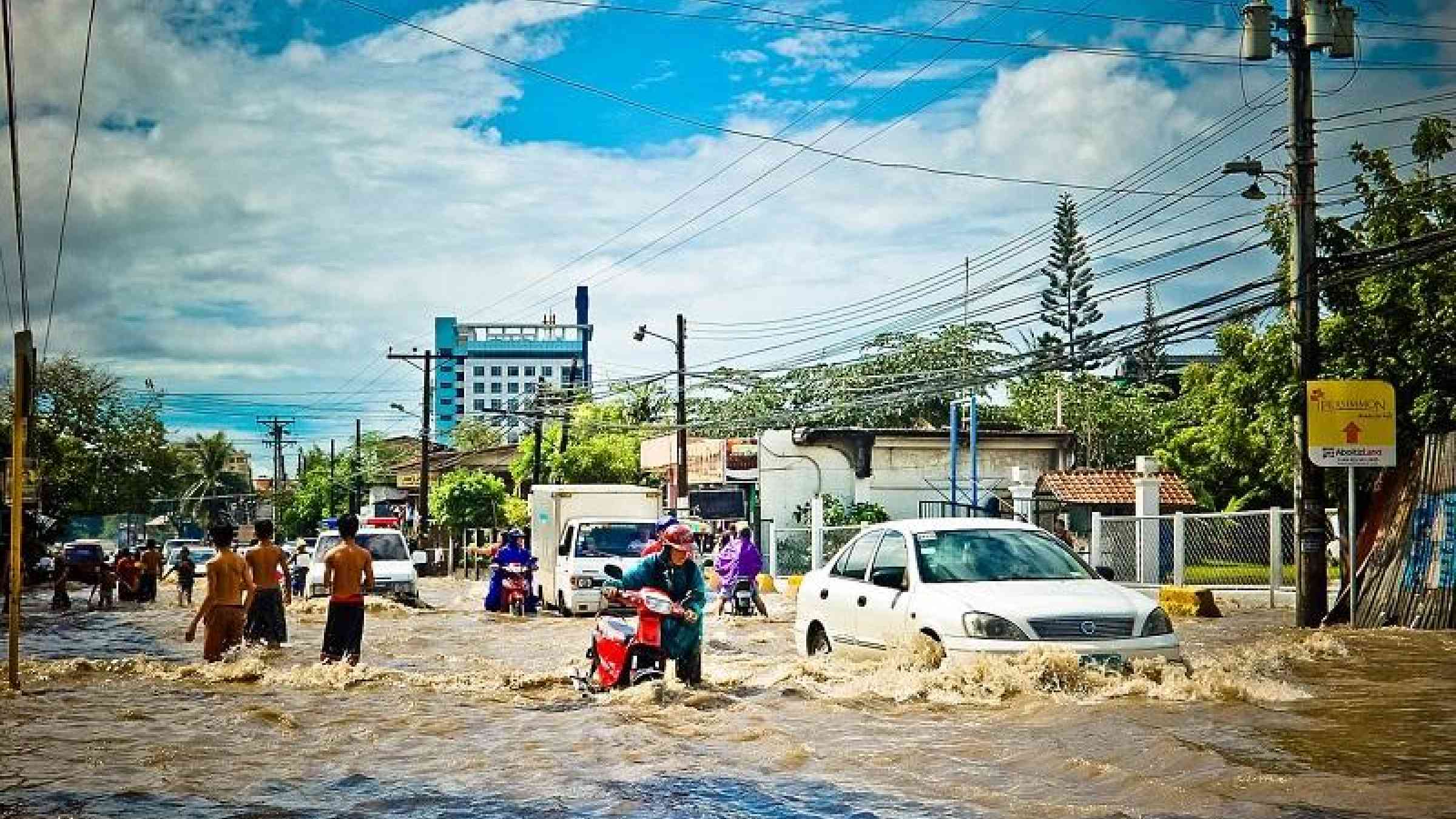
Here are five ways countries ensure persons with disabilities are not left behind when the next disaster strikes.

Latest Inclusion additions in the Knowledge Base

Uploaded on
Documents and publications

This report explains the 'inclusive' principles and programmatic approach of Handicap International in its efforts to manage disaster risk and build resilience, especially among highly at risk or vulnerable groups due to age, gender and disability. The

Humanity & Inclusion
Cecilia Sorensen

By C Sorensen, E. Calvello-Hynes, J Lemery

Global climate change is predicted to increase the frequency and impact of natural disasters and

Update

The ability to rebound and rebuild after a disaster is largely dependent on financial assets. Protecting the poor against natural hazards is a moral, economic, and social imperative. The poor can lose everything to disaster, and not just money. The report Unbreakable addresses this and provides policies to help reduce poverty and build resilience.

World Bank, the
Research briefs

New research shows that 'shadow networks' linking volunteers with authorities can help reduce volcanic risk in practice and improve disaster risk reduction management. The networks consist of community members working together with scientists and government officials on monitoring, communications and evacuation processes.

University of East Anglia
Documents and publications

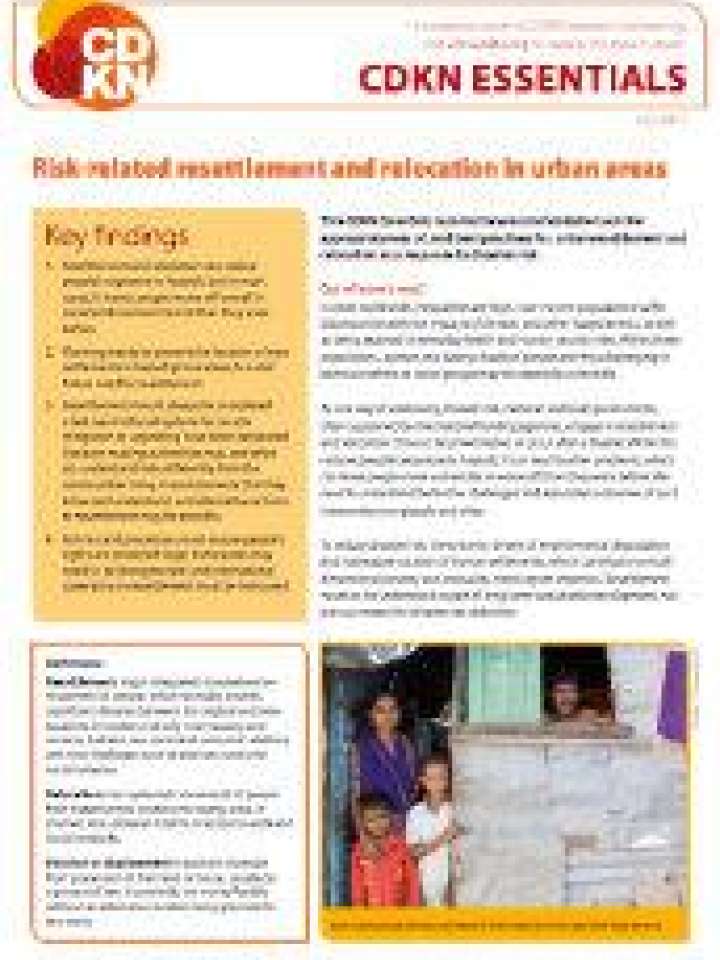
This brief summarises recommendations on the appropriateness of, and best practices for, urban resettlement and relocation as a response to disaster risk. It looks at the challenges and associated outcomes of preventative or post-disaster resettlement on

Climate and Development Knowledge Network
Update

Economic losses from natural hazards are now reaching an average of $250 billion to $300 billion a year, with a disproportionate impact on small and vulnerable countries. If the world is to eradicate poverty, address climate change and build peaceful, inclusive societies for all by 2030, greater efforts are needed to accelerate progress on the Sustainable Development Goals (SDGs), according to a United Nations report.

United Nations News Centre
Update

Children are severely affected by floods in Assam, India. Key problems concerning education, recreational activities and preparedness have been identified by non-profit organization Caritas India. Evening schools and extra-curricular activities will be set up in flood-prone villages to protect the children's right to education.

Caritas Internationalis
Ali Caglar Akgungor, AKUT Search and Rescue Association

How do we ensure that disaster preparedness messages reach all their intended audiences? How do we account for the needs of elderly people, children

Uploaded on