1. Home
  2. Knowledge Base | PreventionWeb
  3. Themes

Gender

Designing, resourcing and implementing gender-sensitive disaster risk reduction policies, plans and programmes. raising awareness of gendered vulnerabilities of men, women and LGBTs, and promoting inclusion and leadership of women and gender minorities in DRR.

The Gender Action Plan to support implementation of the Sendai Framework for Disaster Risk Reduction 2015-2030 (Sendai GAP) has been launched. The Sendai GAP identifies nine key objectives related to the four priorities of the Sendai Framework, and 33 recommended actions promote gender equality and the empowerment and leadership of women and gender stakeholders in disaster risk reduction. Access the GAP

Disaster preparedness, response and recovery services should be uniformly available to all.

Latest Gender additions in the Knowledge Base

Uploaded on
Labourers sit under tagaris (a pan to carry loads like soil) to protect themselves against the scorching sun, as they work at a site in Beawar.
Update

A landmark global economic analysis, paired with a state-of-the-art heat solution cost-benefit calculator covering 11,408 cities worldwide, shows that investing in heat action saves billions in losses.

HERA (Climate Resilience for All)
Children of slum women sit in a group on the floor at a Delhi daycare.
Update

HERA and its partners launched HERA Materna, the world’s first ever heat-pregnancy insurance program. Extreme heat is threatening pregnant women on the frontlines of the climate crisis, and until now no financial protection has existed to shield them.

HERA (Climate Resilience for All)
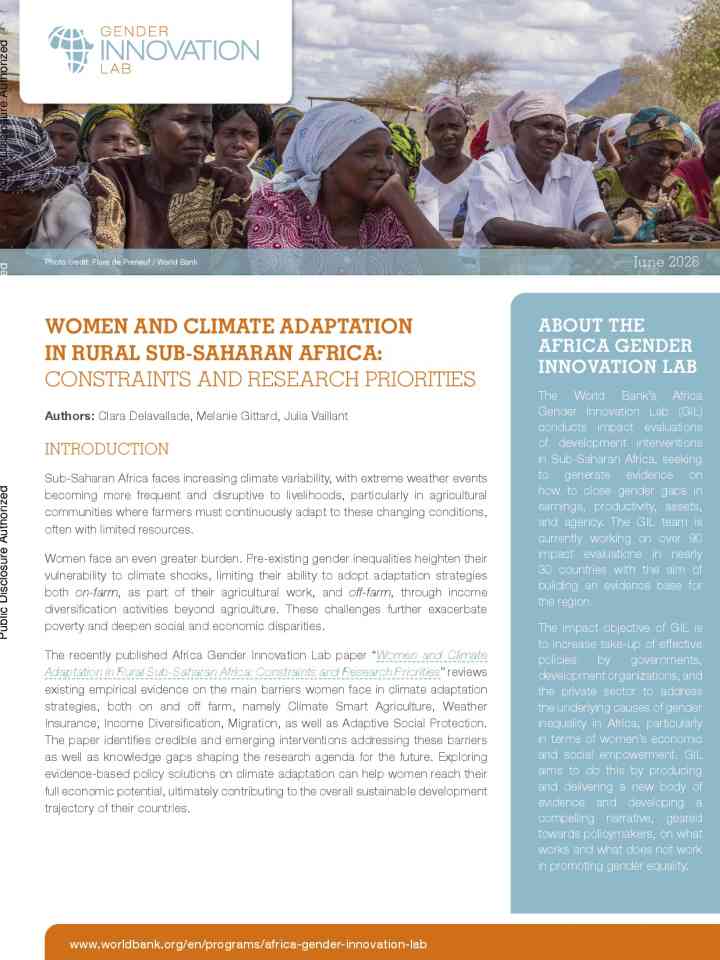
Women and climate adaptation in rural sub-Saharan Africa: constraints and research priorities thumbnail
Documents and publications

This brief reviews the empirical evidence on the barriers women face in adapting to climate change in rural Sub-Saharan Africa. A

World Bank, the
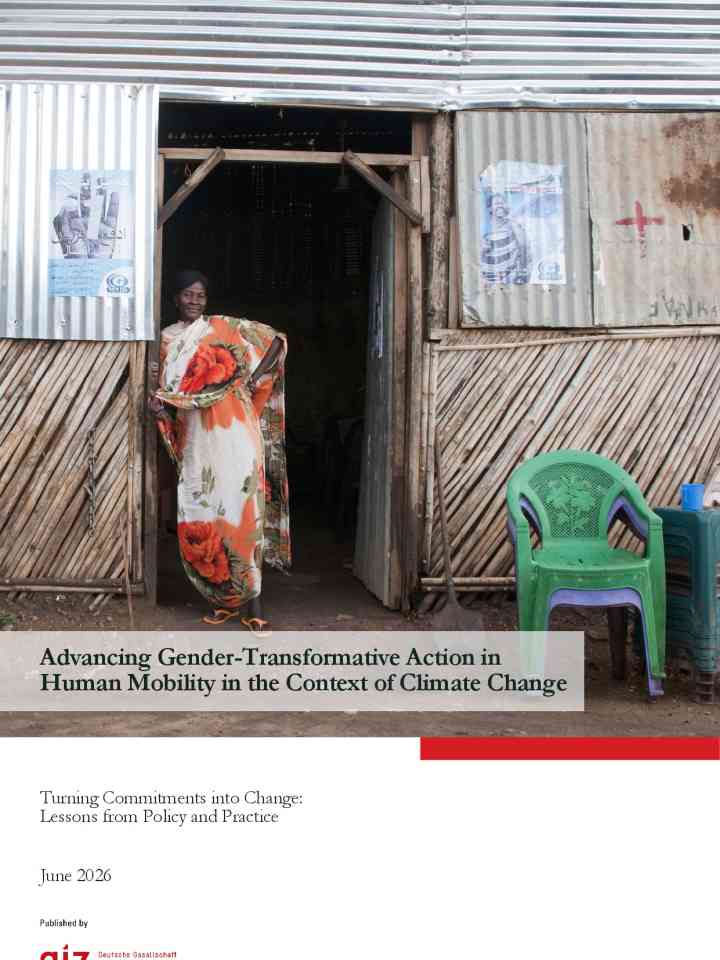
Advancing gender-transformative action in human mobility in the context of climate change thumbnail
Documents and publications

This publication explores how climate mobility programmes can move beyond gender-responsive approaches towards more gender-transformative change.

Deutsche Gesellschaft für Internationale Zusammenarbeit (GIZ)
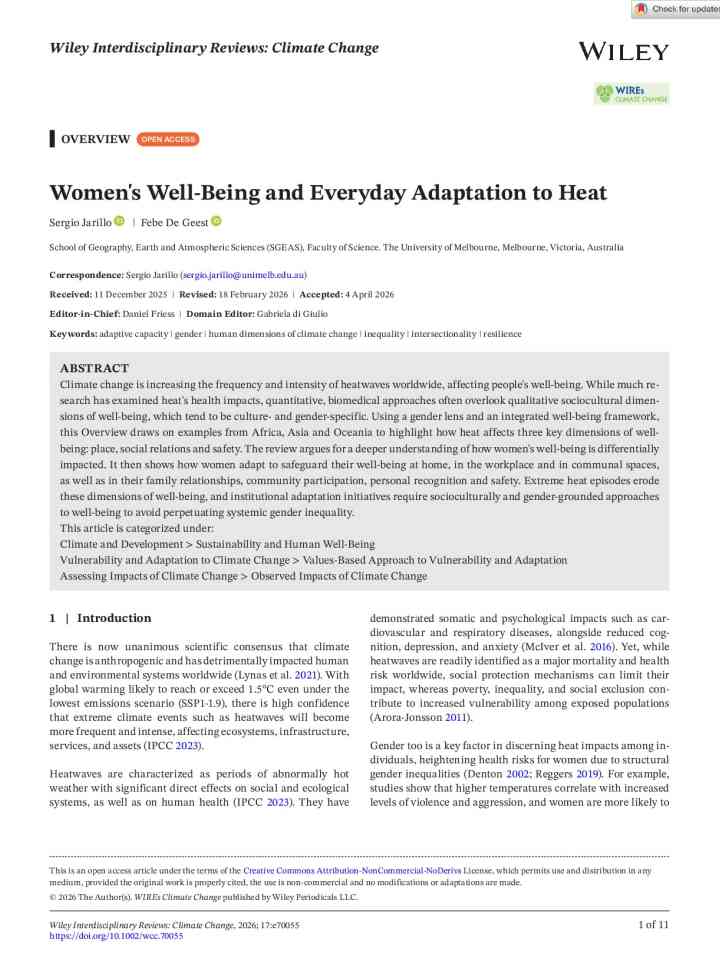
Women's well-being and everyday adaptation to heat thumbnail
Documents and publications

This review examines how extreme heat affects women’s well-being and highlights everyday adaptation practices across Africa, Asia and Oceania.

WIREs Climate Change
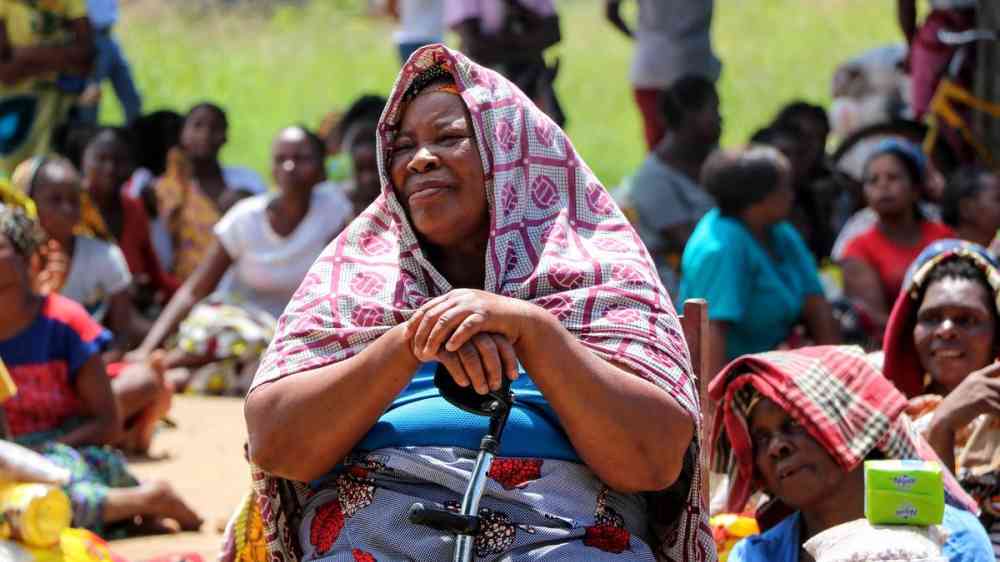
A woman after receiving her humanitarian kit after Cyclone Freddy - Mozambique
Research briefs

This research review, which looks at examples across Oceania, Africa and Asia finds that the people who are forced to adapt to the greatest extent are the ones that climate policies ignore the most.

Conversation Media Group, the
Update

Women experience heat differently due to physiological, occupational, and socio-economic factors; they cannot be considered an “invisible category” within climate governance

The Cool Down
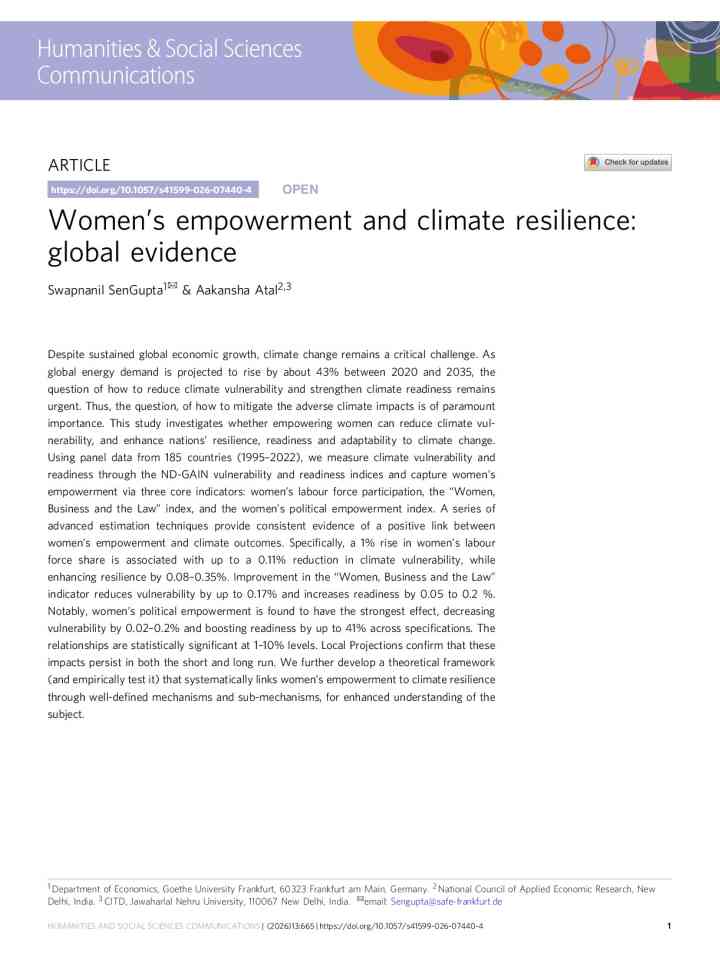
Women’s empowerment and climate resilience: global evidence thumbnail
Documents and publications

This study investigates whether empowering women can reduce climate vulnerability, and enhance nations’ resilience, readiness and adaptability to climate change.

Humanities and Social Sciences Communications (Nature)
Uploaded on