1. Home
  2. Knowledge Base | PreventionWeb
  3. Hazards

Technological hazard

Technical or technological disasters are caused by events that can be intense and sudden, induced by human processes. They originate from technological or industrial conditions, dangerous procedures, infrastructure failures or specific human activities (UNGA, 2016).

Technical systems are complex, with many dependent subsystems. The failure of one element within this system can cascade throughout the chain, causing a series of failures leading to a disaster. Technical hazards are increasing due to the scope of technological expansion. They include industrial activity that includes dangerous conditions, processes, all transport systems (land, sea, air), defensive or offensive weapons systems and power plants.

By 2050, most of humanity will live downstream of large dams built in the 20th century.

A new set of emerging technological risks under the Sendai Framework includes Information and communications technology (ICT)-related hazards. The increasing dependence upon complex large-scale network architectures of information technologies also increases exposure to cybersecurity threats. These threats include computer viruses, worms, Trojan horses, malware, spoofing attacks, identity theft, the theft and illegal disclosure of data, the loss of data and contamination of data. They have the potential to disrupt essential infrastructure operations such as communication, health, banking, transportation, energy, education and many other services.

Risk factors

  • Ageing, abandoned or idle installations.
  • Insufficient institutional and legal capacities.
  • Natural hazards: storms, landslides, floods or earthquakes can cause industrial accidents.

Vulnerable areas

  • Residential communities around industrial establishments tend to be most at risk because of their proximity.

Risk reduction measures

  • Assess the risks before planning and building critical infrastructure.
  • Develop policies and practices for continuity management.
  • Integrate the risks into planning, foresee and reduce cascading effects.
  • Create a hazard map to identify people at risk and their vulnerability.
  • Draft national, regional and local response plans.
  • Put in place early warning/monitoring systems to inform response.
  • Ensure contingency and response plans are in place at a national and local level to evacuate people on time.
  • Assess new technologies.
  • Improve crisis communication before, during and after the event.
  • Organize training and exercises for complex scenarios involving multiple interdependent failures.
  • Educate and raise awareness on potential risks.

Latest Technical Disaster additions in the Knowledge Base

Uploaded on
Documents and publications

This document presents Uzbekistan’s disaster risks and natural hazards, such as earthquake, landslide, flood and drought, and discusses institutional and legal framework for disaster management in the country. It also sets out key areas of focus such as

Ministry of Emergency Situations (Uzbekistan)
Cover
Documents and publications

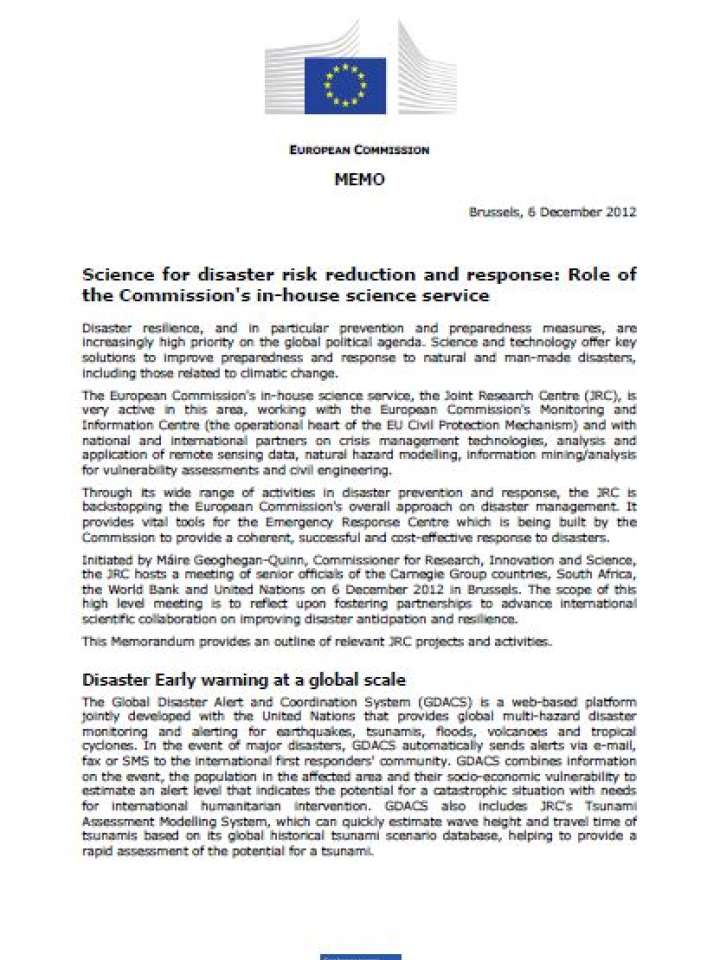
The brochure provides an outline of relevant Joint Research Centre (JRC)'s projects and activities in disaster resilience, in particular prevention and preparedness measures, in collaboration with the European Commission's Monitoring and Information

European Commission Joint Research Centre
Documents and publications

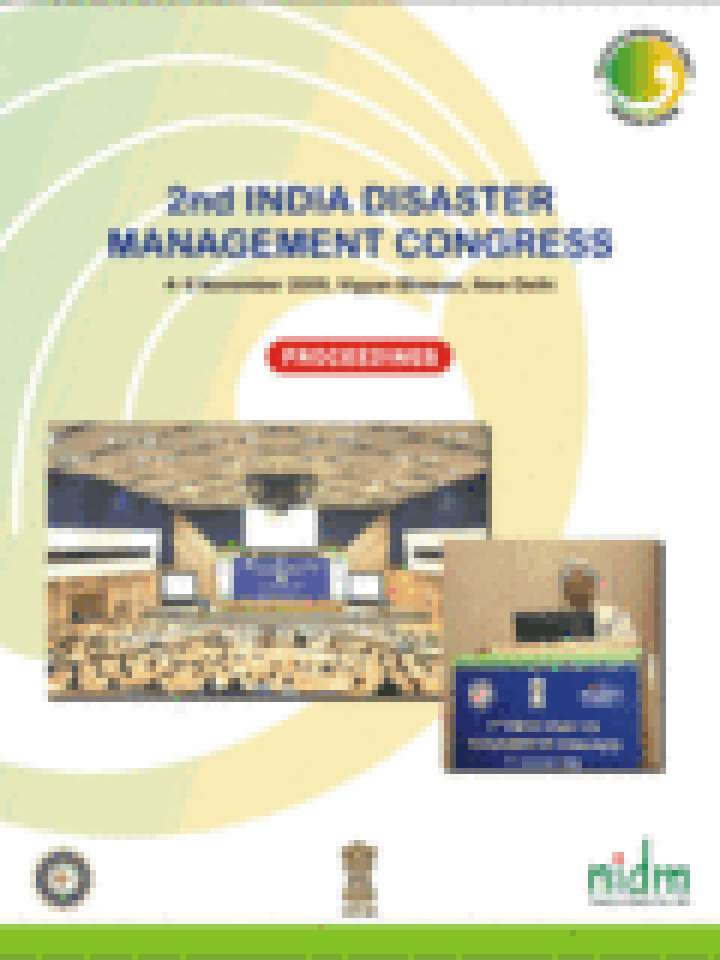
This publication reports on the discussions and outcomes from the Second India Disaster Management Congress organized by National Institute of Disaster Management (NIDM), India and held on 4-6 November, 2009 in New Delhi. The report presents a total of 26

National Institute of Disaster Management (India)
Update

AFP reports on efforts to increase residents' resilience in the event of a big earthquake in Tokyo's Sumida district - 'a picturesque throwback to the Japan of yesteryear' with narrow streets and wood-framed homes. 'People want to live and work here. This is why we are working to make the area more resistant to earthquakes and fires,' the head of a local residents' association told AFP...

Agence France Presse
Update

Suite aux inondations de cette année au Sénégal, Sud Quotidien questionne la mise en oeuvre du programme national de réduction des risques de catastrophes. Ce programme, qui a été validé en 2011 et qui représente un coût de 4 milliards de francs CFA, devait permettre entre autres de maitriser les risques relatifs aux catastrophes...

SudQuotidien, Groupe Sud Communication
Update

'Both the government and companies should establish a new philosophy of disaster prevention that requires safety and disaster measures against any massive accident and disaster regardless of event probability,' the a report requested by the Japanese government found...

Thomson Reuters
Update

UNICEF, Humanitarian Aid and Civil Protection department of the European Commission, the Government of Azerbaijan and Oxfam are joining efforts to improve disaster preparedness and response in the country, starting with children. 'Teaching about disaster risk reduction needs to start with children, and to involve parents and other community members as well...'

European Commission’s Directorate-General for European Civil Protection and Humanitarian Aid Operations (DG ECHO)
Update

A new ISO standard intended for use by fire safety practitioners will help them better assess fire risks in all types of scenarios, in order to select effective and cost-effective technologies and strategies, and compare alternatives...

International Organization for Standardization
Uploaded on