1. Home
  2. Knowledge Base | PreventionWeb
  3. Hazards

Landslide

Landslide is the downslope movement of soil, rock and organic materials under the effects of gravity, which occurs when the gravitational driving forces exceed the frictional resistance of the material resisting on the slope. Landslides could be terrestrial or submarine (Varnes, 1978).

Landslides can be triggered by geological and physical causes such as glacier or snow melts, heavy rains and water pressure, earthquakes, volcanic eruptions and overly steep slopes. Landslides can also be triggered by human action, the most common being building on unstable slopes. Submarine landslides, or massive slides and rock falls hitting the sea can also cause tsunamis.

Landslides can reach speeds of over 50 km/h and can bury, crush or carry away people, objects and buildings. Landslides cannot be predicted but warning systems measuring rainfall levels can provide warning to people living in landslide-prone areas.

Instrumental monitoring to detect movement and the rate of movement can be implemented, for example, extensometers, global positioning system (GPS), seismometers, aerial photography, satellite images, LiDaR (Highland and Bobrowsky, 2008), with varying degrees of success. Increasingly, the science of landslide physics is allowing the nature of these hazards to be understood, which is leading to better techniques through which they can be managed and mitigated (HIP).

Risk factors

  • Population growth
  • Rapid urbanisation
  • Environmental degradation (deforestation and inappropriate use of lands and slopes)
  • High population density, heavy rainfall and rapid land use changes increase the instability of slopes

Risk reduction measures

  • Early warning systems to observe and alert before landslides happen
  • Hazard maps to identify landslides risk and vulnerabilities
  • Integrate landslide risk assessment into urban planning strategies
  • Building codes and standards for materials that reinforce landslide resilience
  • Improve drainage, building tunnels and trenches to stabilise slopes
  • Protect forest cover and regulate logging
  • Raise awareness of landslide risk
  • Regular drills and community evacuation exercises
  • Establish national, regional, and local evacuation plans
Latest Land Slide additions in the Knowledge Base

Uploaded on
This is the first page of the paper.
Documents and publications

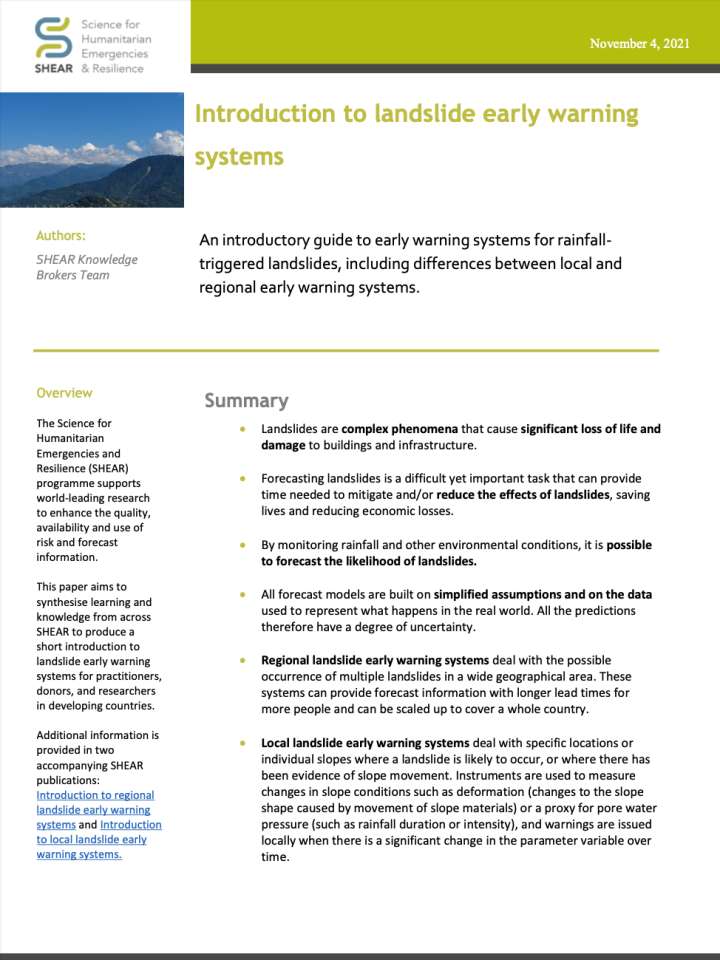
This is an introductory guide to early warning systems for rainfall- triggered landslides, including differences between local and regional early warning systems.

Science for Humanitarian Emergencies and Resilience
This is the first page of the paper.
Documents and publications

This is an introductory guide to local rainfall-triggered landslide early warning systems. This guide includes an overview of monitoring and warning methods, the role of community engagement, and challenges to local landslide early warning systems

Science for Humanitarian Emergencies and Resilience
This is the first page of the paper.
Documents and publications

This is an introductory guide to regional early warning systems for rainfall-triggered landslides. This guide includes an overview of data used, institutional roles, and dissemination and communication approaches. 

Science for Humanitarian Emergencies and Resilience
This is the coverpage of the publication.
Documents and publications

This document aims to succinctly summarize the climate risks faced by Papua New Guinea (PNG). This includes rapid onset and long-term changes in key climate parameters, as well as impacts of these changes on communities, livelihoods and economies.

World Bank, the
Cover and title of publication
Documents and publications

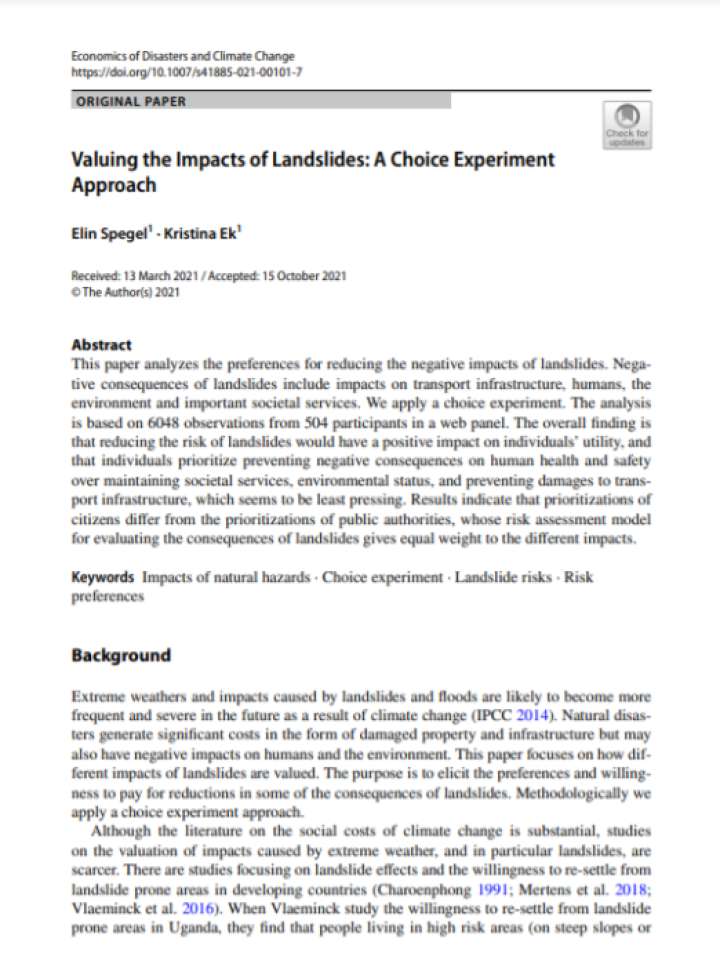
This paper analyzes the preferences for reducing the negative impacts of landslides including on transport infrastructure, humans, the environment and important societal services.

Economics of Disasters and Climate Change (Springer)
Update

Following fatal landslides, the town of Sitka, Alaska, worked with scientists to create a new, individualized hazard warning system, revealing the complexities of coproducing knowledge.

Issues in Science and Technology
Cover
Documents and publications

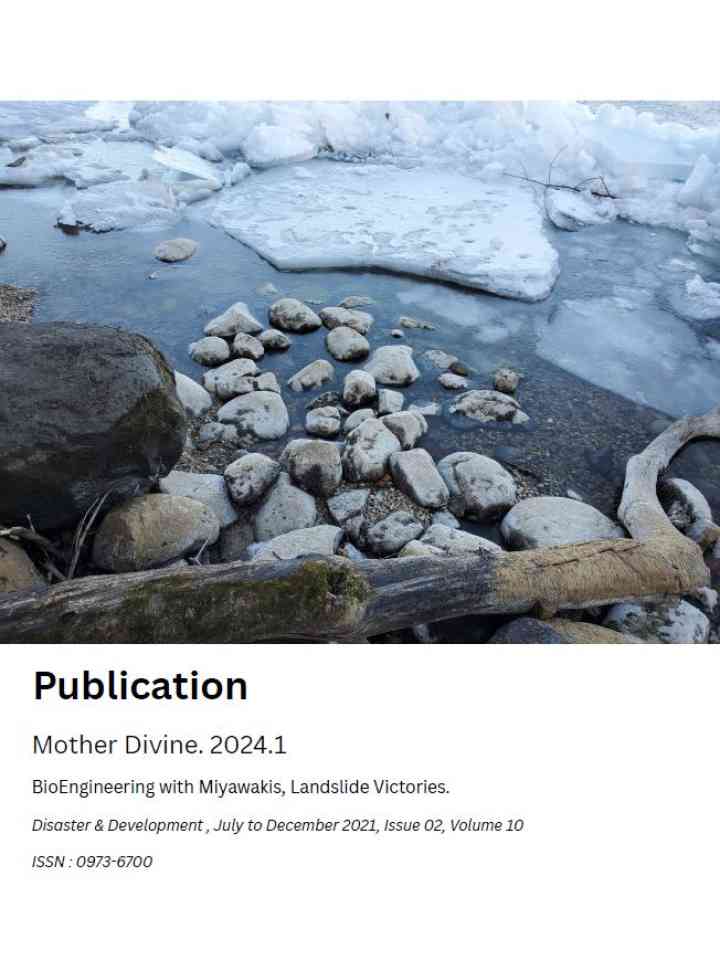
This study presents various case studies of effective bioengineering-based landslide risk reduction in the Indian Himalayan Region, other parts of India, and globally.

Mother Divine
Research briefs

New research provided an unprecedented assessment of how landslide distributions can be affected by extreme events, showing how the 2015 Gorkha earthquake also triggered thousands of landslides that caused additional destruction.

University of Plymouth
Uploaded on