1. Home
  2. Knowledge Base | PreventionWeb
  3. Hazards

Landslide

Landslide is the downslope movement of soil, rock and organic materials under the effects of gravity, which occurs when the gravitational driving forces exceed the frictional resistance of the material resisting on the slope. Landslides could be terrestrial or submarine (Varnes, 1978).

Landslides can be triggered by geological and physical causes such as glacier or snow melts, heavy rains and water pressure, earthquakes, volcanic eruptions and overly steep slopes. Landslides can also be triggered by human action, the most common being building on unstable slopes. Submarine landslides, or massive slides and rock falls hitting the sea can also cause tsunamis.

Landslides can reach speeds of over 50 km/h and can bury, crush or carry away people, objects and buildings. Landslides cannot be predicted but warning systems measuring rainfall levels can provide warning to people living in landslide-prone areas.

Instrumental monitoring to detect movement and the rate of movement can be implemented, for example, extensometers, global positioning system (GPS), seismometers, aerial photography, satellite images, LiDaR (Highland and Bobrowsky, 2008), with varying degrees of success. Increasingly, the science of landslide physics is allowing the nature of these hazards to be understood, which is leading to better techniques through which they can be managed and mitigated (HIP).

Risk factors

  • Population growth
  • Rapid urbanisation
  • Environmental degradation (deforestation and inappropriate use of lands and slopes)
  • High population density, heavy rainfall and rapid land use changes increase the instability of slopes

Risk reduction measures

  • Early warning systems to observe and alert before landslides happen
  • Hazard maps to identify landslides risk and vulnerabilities
  • Integrate landslide risk assessment into urban planning strategies
  • Building codes and standards for materials that reinforce landslide resilience
  • Improve drainage, building tunnels and trenches to stabilise slopes
  • Protect forest cover and regulate logging
  • Raise awareness of landslide risk
  • Regular drills and community evacuation exercises
  • Establish national, regional, and local evacuation plans

Latest Land Slide additions in the Knowledge Base

Uploaded on
Update

Residents living near slopes or hilly areas need to be exposed to knowledge and ways to to identify early landslide indications in their housing areas to reduce the risk of fatalities.

Malaysian Reserve, the
Research briefs

Scientist Sam Purkis discovered evidence of a 500-year-old landslide, and a sizable tsunami, that could have implications for coastline development of coastlines in Egypt and Saudi Arabia.

University of Miami
Update

Little done in response to repeated warnings of risks of mountainside construction in Brazil, researchers and public servants say.

Al Jazeera Satellite Network
Research briefs

Accurately predicting localized, intense rainfall is critical for keeping communities safe from landslides and flash floods.

American Geophysical Union
Cover and title of publication
Documents and publications

This guide offers an operational understanding of both the country’s disaster management capability and information on demographics, hazards, infrastructure, laws and guidelines, risks and vulnerabilities, and other key areas.

Center for Excellence in Disaster Management & Humanitarian Assistance (CFE-DMHA)
This is the first page of the paper.
Documents and publications

This study examines Southern West Africa (SWA), an example of “late-stage” deforestation, ongoing since 1900 within a 300-km coastal belt. Deforestation affects local and regional hydroclimate through changes in heating and moistening of the atmosphere.

Proceedings of the National Academy of Sciences of the United States of America (PNAS)
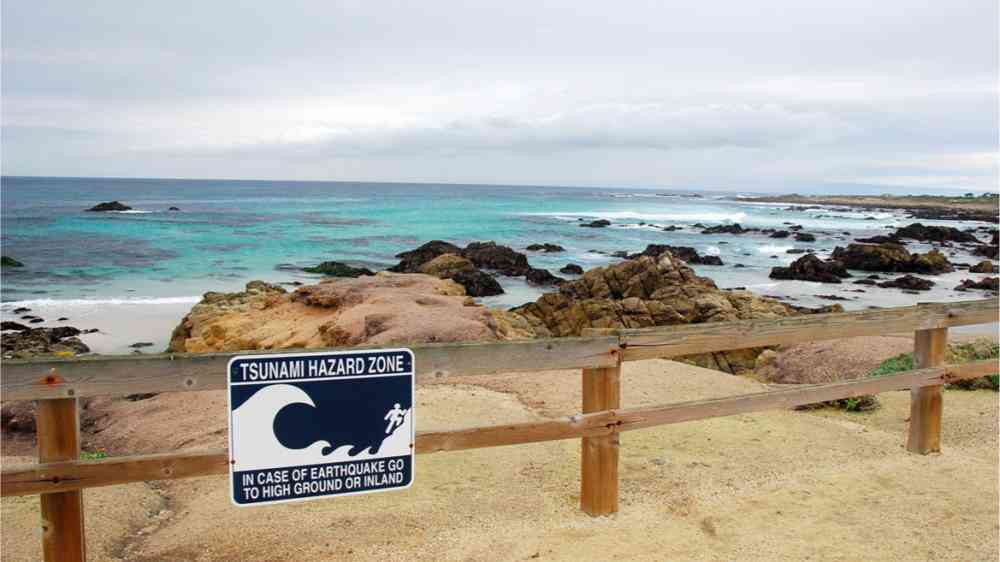
Tsunami warning signs along the Pacific coastline in California
Update

The enormous eruption of the underwater volcano in Tonga, Hunga Tonga-Hunga Ha'apai, triggered a tsunami that reached countries all around the Pacific rim, even causing a disastrous oil spill along 21 beaches in Peru.

Conversation Media Group, the
Cover
Policies and plans
Policy type
Local policies and plans

This document includes the construction process of the Emergency Plan of the Palmira Parish Center of the Guamote canton.

Gobierno Autónomo Descentralizado Municipal del Cantón Guamote
Uploaded on