1. Home
  2. Knowledge Base | PreventionWeb
  3. Hazards

Insect infestation

An insect pest infestation is a recently detected insect pest population, including an incursion, or a sudden significant increase of an established insect, disease agents or weed population in an area leading to damage to plants in production fields, forests or natural habitats and causing substantial damage to productivity, biodiversity or natural resources (adapted from FAO, 2019).

This planting technique reduces crop losses and improves food security.

Risk factors

Higher temperature, severe and extreme weather events and drought stress can all result in reduced vigour of trees, making them more vulnerable to outbreaks of native and introduced pests and diseases. For example, the dieback of millions of hectares of pine forests caused by outbreaks of native bark beetles in Central America, Europe and North America is associated with climate change, impacts of extreme weather events, and, in some cases, inadequate forest management practices (FAO, 2020b).

Favourable climatic conditions, disruption of ecosystems and negligence of crop/forest hygiene contribute to growth in insect populations which can cause substantial damage regularly. In many cases, long distance spread of insects results from transportation of infested goods.

Risk reduction measures

Following principles of sustainable plant production, sustainable forest management and integrated pest management practices are the best approach for control, focusing on diversified production systems, regular surveillance, preparedness before potential outbreaks, and a rapid response to prevent escalation to unmanageable scales (Guzewich et al., 1997). Post disaster needs assessment (PDNA) is designed to evaluate immediate needs for recovery and restoration for better disaster response (HIP).

Latest Insect infestation additions in the Knowledge Base

Uploaded on
Update

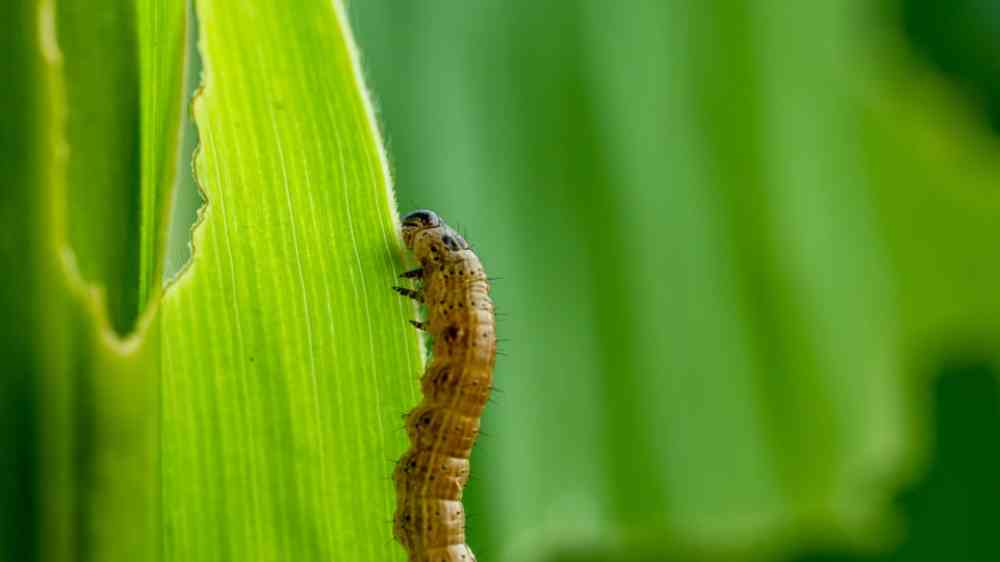
Climate change is fuelling the spread of crop-destroying fall armyworm in Zimbabwe, dealing another blow to drought-hit farmers.

Context
Research briefs

Insect predators found in the United States could help keep spotted lanternfly populations in check while potentially reducing reliance on chemical control methods, according to a new study conducted by researchers at Penn State.

Pennsylvania State University
Cover
Documents and publications

This study examines the effects of cold plasma seed treatment on the growth and development of herbivores, using rice and FAW as models.

Nature Scientific Reports
Cover
Documents and publications

These guidelines provide information on relevant safety and environmental precautions when controlling Desert Locust and other types of locusts and some grasshoppers.

Food and Agriculture Organization of the United Nations (FAO)
Locust in Yemen
Update

FAO has released an updated version of its desert locust guidelines, focusing on safety and environmental precautions. These updated guidelines are designed to help manage desert locust control operations.

Food and Agriculture Organization of the United Nations (FAO)
Research briefs

Scientists have demonstrated that Wrinkle-lipped free-tailed bats hunt at impressive altitudes of up to 1,600 metres above ground – the altitude at which many planthoppers fly, which are dreaded insect pests of rice plants.

Leibniz Institute for Zoo and Wildlife Research
Update

In the vast arid regions of India, under the scorching sun, a dedicated field team of desert locust survey officers, accompanied by FAO's Locust Forecasting Officer, set out to survey desert locust incidence.

Food and Agriculture Organization of the United Nations (FAO)
Influence of climate on desert locust (Schistocerca gregaria Forskål, 1775) Plague and migration prediction in tropics
Documents and publications

This study employs statistical modeling to assess desert locust suitability across India, revealing that over 40% of western and central regions face high vulnerability to future outbreaks.

Nature Scientific Reports
Uploaded on