1. Home
  2. Knowledge Base | PreventionWeb
  3. Hazards

Avalanche

An avalanche is a mass of snow and ice falling suddenly down a mountain slope and often taking with it earth, rocks and rubble of every description (WMO, 1992).

Thousands of avalanches occur every year, killing an average of 500 people worldwide. Avalanches occur when massive slabs of snow break loose from a mountainside and shatter like broken glass as they race downhill. These moving masses can reach speeds of 130 km/hour within about five seconds. They cannot always be predicted but the weather conditions, which make them more likely, can be forecast in advance. Most accidents now occur because people ignore warnings. The majority of avalanche incidents are due to slab avalanches with skiers involved. Avalanches are bigger, travel greater distances and are triggered earlier in the year. These changes can be attributed clearly to rising temperatures, which have reached 0.2 to 0.4 degrees annually in some parts of the Himalayas.

New simulations can improve avalanche forecasting.

Avalanche protection and control measures include early warning which is key (EAWS). By way of controlled explosions, artificial avalanche triggering aims temporarily to safeguard possible starting zones (SLF). Defensive structures prevent the formation of avalanches. In order circumstances, when an avalanche is released, it can be diverted or intercepted by a dam. Other means of protection against avalanches include physical structures for buildings and snow sheds (SLF).

Avalanche risk factors

  • Quick changes in weather, snowpack and terrain.
  • Increasing human populations: winter sports lovers at ski resorts and developers building in vulnerable locations.
  • Climate change.

Vulnerable areas

  • Human settlements in avalanche-prone zones.
  • Rural mountainous villages with no early warning systems.
  • Human settlements with no forest cover.
  • Skiing populations and tourists not educated in avalanche risk.

Risk reduction measures

  • Not constructing buildings, roads, etc. in avalanche hazard areas.
  • Early warning systems at local and national levels.
  • Information on avalanches, their impacts and risks for tourism information offices.
  • Tree planting to protect against the release of avalanches.
  • Building codes and appropriate materials to reinforce resilience.
  • Raising awareness, educating and training residents and visitors on what to do before, during and after an avalanche.

Latest Avalanche additions in the Knowledge Base

Uploaded on
(From left) The UN Secretary-General’s Special Representative for Disaster Risk Reduction, Mr. Robert Glasser, the Deputy Prime Minister of Tajikistan, Mr. Zokirzoda Mahmadtoir Zoir, and the Chairman of Tajikistan's Committee of Emergency Situations, Lt. Gen. Rustam Hazarzoda, at the Regional Platform yesterday. (Photo: UNISDR)
Update

The first Central Asia and South Caucasus Regional Platform is a landmark moment for the Sendai Framework for Disaster Risk Reduction, a global blueprint adopted last year.

United Nations Office for Disaster Risk Reduction - Sub-Regional Office for Central Asia (historical record)
Update

One year after a 7.8 magnitude earthquake hit Nepal, a multi-hazard risk assessment and management approach that takes into account the loss of 9,000 lives, damage worth seven billion dollars and tremor-induced geohazards is yet to be developed, says a new study.

Science and Development Network
Documents and publications

The publication summarizes key findings about geohazards induced by the 2015 Gorkha earthquake that struck Nepal and neighbouring countries. The main quake—a massive M7.8 event—on April 25, 2015, was followed by hundreds of aftershocks, including one of

International Centre for Integrated Mountain Development (ICIMOD)
Documents and publications

EEA Technical Report No. 12/2015:

This report tries to demonstrate the role of Green Infrastructure (GI) for mitigating vulnerability to weather and climate variability-related natural hazards at European level, addressing some of the challenges and

European Environment Agency
Documents and publications

This case study addresses the specific situation of alpine areas, where communities and valleys are typically prone to a range of natural hazards (avalanches, debris flows, landslides, rockfalls) at the same time.

The emBRACE project aims to build

Centre for Research on the Epidemiology of Disasters (CRED)
Photo by Flickr user Alan Stark https://www.flickr.com/photos/squeaks2569/8341259332/
Update

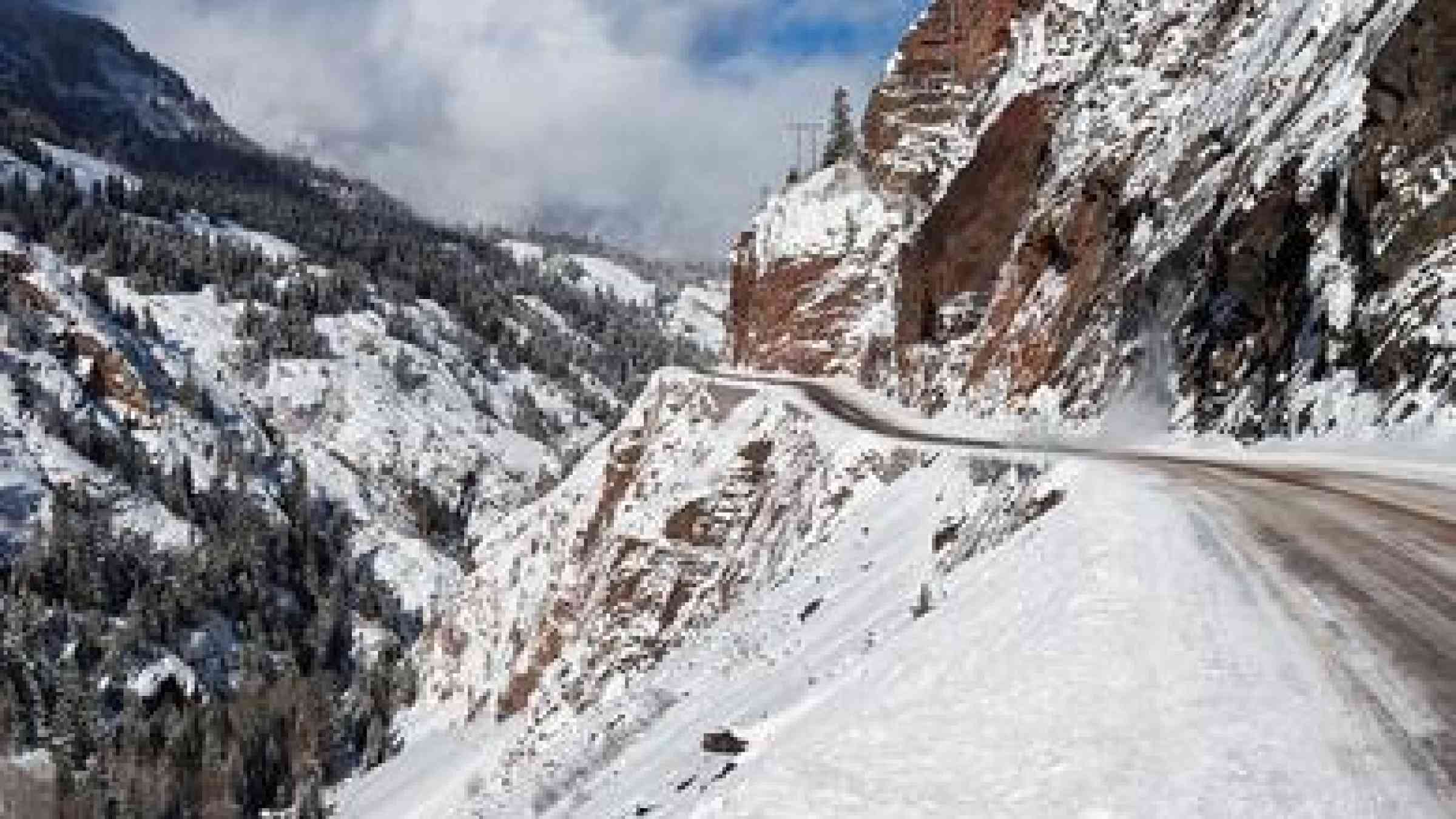
The biggest natural hazard in Colorado is avalanches - it leads the nation in avalanche injuries and deaths, mostly of backcountry skiers, boarders and snowmobilers, reports Gazette Communications. Colorado's highway department (CDOT) is planning to install a new type of mountain-top avalanche prevention system...

Gazette, the
Update

Mountaineering tourism in Nepal faces a threat from global warming as melting glaciers feed the risk of more deadly disasters such as the avalanche on Mount Everest that killed 16 people last month, scientists said on Tuesday...

Thomson Reuters Foundation, trust.org
By Joe Hastings https://www.flickr.com/photos/joehastings/538538099
Update

'Studies suggest that rise in temperatures increase the likelihood of avalanches, such as the one on the Mt Everest, the world's tallest mountain, that has claimed 16 lives this month. Melting glaciers also lead to glacier lake outburst floods, and experts urge that 'an effective monitoring and warning system for critical glacial lakes is urgently needed,' reports Live Science...

LiveScience, TechMediaNetwork
Uploaded on