1. Home
  2. Hubs: tools and knowledge
  3. Wildfire Portal

Food security and agriculture

Wildfires can have significant impacts on food security and agriculture by damaging crops, livestock, forests and agricultural infrastructure.

Beyond immediate losses, fires can disrupt food production, affect livelihoods, degrade ecosystems and increase pressure on already vulnerable communities. Explore the latest research, insights and resources on how wildfires affect food systems and agriculture, and the measures needed to reduce risks, strengthen resilience and support recovery.
Uploaded on
Update

regon State University researchers have discovered a new class of compounds that contributes to the ashy or smokey flavors in wine made with grapes exposed to wildfire smoke.

Oregon State University
Update

Extremely hot days and heat waves will increase, floods and wildfires will intensify, agriculture and public health will be threatened and rising sea levels will encroach on Israel's coastline. Here is Israel's climate change forecast for 2050.

Haaretz Daily Newspaper Ltd.
Update

Climate change, combined with years of fire suppression policies, have brought an unsettlingly new normal of increasingly devastating wildfires. Farmers and ranchers are key players in building large-scale resilience in a rapidly changing world.

Fire Adapted Communities Learning Network
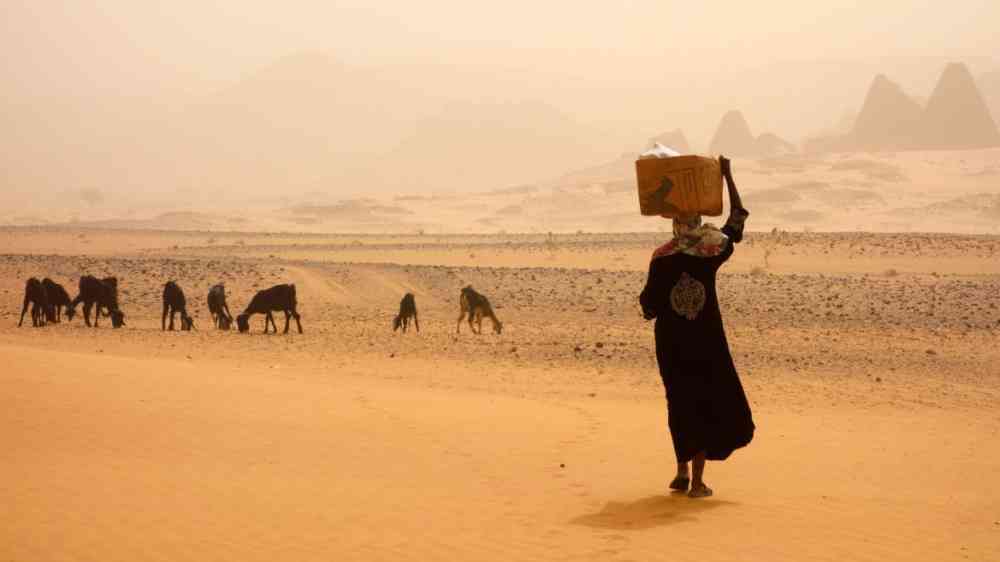
Woman carrying a basket walking through the sandy desert with her livestock.
Update

From deadly floods in Nigeria to devastating drought in Somalia, Africa has faced a run of severe – and sometimes unprecedented – extreme weather events since the start of 2022.

Carbon Brief
Cattle grazing
Research briefs

The use of virtual fencing to manage cattle grazing on sagebrush rangelands has potential to create fuel breaks needed to help fight wildfires, a recent Oregon State University and U.S. Department of Agriculture-Agricultural Research Service study found.

University of Oregon
United States Department of Agriculture
Research briefs

New research in the Journal of Dairy Science® examines effects of wildfire smoke on dairy cattle, including reduced milk production.

Elsevier
Update

Four new studies—each quite separate—appear to confirm that heat, drought, and hunger on massive scales can only get worse with rising global temperatures.

The Energy Mix
Update

The IPCC report suggests that places that only experience fire every 400 years will experience them every 50 years. The report further states that fires, combined with pests and other factors, could result in the loss of $459 billion in forestry by 2080.

CBC/Radio-Canada
Uploaded on