Research briefs

Keep up to date with the latest research on disaster risk and resilience on the PreventionWeb knowledge base.

Explore cutting-edge research on disaster risk reduction and resilience through PreventionWeb's dedicated research briefs section. Our platform curates and highlights the most recent academic studies, providing valuable insights into disaster risk management. Each research brief distills key findings from peer-reviewed journals and academic publications.

Submit a research brief.

These briefs are designed to keep you informed about the latest scientific advances. Links to the full publications are always included, ensuring easy access to in-depth knowledge. Please note that this section exclusively features academic research, distinct from reports by international organizations or Non-Governmental Organisations.

Uploaded on
Research briefs

An outdated federal rule is routinely blocking projects to improve water quality, prevent erosion, and reduce flooding.

Circle of Blue
A woman protects herself from the hot sun in Sao Paulo, Brazil.
Research briefs

A global team of leading researchers found that similar three-day heat events that were experienced across Australia in early January 2026, should now be expected once every 5 years, instead of once every 25 years.

Western Sydney University
Tornado, Iowa, April 2024
Research briefs

Researchers at the University of Kansas have shown the National Severe Storms Laboratory’s Warn-on-Forecast System (WoFS) has potential to help weather forecasters issue warnings to emergency managers and the general public well before tornado formation.

University of Kansas (KU)
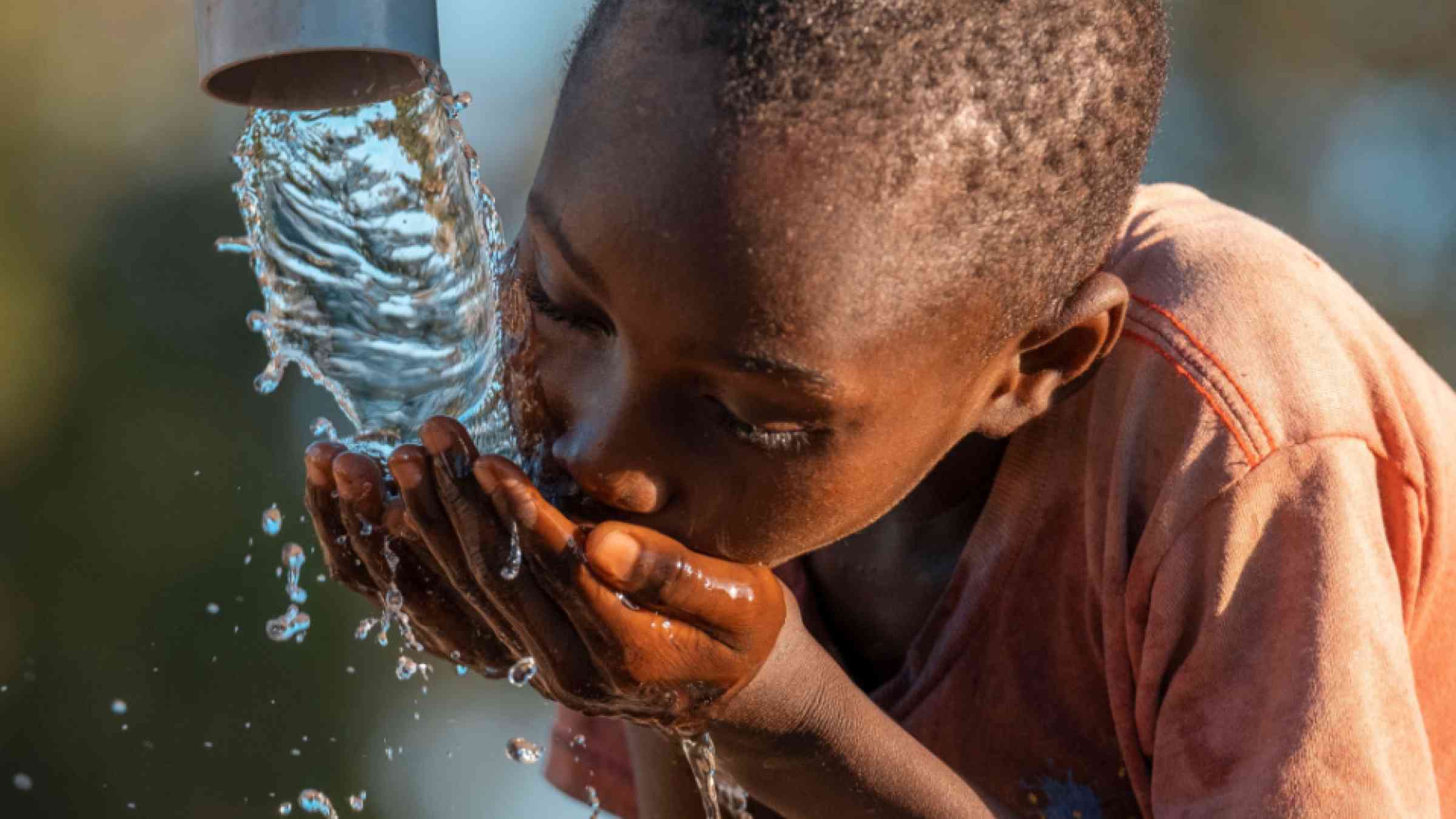
Happy boy drinking water from water pump, water fountain in village in Africa.
Research briefs

Climate change intensifies groundwater contamination via multiple pathways, calling for urgent, coordinated adaptation. The article highlights the growing climate pressures on drinking water systems and outlines pathways to climate-resilient solutions.

Rennes Institute of Chemical Sciences (ISCR)
Research briefs

Visakhapatnam is projected to see a significant rise in sea levels by the end of the century, with increases of up to 98 cm under high-emissions scenarios.

New Indian Express, the
Research briefs

People exposed to wildfire smoke have a higher risk of suffering a stroke, according to research published in the European Heart Journal.

European Society of Cardiology (ESC)
A security officer takes a break in the middle of a hot afternoon in Bangkok, Thailand
Research briefs

A University of Oxford study finds that almost half the world’s population will be living with extreme heat by 2050 if the world reaches 2.0°C of global warming above pre-industrial levels – a scenario that climate scientists see as likely.

Oxford Smith School of Enterprise and the Environment
This image shows a smartphone in a grid connecting to people.
Research briefs

The platform that rapidly maps earthquake damage can collect more global shaking intensity observations by supporting more languages and increasing social media traffic.

University of Michigan