Research briefs

Keep up to date with the latest research on disaster risk and resilience on the PreventionWeb knowledge base.

Explore cutting-edge research on disaster risk reduction and resilience through PreventionWeb's dedicated research briefs section. Our platform curates and highlights the most recent academic studies, providing valuable insights into disaster risk management. Each research brief distills key findings from peer-reviewed journals and academic publications.

Submit a research brief.

These briefs are designed to keep you informed about the latest scientific advances. Links to the full publications are always included, ensuring easy access to in-depth knowledge. Please note that this section exclusively features academic research, distinct from reports by international organizations or Non-Governmental Organisations.

Uploaded on
Indian farmer working in a field in front of a water sprinkler
Research briefs

A recent satellite-based study has uncovered alarming declines in groundwater storage across High Mountain Asia (HMA), widely known as the "Asian Water Tower".

Chinese Academy of Sciences
Children run in the courtyard outside Barbuda Primary School
Research briefs

A study led by climatologists at the University at Albany finds that extreme heat waves across the Caribbean are becoming significantly more frequent, longer and severe.

University at Albany
Research briefs

In Denmark, the plan is to flood 140,000 hectares of low-lying land such as bogs and meadows as part of the Green Tripartite Agreement. A new study from the University of Copenhagen shows that this is not the best solution for the climate.

University of Copenhagen
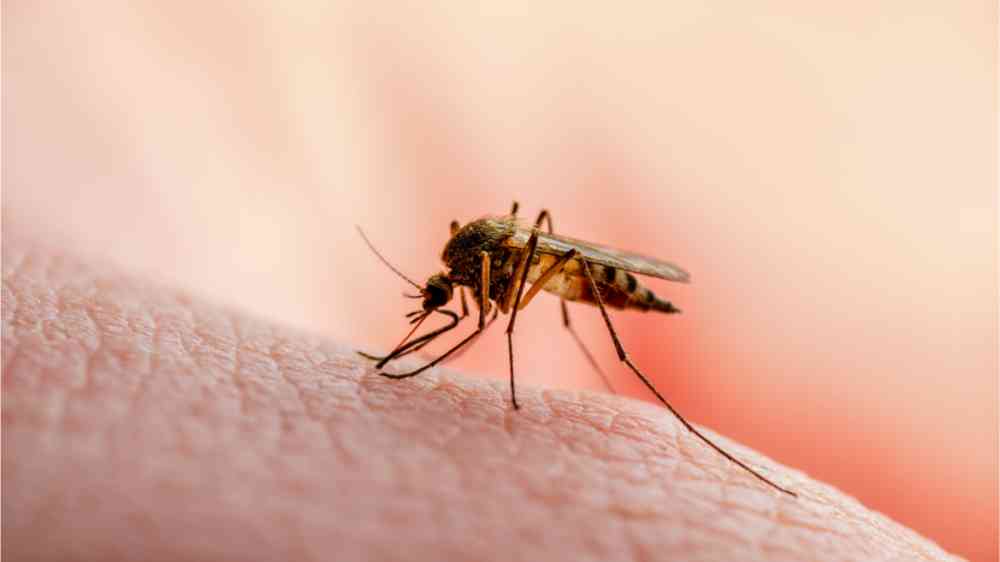
This image shows a mosquito sitting on human skin.
Research briefs

A study published in Nature presents the first detailed projections of how climate change may impact malaria transmission in Africa.

Met Office
An ominous cloud formation is illuminated during golden hour out in the countryside.
Research briefs

Researchers have developed an AI model that can predict dangerous convective storms—including Black Rainstorms, thunderstorms and extreme heavy rainfall—up to four hours before they strike.

PhysOrg, Omicron Technology Ltd
A woman who sells water on the street in Accra, Ghana, carries her load balanced on her head.
Research briefs

A study using Explainable Artificial Intelligence (XAI) has revealed land-use change – particularly deforestation and unplanned agricultural expansion – is dramatically intensifying heatwaves across Africa.

Griffith University
Border Roads Organization clear the road to Leh affected by landslide on August 29, 2012 in Manali, India. Landslides are regular phenomenon of this high altitude region.
Research briefs

A relatively simple statistical analysis method can more accurately predict the risk of landslides caused by heavy rain, according to a study coordinated by Brazilian researchers.

São Paulo Research Foundation (Agência FAPESP)
Research briefs

Concordia study finds snow droughts in western and southern Canada could affect nearly all Canadians

Concordia University