DRR Community Voices

The DRR Community Voices share personal stories and perspectives from the disaster risk reduction trenches on reducing risk and building resilience.

  • Our posts from both practitioners and academics reach a global audience and can influence policy, practices and approaches.
  • We invite you to propose your own blog and submit it for review.

Republishing guidelines

  • Please contact us if you wish to republish a blog article.
  • Most articles can be republished under CC BY-NC-SA 3.0 IGO Deed.
  • You must give appropriate credit, provide a link to the license, and indicate if changes were made.
  • You may not use the material for commercial purposes.
Uploaded on
Portrait of Ankita Shah
Ankita Shah from Kathmandu in Nepal is the Executive Director of Bighnaharta Nepal, a non-profit organization based in the country’s capital Kathmandu. She was not always meant to work in DRR.
Like, share, subscribe... and save lives
Anne Bach Nielsen Emmanuel Raju
How social media and crowdsourcing can help build disaster resilience.
Two women dressed in the traditional Indian Saree are walking through the narrow streets of the blue city of Jodhpur, Rajasthan, India.
Repaul Kanji
Jodhpur is known as the “Blue City” for its captivating blue-painted houses. But, beyond their visual appeal, these houses hold a hidden secret; a revelation that could pave the way for a cooler, more sustainable urban future.
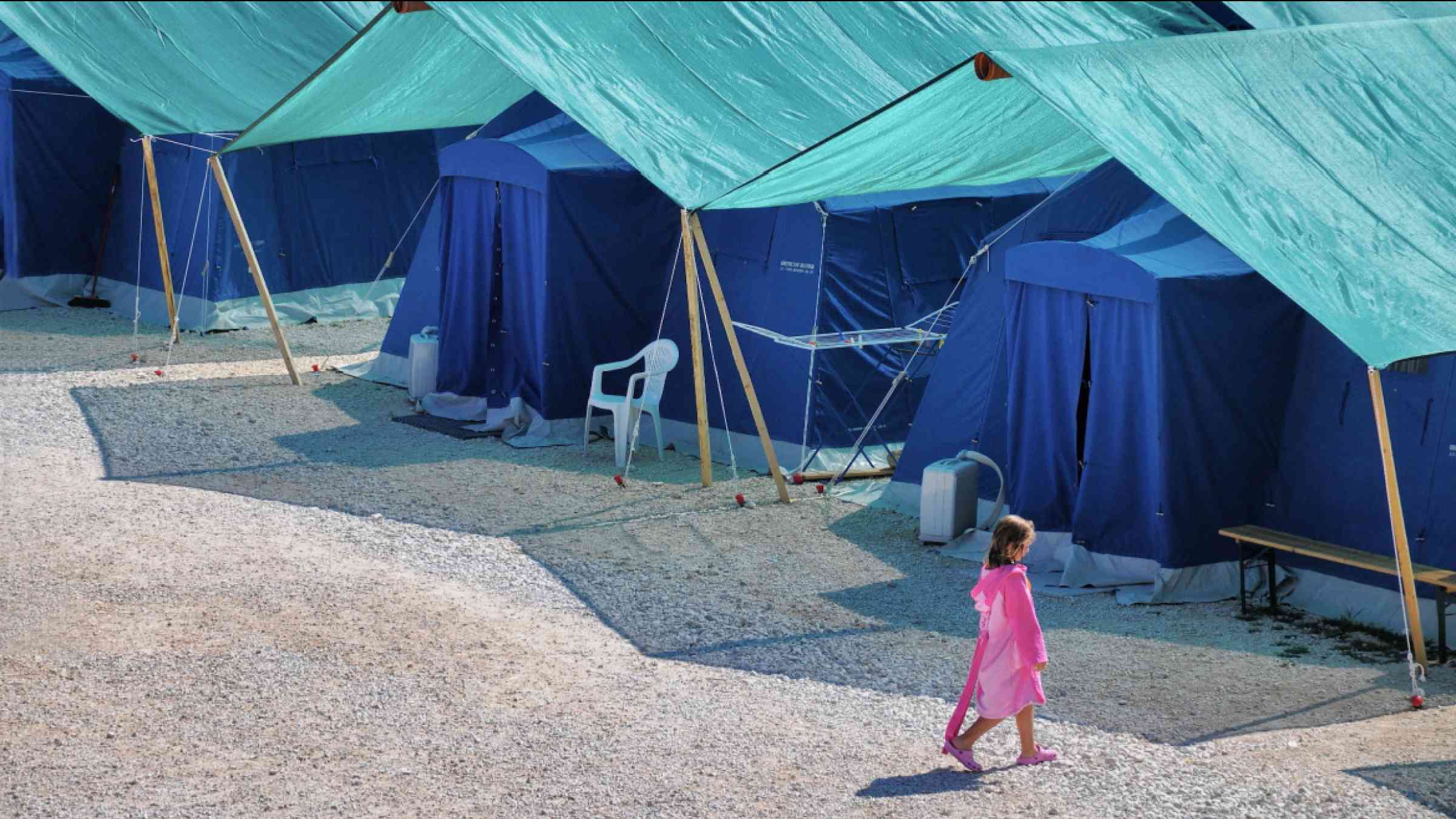
Earthquake refugees tent camp with a lonely child walking in Aquila Italy (August 2009)
Dr Dharam Raj Uprety
For many communities around the world, climate-induced disasters are now an inevitable part of life. When recovering from such events, it is senseless to rebuild structures that are incapable of resisting the hazards that will inevitably follow.
Leaning buildings after the 2023 Türkiye earthquakes
Jonathan T.M. Reckford Dr. Kit Miyamoto
Currently, governments around the world spend 90% of their disaster budgets on emergency relief, but only 4% on prevention and preparedness. That equation equals disaster.
RiskChanges - an open-source tool
Rabina Twayana
Effective risk assessment and management are essential for mitigating the impacts of hazards and building resilient communities. A new open-source tool, RiskChanges, can help inform decision making and guide resource allocation.
Missing voices approach - an older woman from a vulnerable and socially excluded community in Nepal speaking
Mirianna Budimir
The voices of marginalized people are often those missing from mainstream data-gathering and decision-making processes. The Missing Voices Approach informs DRR policies and practices by proactively listening to the experiences of marginalized individuals.
Turin heat island effect
Daniele Berruti
To better understand the implementation of a micro-scale urban heat island risk assessment, researchers conducted a study using Turin as a subject – the first time that such an in-depth methodology is applied in any Italian city.