
Building for the next disaster: How a structural engineer is strengthening resilience
Tsunamis are infrequent but devastating hazards, with singular events causing high death tolls. Like earthquakes, they are also rapid-onset hazards, often creating a perception that there is little we can do to prepare or adapt to an overwhelming event. But this is not true: a combination of resilient infrastructure, coastal defences, early warning systems, and evacuation preparedness can reduce loss of life, livelihoods, and infrastructure.
In terms of resilient infrastructure, engineers have been working to better understand the impact of earthquakes and tsunamis on the built environment, to inform and guide structural changes to better protect critical infrastructure. Professor Tiziana Rossetto (FREng, FICE) at TU Delft contributes to this work; her research focuses on the impact of natural hazards on infrastructure and communities.
PreventionWeb spoke with Tiziana to learn how her role is contributing to a more resilient built environment, and how others can pursue a career in engineering to improve our collective resilience to natural hazards.
What drew you to engineering specifically for tsunamis and earthquakes?
I decided to study civil engineering at university largely due to the advice of my father, who explained to me that engineering is not just a set of skills and knowledge but a mind-set towards solving problems that can serve you in any future career. He was totally right! With this mindset, my goal is to not only better understand natural hazards, but to also design interventions for improving our resilience to future events. Why this focus? Well my career has been marked by a number of significant natural hazards, and in particular, earthquake and tsunami events. Whilst an undergraduate at Imperial College, my home town in Italy was affected by the 1997 Umbria-Marche earthquakes, which though moderate in magnitude caused extensive damage in the region, including to the historical Basilica of St. Francis of Assisi.
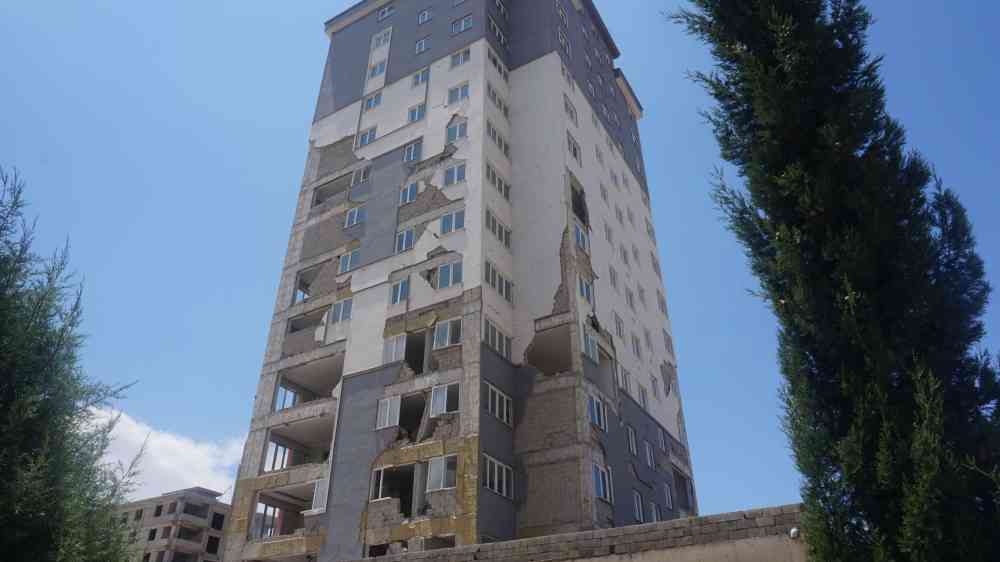
I wanted to understand how civil engineering could help, and so I undertook an MSc and then PhD in Earthquake Engineering at Imperial College London. Then, on the 26th December 2004, only four days after I started as a young lecturer at University College London, the Indian Ocean Earthquake and Tsunami struck. I deployed with the Earthquake Engineering Field Investigation Team (EEFIT) to conduct post-disaster reconnaissance in Sri Lanka and Thailand. Field observations and subsequent analysis made clear that many gaps existed in both the understanding of tsunami as a phenomenon, as well as on how buildings and infrastructure could resist these waves. This event motivated me to work towards development of the much needed science and engineering knowledge that could be used to mitigate the catastrophic effects of future tsunami. This goal continues to drive my work at TU Delft.
You mentioned that you have conducted post-disaster reconnaissance investigations. What does such an investigation involve?
I have led or participated in 8 post-disaster field reconnaissance missions and 2 further missions to study disaster recovery. These have mainly been conducted under the auspices of the UK Earthquake Engineering Field Investigation Team (EEFIT), which is a joint university-industry venture and is part of the UK Institution of Structural Engineers. The aim of these field reconnaissance is to observe and document the engineering lessons that can be learned from earthquake and tsunami events. When the launch of a mission is decided, a team of volunteers is assembled that have complementary expertise in field data collection related to hazards and their impacts on the natural and engineered environment. The field mission teams always include partners in the areas affected and require close collaboration with local authorities and professional institutions. The data collected is of essential research importance, as the effects of natural hazards cannot be fully reproduced numerically, nor in a laboratory. The work involves forensic research in difficult conditions where aftershocks might still be occurring and travel and accommodation logistics are difficult. The team members are trained in what to do in case of an emergency, and are supported by a remote team that can help with information flow and any needs.
Part of our post-earthquake and tsunami field reconnaissance work is to communicate findings to local governments and Non-Government Organizations (NGOs) that are conducting reconstruction, both in the field and after returning from the missions. For example, following the 2018 Sulawesi earthquake and tsunami in Indonesia, which was also associated with widespread liquefaction and landslides, we provided advice to NGOs as to the safety of the locations selected for temporary shelter. We could only do this by combining the expertise of several hazard experts, engineers, planners and social scientists.

Professor Tiziana Rossetto and fellow members of the post-disaster reconnaissance investigation team, studying the 2018 Sulawesi earthquake and tsunami in Indonesia.
In the end, each event is different and teaches us something new about how buildings perform in natural hazards. The field data collected provides an evidence-base for improving seismic design, resulting in changes in building codes for future construction.
What is the current state of tsunami and earthquake risk globally, and how can the built environment reduce this risk?
The number and cost of earthquake and tsunami-related disasters is increasing, as cities become larger and more densely populated and coastlines are becoming more urbanised. Currently, the frontier of earthquake engineering has shifted towards the provision of resilience. This means that design approaches are being developed to help limit loss of function and help restore function rapidly in key infrastructure in the case of an earthquake. For example, a hospital should not sustain significant damage, key equipment and clean spaces within the structure should be protected, and back-up systems should be in place to ensure continued function even if there is utility or communication interruption.
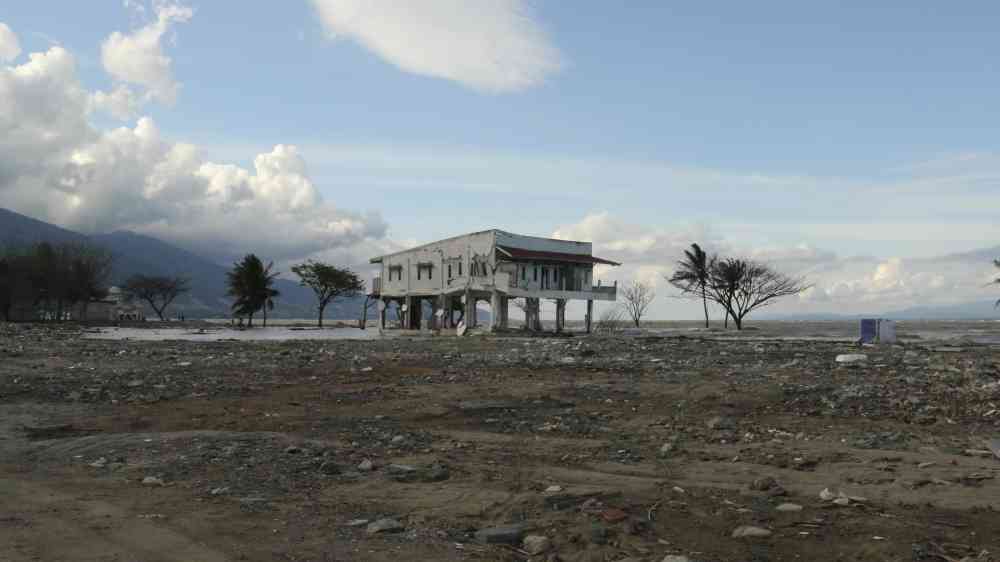
In 2018, Indonesia experienced the highly damaging Sulawesi earthquake and tsunami.
The field of tsunami engineering is less established than that of earthquakes - but research over the last 20 years has significantly increased our understanding of the science of tsunami and how we can better design buildings and infrastructure to mitigate tsunami effects. Codes for tsunami design of buildings are only available in the USA and Japan, and mainly pertain to tsunami evacuation structures.
Research shows that in some cases small modifications in the structure design can enhance the resilience of normal buildings as well. However, no tsunami resistant design of structure nor coastal protection measures can ensure that there is no loss of life. All these efforts must be complemented by a tsunami early warning system and evacuation plan.
In both cases of earthquakes and tsunami, community and organisational preparedness is essential to reduce casualties and mitigate losses.
As part of your work, you've led the MAKEWAVES consortium, which focuses on reducing tsunami risk. Could you share more about the mission of this group and some of its key successes relevant for disaster prevention?
MAKEWAVES is an interdisciplinary consortium of academics and professionals with expertise that span several engineering fields , social sciences and statistics. The key aim of the consortium is to adopt an interdisciplinary and multi-pronged approach to develop scientific knowledge and practical tools for the engineering design and assessment of buildings and coastal defences against tsunami.
Through post-tsunami fieldwork and lab experiments, MAKEWAVES has advanced understanding of tsunami inundation interaction with coastal infrastructure leading to new equations for estimating how far inland tsunami inundate coasts, the depth of soil scour (removal of sediment) around buildings, and the size and distribution of tsunami forces on buildingsand infrastructure. Moreover, a novel structural analysis approach, the Variable Depth Pushover (VDPO) method, has been developed for designing and assessing buildings under tsunami.
You have also led the creation of a tsunami simulator. How does the simulator ultimately translate into resilience against tsunamis?
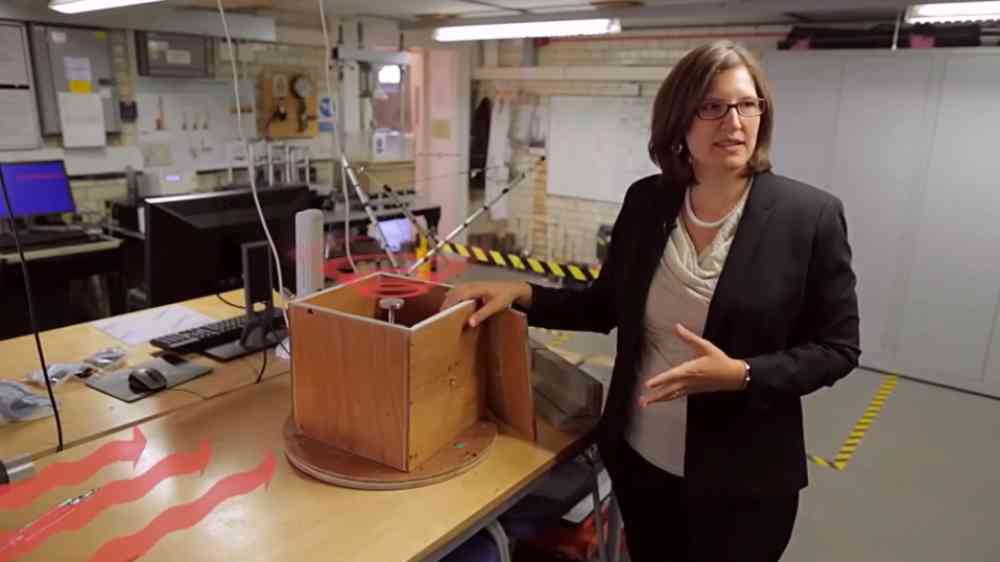
Since 2005, building on the expertise in wave generation at HR Wallingford, we designed, built, validated and refined a new type of pneumatic Tsunami Simulator (TS) that is able to recreate realistic representations of tsunami in a lab environment. The TS is unique and world-leading in its ability to generate extremely long waves (with wave periods up to 240s at a scale of 1:50 representative of a 28-minute tsunami) and to well reproduce tsunami wave traces recorded in the field for the 2004 Indian Ocean Tsunami and 2011 Tohohu, Japan, tsunami.
Using the TS we have been able to study the interaction of tsunami waves of different height and wavelength with different coastal slopes, breakwaters, sea walls, coastal forests and buildings. In the latter tests we have looked at the forces imposed on the structures as well as the evolution of scour (i.e. sediment movement) around building foundations. These experiments have been fundamental to advancing our understanding and being able to develop quantitative tools for use by engineers in tsunami engineering and design. By influencing design practice, we aim to improve future earthquake resilience. I am also very proud of the fact that two tsunami simulators have recently been installed in laboratories in Indonesia, where they are being used by local academics and practitioners to test new approaches to coastal defence for enhancing local resilience to tsunami.
These researchers built a tsunami simulator that recreates tsunamis in the lab
🌊 Can we design buildings to withstand tsunamis?
What advice would you give to young professionals interested in disaster risk reduction careers in engineering?
I would highly encourage this as too few engineers work in this important field. Your entry point is a degree in civil engineering, and a strong motivation to make the world a better place. Working in disaster risk reduction requires the humility to understand the limits of your knowledge and the openness to listen to and work with other disciplines. This is required both in the academic research field as well as in the profession.
However, gaining knowledge and experience of how to work in disaster risk reduction and disaster affected areas also needs significant work beyond the university or typical civil engineering company environment. Those wishing to deploy following disasters can join EEFIT or sister initiatives in other countries, (e.g. EERI, GEER and STEER in the USA), and I would also encourage participation and/or training through initiatives like Bridges to Prosperity, Engineers Without Borders and RedR.
Tiziana Rossetto is Professor in Natural Hazards Engineering, and Head of the Hydraulic Engineering Department at TU Delft. She is also a Fellow of the Royal Academy of Engineering and Honorary Professor at University College London (UCL). By training, Tiziana is a structural earthquake engineer and has conducted research on building and infrastructure vulnerability for over 20 years, first focussing on earthquakes and then expanding to tsunami, fire, wind and landslides. She has won several awards for this work, including the 2024 Hamaguchi Award (Japan) and 2017 Shah Distinguished Lecture Award (USA). She is active in several professional societies, including being current chair of the FIB working group on Tsunami Engineering, and past chair of both the UK Earthquake Engineering Field Investigation Team (EEFIT), and Society of Earthquake and Civil Engineering Dynamics (SECED).