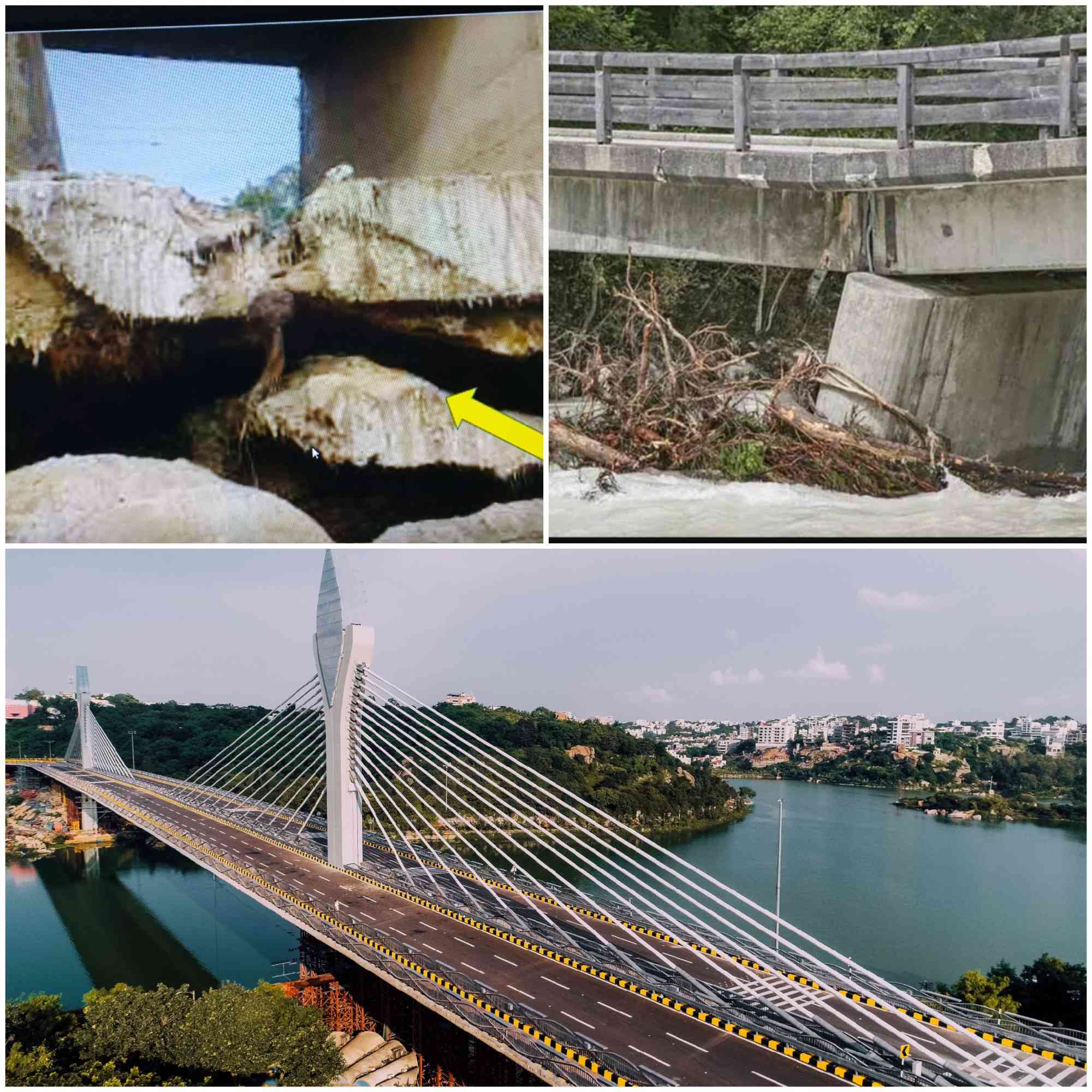
Provide a tool to enhance the resilience of existing deteriorated bridges in the high risk zones for natural hazards using Global Analytics for Bridge Management
UBMS Research Group aims to evolve a tool using data from Global Analytics for Bridge Management for deteriorated bridges. This tool will enhance the resilience of bridges in high risk zones for natural hazards.
Description
UBMS Research Group (URG) is private organization focused on advancing bridge management systems. Originally established to improve upon existing Integrated Bridge Management Systems, the group has rapidly integrated cutting-edge technologies like UAV videography, photogrammetry, 3D modelling, and Structural Health Monitoring (SHM) into the field of bridge management.
We have strived to evolve the method to identify existing deteriorated bridges and define a system that will enhance the resilience of such bridges, UBMS Research Group has produced a tool called the Global Analytics for Bridge Management (GABM), which is a comprehensive and innovative approach in bridge management systems. This tool will identify the bridges on the critical route most used for providing relief and rescue measures post occurrence of an event of high magnitude natural hazard. It will also define the capability of the existing deteriorated bridges to withstand the natural hazard and determine the intensity which the bridge will be able to withstand.
Global Analytics for Bridge Management (GABM) emphasizes data-driven decision-making, integrating real-time SHM data for efficient fund allocation and improved bridge sustainability. Additionally, it incorporates Life-Cycle Cost Analysis to balance sustainability with economic growth, and offers a cost-effective solution for managing risks, especially those related to climate change, by using detailed hazard data and quantitative risk assessment models. Remarkably, Global Analytics for Bridge Management (GABM) achieves this without the need for internet, cloud servers, or extensive engineering manpower, making it a highly efficient and cost-effective option for bridge owners, especially those with minimal bridge inventory.
Did the Sendai Framework change or contribute to changes in your activities/organization? If so, how?
UBMS Research Group, which is an Indian-led research organization, was influenced by the commitment of the Government of India to advance resilient infrastructure under the Sendai Framework for Disaster Risk Reduction. India has been actively pursuing the theme of Disaster Resilient Infrastructure throughout the years and has established the Coalition for Disaster Resilient Infrastructure. UBMS Research Group aims to use their expertise in bridge management to focus on building resilience of bridges, one of the critical infrastructures in many countries. Bridge Management solutions incorporating risk assessment for natural hazards will enable rescue and relief operations immensely
What led you to make this commitment/initiative?
What was your position before making this Voluntary Commitment / prior to the Sendai Framework?
Globally we all are witness to score of people dying in remote areas due to delay in relief and rescue reaching the most needed population. One of the reason is collapse of bridges connecting the area. UBMS Research Group is actively involved in evolution and enhancing the capabilities of bridge management. We intend to use our expertise in bridge management to evolve the tool that could define resilient bridges.
Deliverables and Progress report
Deliverables
Deliverables are the end-products of the initiative/commitment, which can include issuance of publications or knowledge products, outcomes of workshops, training programs, videos, links, photographs, etc.
This set of research papers have been published by UBMS Research Group on their website https://ubmsresearchgroup.com from time to time as research progresses. This set of papers have culminated in the compilation which is titled "Navigating from Deterioration to Resilient Bridges"
NAVIGATING FROM DETERIORATED TO RESILIENT BRIDGES is now available https://ubmsresearchgroup.com/publications/voluntary-commitment/navigating-from-deteriorated-to-resilient-bridges/
A tool which will evaluate the resilience of the existing deteriorated bridge by defining the magnitude of natural hazard which the bridge will be capable to withstand. To reach this goal, UBMS Research Group will first publish their research titled "Navigating from Deterioration to Resilient Bridges" and based on this research UBMS Research Group will evaluate the increments in deterioration that the bridge will undergo should the authorities opt not to implement the suggested measures. A software tool will be the compiled to evaluate the status of the bridge. The first phase of this tool which evaluates the Risk index for natural hazards within the overall bridge management system was completed and is available for trial purpose free of cost.
The research carried out will result in periodic publication of papers that will be published as the research progresses.
Porgress report
UBMS Research Group [URG] submitted a Voluntary Commitment to research and evolve a tool titled "Provide a tool to enhance the resilience of existing deteriorated bridges in the high-risk zones for natural hazards using Global Analytics for Bridge Management."
The research involved compilation of a document. The title of the compiled document is "Navigating from deteriorated to bridges." The documentation is available on UBMS Research Group's website: https://ubmsresearchgroup.com/publications/voluntary-commitment/navigating-from-deteriorated-to-resilient-bridges/
The second phase involved the evolution of the software tools "Global Analytics for Bridge Management. [GABM]" and "Global Analytics for Resilience and Risk Management. [GARM]"
URG has completed the documentation and software evolution.
This research resulted in Software tool namely "Global Analytics for Bridge Management" [GABM] which is a internet free standalone tool used for maximum of 250 bridges and 10 cycles. Data from GABM is imported in Global Analytics for Resilience and Risk Management [GARM].
Both tools are available on https://ubmsresearchgroup.com/GARM/
The tool enables evaluation of all standard bridge management parameters like BSL, ABSL, Cause of distress and clubs it with financial due diligence (IRR calculations') for direct and intangible benefits. Vulnerability index for all four hazards is evaluated for each bridge resulting in risk index evaluation.
The boundaries of the bridge to survive a hazard of known severity have be evolved. post extensive Beta testing by using geometrical details of ten bridges in India and applied certain forces due to natural hazards to define the parameters of limits for which the bridge will show probability of survival. Document is attached herewith
Organizations and focal points
Implementing Organization(s)
Focal points