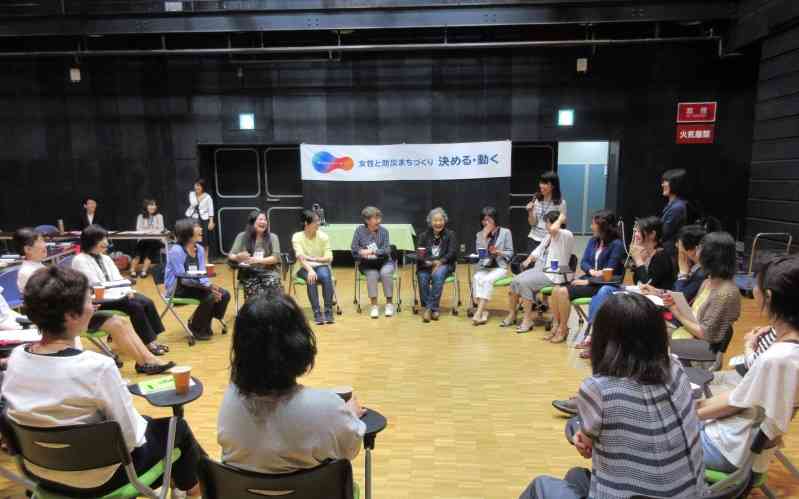
"Decision-making and Taking Action" - Promotion of Women Leadership Program
In the Sendai Framework, the importance of the promotion of women’s leadership was clearly stated. In order to achieve this goal, we offer a training program to promote the leadership of women who actively engage in community planning.
Description
At the Third United Nations World Conference on Disaster Risk Reduction, the Sendai Gender Equal Promotion Center’s “L-Park Sendai” was the venue for the Thematic Pavilion: Gender and Disaster Risk Reduction, WCDRR Public Forum. At the event, many symposiums were carried out under the theme of Gender Equality and DRR and Women’s experiences at the time of the Great East Japan Earthquake and after were also shared. Taking that into account, we realized that active participation of women in community decision making for DRR as an important stakeholder is essential to make the community disaster resilient for every resident to live safely.
The City of Sendai and the Sendai Gender Equal Opportunity Foundation jointly developed a training program for women who actively play important roles at a local level, to further improve their leadership skills and also to build a network between them beyond their activity fields. We began offering the training program in 2016 aiming at producing 100 female leaders in five years, and in three years, 65 women participated in and finished the program. This is a six-month program consisting of 40 hour-lessons in total of about ten days and participants attend classes once a month.
This program especially emphasizes the repeated exposure of the following practices: have self-confidence by understanding one’s own attributes and utilizing them as “strengths”, think and practice how you can apply what you have learned in the training program to their own activities, and share “awareness” with colleagues and acquaintances. By practicing such method, we believe participants can acquire hands-on skills.
Did the Sendai Framework change or contribute to changes in your activities/organization? If so, how?
The Sendai Framework allows us to realize the importance of the leadership of women and their participation as multi-stakeholders in decision making for building a disaster resilient community. The Framework serves as a guideline for fostering leadership in women through development programs and other related programs.
What led you to make this commitment/initiative?
What was your position before making this Voluntary Commitment / prior to the Sendai Framework?
Japan Women’s Conference was held in Sendai in 2012. The “Sendai Declaration” which was adopted at the conference, stated the importance of women “Decision-making” and the necessity of women “Taking Action” based on the experiences from the Great East Japan Earthquake. In addition to that, carrying out various projects using the “Women’s Leadership Fund for Recovery from the Great East Japan Earthquake” from Norway, one of the leading countries for gender equality and adoption of the Sendai Framework, lead to the creation of a training program which facilitates the cultivation of leadership in women. Women are disproportionately affected by disasters. So, the Sendai Framework states that the participation of women is critical for better management as well as better design, resource allocation and implementation of gender-sensitive disaster risk reduction policies, plans and programmes. Thus, capacity building actions are needed to empower women both for preparedness and for having the capacity to secure alternate means of livelihood in post-disaster situations.
Deliverables and Progress report
Deliverables
Deliverables are the end-products of the initiative/commitment, which can include issuance of publications or knowledge products, outcomes of workshops, training programs, videos, links, photographs, etc.
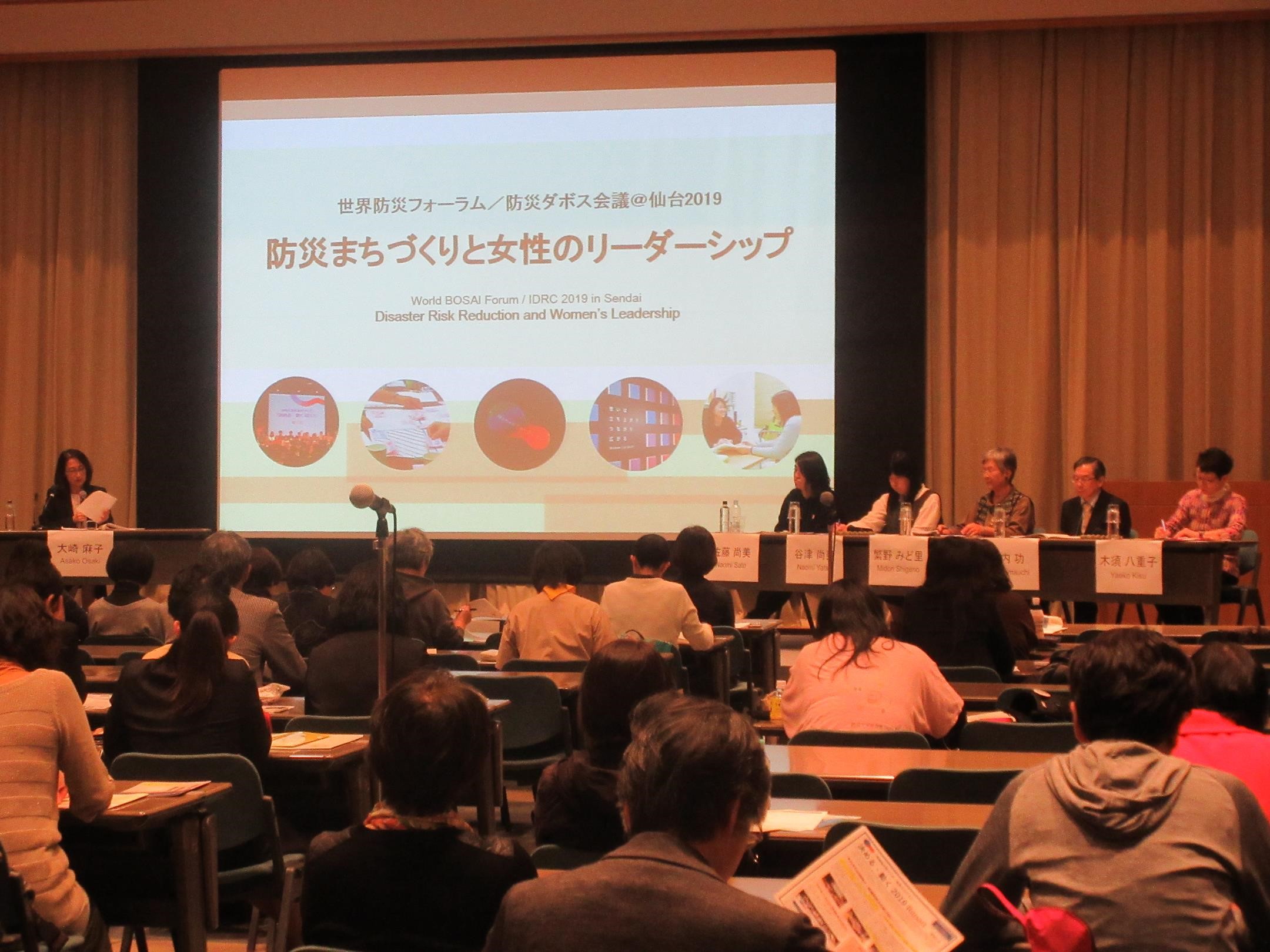
A graduate from our program took to the podium as a panelist for the session themed “Disaster Risk Reduction and Women's Leadership” during the World Bosai Forum / IDRC 2019 in SENDAI (Nov. 2019). In reporting about examples of efforts from the Great East Japan Earthquake, the panelists disseminated the importance of women’s participation from times of normalcy to the decision making process in creating communities resilient to disasters, as set out in the Sendai Framework.
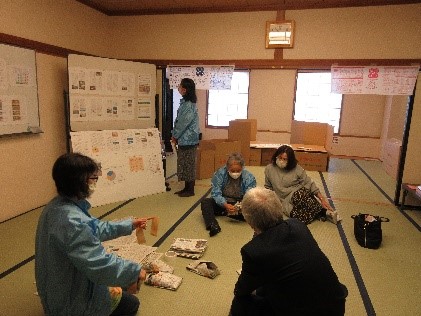
Each fiscal year forms a network of graduates, and even under the COVID-19 pandemic they have been undertaking activities by using social media and video calling services. The 2018 network, created a project under the theme of DRR and participated in the Sendai Forum for Gender Equal Opportunity. It led to joining a volunteer forum hosted by welfare organizations, and expanding their activities to other fields.
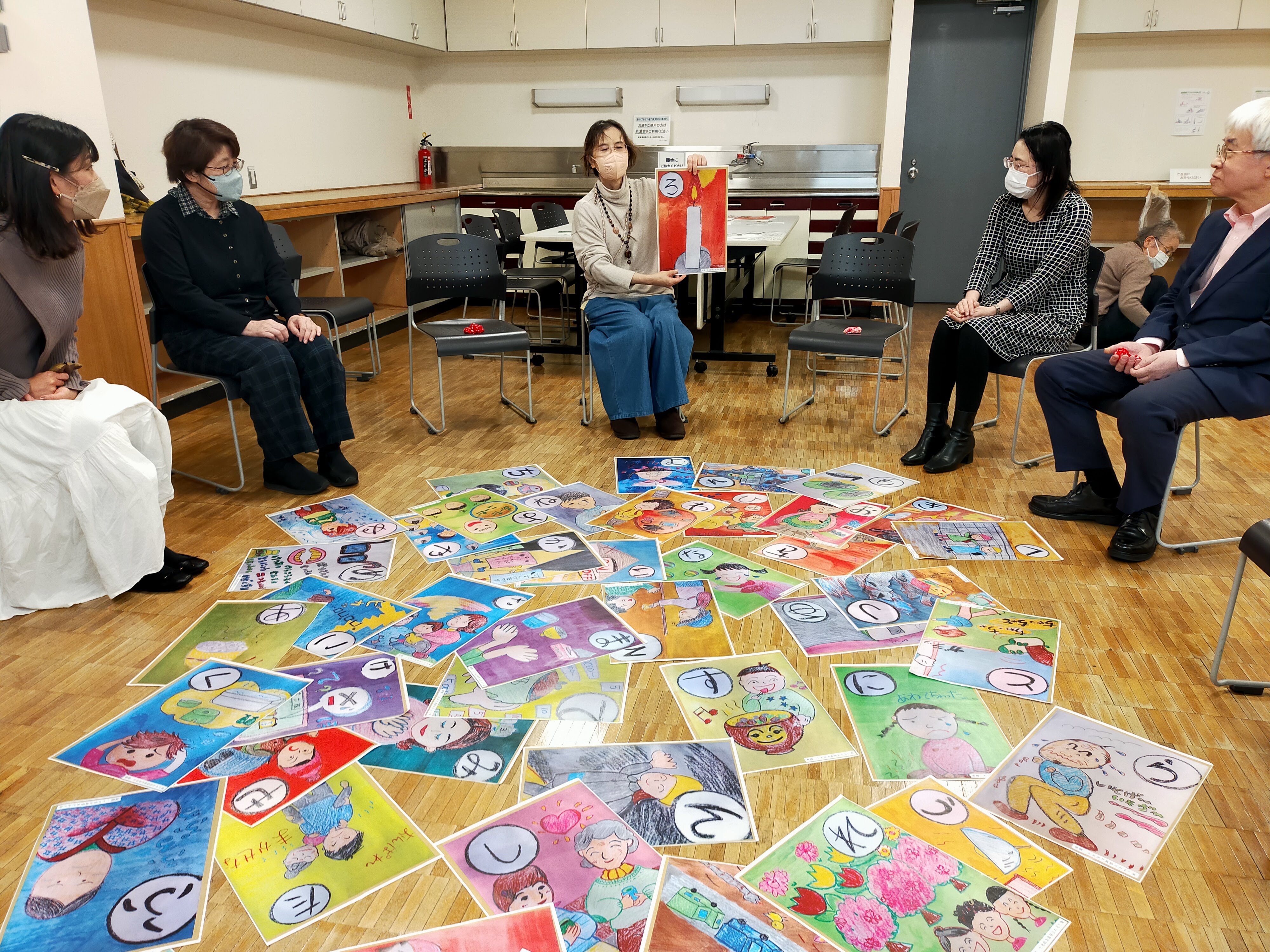
For each term, an alumni network is formed to conduct regular activities. Networks formed by alumni of the 2017, 2018, and 2019 terms participated in the "Sendai Forum for Gender Equality Promotion" in November 2023 hosted by our group. They conducted a seminar to inform about Disaster Risk Reduction and an event during which participants are encouraged to discuss among themselves.
Application Requirements for "Decision-making and Taking Action" 2024. It contains overview of the initiative, content of programs and voices of graduates.
The report contains the state of achievement of the program and voices or feedback from past participants. The purpose of creating this report is to raise awareness of the local groups, NPOs and citizens about the importance of cultivation of community leadership in women and participation of multi-stakeholders in decision making in relations to DRR, while introducing their activities as good practice within Japan and abroad.
Porgress report
24 women who are members of community organizations such as NPOs and neighborhood associations participated in the eighth term of the program which began in June 2023. During the program, participants developed leadership skills through practical training and learning from each other. At the graduation ceremony in November, participants gave self-promotional speeches to stakeholders involved in community building on how they will continue to utilize their leadership skills in their perspective communities and organizations after graduation. In total, 179 women have graduated from the program in the past eight years.
In September 2023, graduates were involved in organizing an exchange event with alumni of previous terms so as to further broaden their network.
・For each term, an alumni network is formed to conduct regular activities. Networks formed by alumni of the 2017, 2018, and 2019 terms participated in the "Sendai Forum for Gender Equality Promotion" in November 2023 hosted by our group. They conducted a seminar to inform about Disaster Risk Reduction and an event during which participants are encouraged to discuss among themselves. (Photo A)
・Two alumni were invited as guests for a mini event held at the “Women and DRR Corner” in L-park Sendai. They talked about activities organized by neighborhood associations and had discussions with participants on the current state of local communities and ways to strengthen community building. (Photo B)
・Four alumni were invited to an exchange event that was held in conjunction with an inspection visit by female leaders of other communities to disaster affected areas. Besides from introducing their activities, the alumni also discussed community building with other female leaders.
Organizations and focal points
Implementing Organization(s)
Focal points