Research briefs

Keep up to date with the latest research on disaster risk and resilience on the PreventionWeb knowledge base.

Explore cutting-edge research on disaster risk reduction and resilience through PreventionWeb's dedicated research briefs section. Our platform curates and highlights the most recent academic studies, providing valuable insights into disaster risk management. Each research brief distills key findings from peer-reviewed journals and academic publications.

Submit a research brief.

These briefs are designed to keep you informed about the latest scientific advances. Links to the full publications are always included, ensuring easy access to in-depth knowledge. Please note that this section exclusively features academic research, distinct from reports by international organizations or Non-Governmental Organisations.

Uploaded on
Uploaded on
Research briefs

Climate change is altering where and when rocks are most likely to fracture across Spain, according to new research that suggests warming temperatures are redistributing a key process responsible for breaking down mountain landscapes.

PhysOrg, Omicron Technology Ltd
Research briefs

As the planet continues to warm, marine heat waves are growing longer and deadlier, hurting the seafood supply that billions of people worldwide rely on for their food and livelihoods.

Michigan State University
Coloured houses on a windy day
Research briefs

The study showed that trees around a low-rise building can reduce the wind force on segments by as much as 50%.

Florida International University
Turkmenistan earthquake
Research briefs

Sedimentary basins – depressions in Earth’s crust caused by tectonic activity – tend to be flat and are favoured places to build cities. But during earthquakes, they can become natural resonance chambers.

Conversation Media Group, the
Modern high-rise buildings with vertical greenery and integrated plants on facade connected by skybridge.
Research briefs

Green wall installation can provide cooling effects for both indoor and outdoor environments.

Osaka Metropolitan University
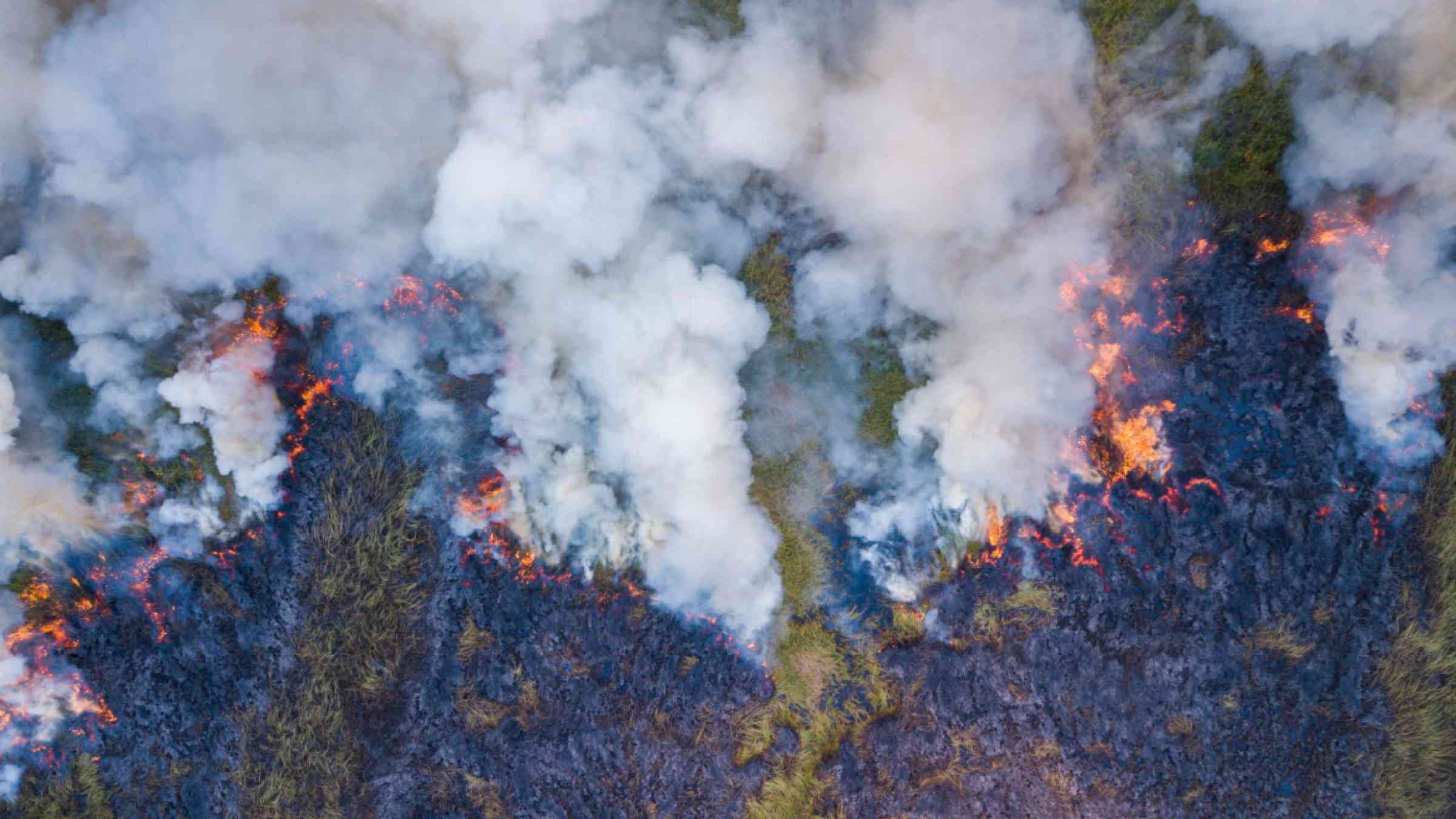
Aerial view of forest grass being burned
Research briefs

A Stanford-led study based on two decades of satellite data finds California could cut deadly pollution from wildfire smoke by 20% in active fire years by expanding use of prescribed fire in conifer forests each year.

Stanford University
Houses with wildfire smoke in the background
Research briefs

A new study projects the intertwined relationship between fires and the money spent fighting them.

Eos - AGU
Coastal homes in Carolina Beach, NC, USA facing the Atlantic Ocean.
Research briefs

Climate Central-led paper finds climate change tripled the number of days with extreme water-levels at worldwide locations since the 1970s.

Climate Central