DRR Solutions space
Disaster risk solutions
Scalable and replicable success stories to prevent disasters.
A catalogue of evidence-based practices to reduce disaster risk.
Concrete innovations, inventions, and strategies are reducing the impacts of disasters worldwide. These practical success stories and proven strategies address various aspects of disaster risk.
The documented successes, measurable achievements, avoided disasters, and tangible outcomes serve as lessons for those planning actions to enhance resilience, reduce vulnerability, and protect communities from the adverse effects of disasters.
The stories you will find below encompass a wide range of practical DRR measures, including early warning systems, community-based initiatives, green and grey infrastructure improvements, policy implementations, and innovative technologies that have been applied and proven effective in real-world scenarios.
Find your solution
Search by theme, hazard and country, or use specific keywords.



Featured stories
Houses that can float could protect vulnerable people from flooding
This concept retrofits houses with flotation devices and tethers them to poles - allowing the house to rise with floodwaters and descend to their foundations when the flood subsides.
Can wildfire prevention offer sustainable business opportunities?
Because of climate change, wildfires are becoming more intense and frequent. Prevention measures often come with a hefty price tag. Across Europe, fire-smart solutions make wildfire prevention more sustainable, by offering ecological, economic and social benefits.
Rain-related early warning in Japan
“The risk is imminent” translates as KiKIKURU in Japanese. It’s the name of an innovative early warning system for rain-related hazards in Japan. KIKIKURU was developed by the Japan Meteorological Agency (JMA). The system provides real-time hazard updates using a high spatial resolution of 1 km.
Developing local-level solutions
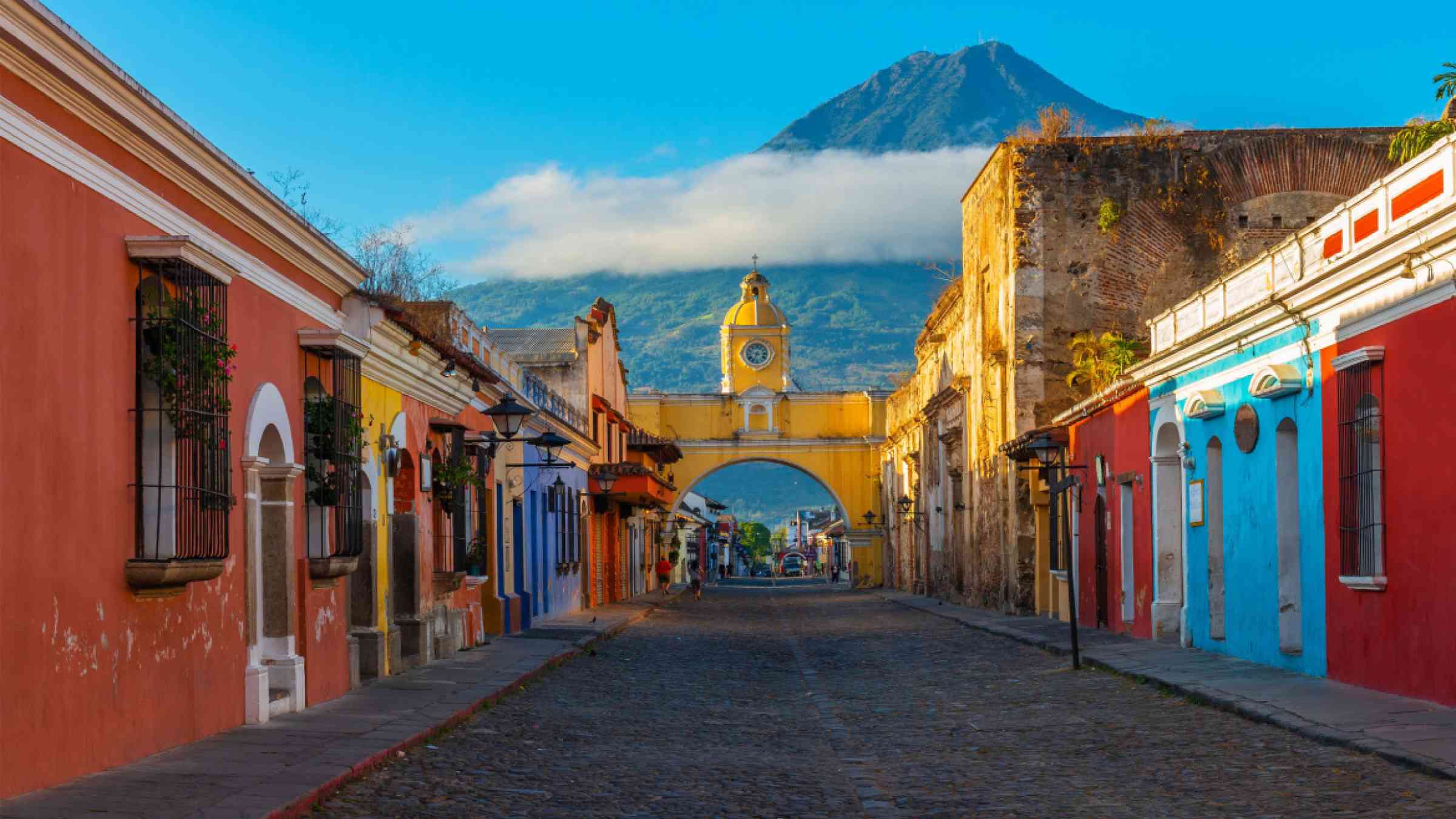
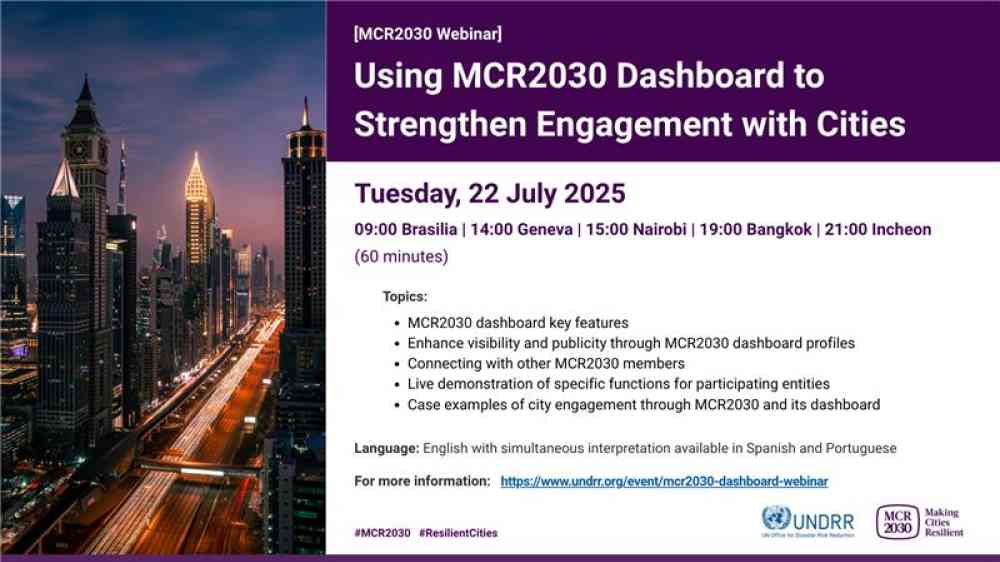
Is your city resilient? Does its resilience help its citizens to prosper and flourish? Making Cities Resilient 2030 (MCR2030) is a unique cross-stakeholder initiative for improving local resilience. See how cities around the world build their capacities to tackle disasters.
MCR2030 is a place where cities can find guidance and support to enhance understanding on risk reduction and resilience, to improve strategic planning to reduce risk and build resilience, and to take actions and progress along the resilience roadmap.
See below news from cities that have taken the leap to reduce disaster risk.