The nature‑based solutions for urban heat are specifically designed for neighborhoods and communities because the standard will provide users with tools and techniques to identify areas where nature‑based solutions can be most effectively implemented.
Kampala Capital City Authority has intensified flood preparedness across the city as Uganda braces for increased rainfall, with the Ministry of Water and Environment warning of a high likelihood of El Niño conditions during the Sept-Dec rainfall season.
More than half of reporting companies provide no core quantitative metrics, raising concerns over their ability to measure nature-related risks and potential greenwashing.
A study suggests that isotopes can provide an early warning of prolonged droughts. This study is one of the first in over 30 years to utilize isotopic techniques in Amazonian hydroclimatic research.
Rising sea levels and storm surges could cost $855 billion in economic losses across Australia by the end of the century, according to new Australian-first research.
On August 26, the side of a mountain near the border between Nepal and Tibet collapsed. Seven billion cubic feet of glacial ice and rock, enough to fill 100 football stadiums, crashed roughly a mile straight down into the river below.
Children across Europe have returned to school after a summer of extreme heat. As the climate warms, one question is becoming harder to ignore: how can students learn when classrooms become dangerously hot?
This study applied an integrated flood risk assessment framework to evaluate climate-driven compound flood risk in Broadland, with particular emphasis on how methodological choices influence exposure, damage and spatial risk estimates.
International Journal of Disaster Risk Reduction (Elsevier)
August was the hottest month of the year, with an average temperature of 25.6 C, up 5.2 C from the 1951-1980 average and 3.5 C above the 1991-2020 norm, according to Italy's research public body.
The drought of 2026 is not yet over, and some of its effects are already visible. There are economic consequences for agriculture, transport and industry. But there are also consequences that are less visible and may have long-term effects.
Beavers are often called ecosystem engineers. They fell small trees, build dams and dig channels. Water backs up behind their dams, spills across the valley bottom and soaks into the surrounding soil.
The Africa Early Warnings Forum, held in Addis Ababa, highlighted Africa's progress in expanding early warning systems, but with climate and disaster risks accelerating, the task now is to translate that progress into protection for everyone.
United Nations Office for Disaster Risk Reduction (UNDRR)
United Nations Office for Disaster Risk Reduction - Regional Office for Africa
The exact sequence of events that sent so much debris and water downstream is something we are still trying to unravel. There are a number of possibilities.
This is a project post. Appointment or assignment against this position is for an initial period of one year. The incumbent reports to the Deputy Chief, under the overall authority of the Chief of the Regional Office.
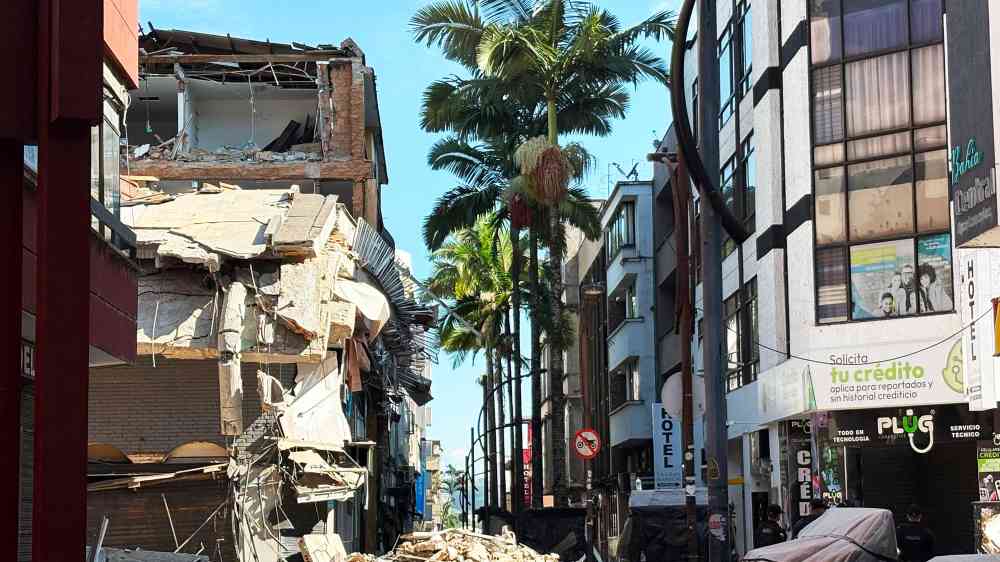
Statement on the Colombia Earthquake by Kamal Kishore, Special Representative of the UN Secretary-General for Disaster Risk Reduction and Head of UNDRR
United Nations Office for Disaster Risk Reduction (UNDRR)
Through an Early Action Protocol funded by the IFRC, the Colombian Red Cross is implementing anticipatory measures in the departments of Tolima and Cesar before the drought reaches its critical point.
International Federation of Red Cross and Red Crescent Societies (IFRC)
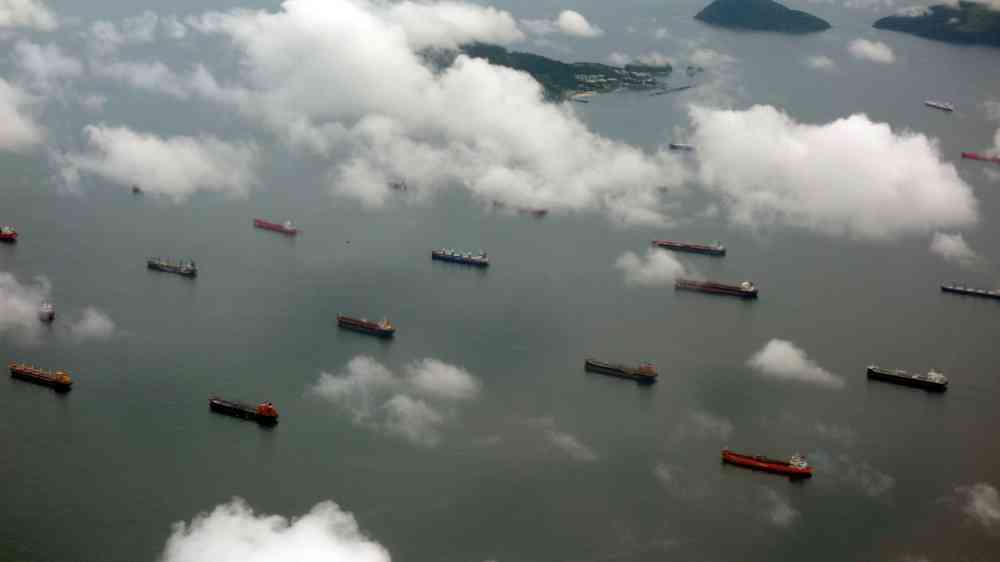
The economic ramifications of the closure of the Strait of Hormuz are much discussed. But so far, the risk of ecological damage following a long blockade of ships has been overlooked.
Facing severe geological disasters, China is expanding risk management from individual hazard points to entire zones and deploying advanced technologies to minimize casualties and property losses.
This webinar will highlight several issues with the governance gap between the commitments made by DRR policies and the key points at which they fail to deliver these commitments at local, national, and international levels.
The Consultant will be responsible for developing process documentations, a program documentation, and a program video. The Consultant is expected to consult and liaise with the program team and BPP sectoral partners at the national and district levels.
This side event will explore key elements of an ASEAN approach to accelerate the implementation of the Sendai Framework, drawing on national and regional experiences to identify priorities for a future global disaster risk reduction agenda.
Parts of northern Hong Kong face the highest risk of climate-related disasters, a study by the Hong Kong Red Cross has found, with the charity urging the government to take climate resilience planning into account in developing the area.
In France, the fires originated near the Atlantic coast on 22 and 23 July but have since spread inland, becoming particularly destructive in the Gironde department around Bordeaux.
As wildfires strain resources across North America, IAFF training is preparing municipal fire fighters to respond safely in the wildland-urban interface.
Deventer is closing its harbour to ships from this weekend after the summer drought caused the water level in the river IJssel to drop to exceptionally low levels.
This special AIDR webinar will bring together experts from emergency management, government, and community services to explore current seasonal outlooks, preparedness priorities and practical actions organisations can take ahead of the season.
This session will explore why and where blended finance models can draw in additional co-financing, where grants and public finance remain essential, and how this can support delivering adaptation and resilience investments aligned to country priorities.
The overall objective of the RIS is to harness the power of data and rapidly evolving digital tools and technologies to improve decision-making in ways that sustain and protect lives and livelihoods across the rapidly changing Hindu Kush Himalaya region.
This project position is located in the Inter-governmental processes, Inter-agency cooperation and Partnerships Branch in Geneva. The incumbent reports to the Deputy Chief of the Branch under the overall authority of the Chief of Branch.
A new study suggests that El Ninos—the natural climatic chaos agent that pops up periodically and spikes global temperatures—are getting stronger because of human-caused climate change.