Children displaced in a changing climate: Using historical disaster impact data to understand and map child displacement risk for action and investment
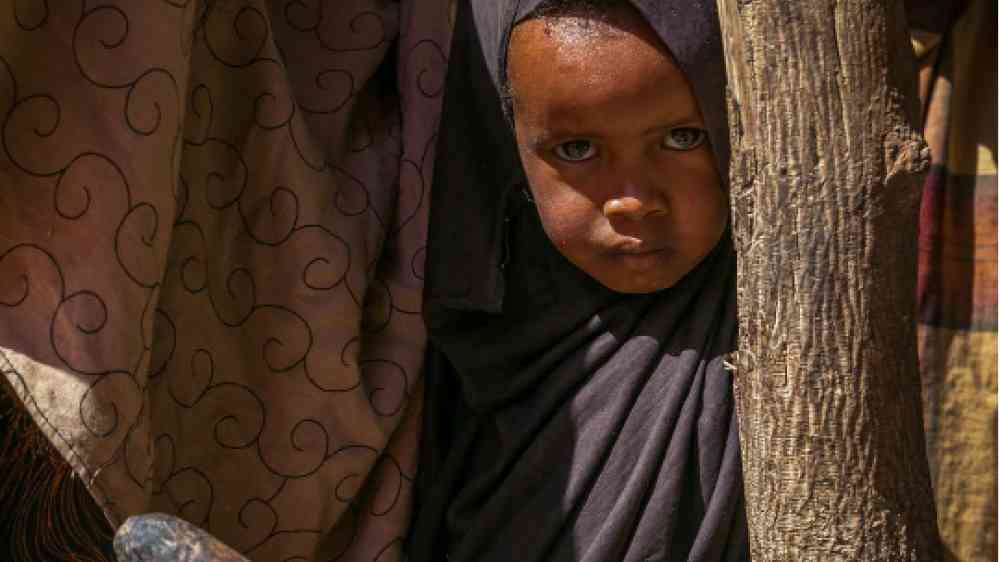
Weather-related disasters intensified by climate change are an increasingly significant driver of internal displacement worldwide, with children disproportionately affected. Floods, storms (including cyclones), droughts, and other climate-related hazards are forcing families to move more frequently and often with little warning, disrupting children’s access to education, healthcare, protection services, and social support systems. Displacement heightens children’s exposure to violence, exploitation, family separation, and long-term developmental harm (UNICEF, 2023; UNICEF, 2025a; UNICEF, 2025b).
Despite these profound impacts, child displacement has remained largely invisible in disaster risk management and climate policy discussions. This is primarily due to the limited availability of age-disaggregated data on disaster losses and damages. The invisibility of children on the move is further compounded in contexts where extreme weather intersects with rapid urbanization, fragility, and conflict, increasing the likelihood that displaced children remain unseen and unaddressed (UNICEF, 2023; UNICEF, 2025a; UNICEF, 2025b).
To address this gap, the United Nations Children’s Fund (UNICEF), in collaboration with the Internal Displacement Monitoring Centre (IDMC), with support from the Patrick J. McGovern Foundation and other partners, initiated a global analytical effort to quantify past child displacement and estimate future displacement risk associated with weather-related disasters. This work represents one of the first systematic, evidence-based efforts to make child displacement visible within disaster risk analysis and climate policy frameworks.
The analysis combines historical displacement assessment with forward-looking risk modelling, applied consistently across one global assessment and two regional studies. It examines past patterns and future risks of child displacement linked to weather-related disasters. Event-level disaster displacement data from IDMC’s Global Internal Displacement Database were integrated with gridded population and demographic data from UNICEF and the United Nations Department of Economic and Social Affairs (UN DESA). Because disaster displacement data are rarely disaggregated by age, child displacement was estimated by applying child population shares to recorded disaster displacement events. This approach enables analysis of the scale and spatial distribution of disaster-related displacement through a child-specific lens, while acknowledging that results are conservative estimates (UNICEF, 2023; UNICEF, 2025a; UNICEF, 2025b).
The analysis comprises two complementary components that together provide a coherent evidence base linking observed displacement patterns with plausible future risk. First, a historical assessment quantified child displacement linked to observed weather-related disasters. The global analysis covered the period 2016–2021, corresponding to the most robust and consistently reported phase of IDMC global data. This global assessment laid the foundation for subsequent regional applications in Eastern and Southern Africa and South Asia. Regional analyses extended the historical timeframe to 2016–2022 in South Asia and 2017–2023 in Eastern and Southern Africa, reflecting improved data availability and capturing recent years marked by exceptionally large flood- and storm-related displacement events (UNICEF, 2023; UNICEF, 2025a; UNICEF, 2025b). Across all analyses, the focus was on the most significant weather-related hazards: floods, storms (including cyclones), droughts, and wildfires, which together account for more than 99 per cent of weather-related internal displacements recorded by IDMC since 2016 (UNICEF, 2023).
Second, future displacement risk was assessed using IDMC’s disaster displacement risk model. The model estimates the average annual number of children likely to be displaced under different global warming scenarios, ranging from +1°C to +5°C, by integrating hazard probability and intensity, specifically riverine flooding, cyclonic winds, drought, and coastal flooding, with exposure and vulnerability factors. The model captures both frequent, moderate events and rare but high-impact disasters, generating conservative, lower-bound estimates of future displacement risk. Spatial analysis was used to identify global and regional displacement “hotspots” where high hazard exposure coincides with large child populations and limited coping capacity (UNICEF, 2023; UNICEF, 2025a; UNICEF, 2025b).
The global study, published in 2023, produced the first globally comparable estimates of child displacement linked to climate- and weather-related hazards. Between 2016 and 2021 alone, an estimated 43.1 million internal displacements of children were associated with weather-related events, equivalent to nearly 20,000 child displacements every day (UNICEF, 2023). This finding demonstrates that climate-related mobility is already a living reality for millions of children worldwide.

Displacement drivers were highly concentrated. Floods and storms accounted for approximately 95 per cent of recorded child displacements, including an estimated 19.7 million displacements linked to floods and 21.2 million linked to storms. The analysis also showed that displacement risk is expected to rise substantially under higher warming scenarios (UNICEF, 2023). By quantifying both the magnitude and geographic concentration of risk, the study reframed child displacement from a predominantly humanitarian concern into a measurable and systemic dimension of disaster losses and damages and climate risk.
Subsequent regional analyses translated global findings into actionable insights to inform regional and national decision-making. In Eastern and Southern Africa, the analysis showed that between 2017 and 2023, an estimated 8.8 million children were displaced by weather-related disasters, with floods accounting for the largest share.
Even under optimistic climate scenarios, future projections indicate that millions of children could be displaced annually. These findings were used to identify priority countries and high-risk communities and informed the development of Costed Action Plans in Kenya, Ethiopia, and South Sudan in 2025. The plans translated regional risk evidence into concrete national investment priorities focused on child protection systems, resilient education and health services, preparedness measures, and safe, child-sensitive mobility planning (UNICEF, 2025a).
In South Asia, the analysis estimated that 15.6 million children were displaced by weather-related disasters between 2016 and 2022, equivalent to more than 6,100 children every day. Floods were the most significant driver of displacement in this region as well, displacing nearly 9.9 million children, similar to patterns seen in Eastern and Southern Africa (see Figure 3). These findings strengthened regional policy dialogue on loss and damage, anticipatory action, and child-sensitive disaster risk reduction, enabling more targeted programming in the most affected areas (UNICEF,2025b).
One key insight from these assessments is that integrating disaster losses and damages data with demographic information can significantly improve risk understanding by making previously invisible impacts visible and policy-relevant. Hotspot mapping proved particularly effective for prioritization, advocacy, and investment planning. The use of standardized, globally consistent datasets strengthened comparability across countries and regions and supported stronger investment cases.
However, the estimates remain conservative due to methodological and data constraints. Slow-onset and compounding hazards such as drought, land degradation, and erosion are difficult to quantify and are often excluded from event-based displacement datasets. The hazard scope is also limited, with multi-hazard dynamics and secondary impacts such as landslides or conflict-induced displacement, which are not fully captured. Additionally, variations in national data quality, combined with the limited tracking of cross-border and recurrent displacement, likely result in an underestimation of both the scale and duration of child displacement (UNICEF, 2023). These limitations underscore the need for sustained investment in national disaster tracking systems/loss databases and more granular, disaggregated data systems to enhance both accuracy and operational utility.
This case study demonstrates how disaster losses and damage data can be applied to understand child displacement risk and inform forward-looking planning. It aligns closely with UNDRR’s objectives under DELTA Resilience and the Global Disaster-related Statistics Framework by illustrating the value of systematic, disaggregated impact data for risk analysis and decision-making. The findings support the integration of child-sensitive indicators into national disaster losses databases, DRR strategies, and climate policies, and underscore the importance of investing in robust data ecosystems. Strengthened data systems can enable more comprehensive losses and damages assessments, support anticipatory action, and reinforce financing, planning, and protection mechanisms for children affected by climate-related disasters.
Contact person
Laura Healy, Climate Change, Migration and Protection Consultant UNICEF
References
UNICEF. (2023). Children displaced in a changing Climate: Preparing for a future already underway.
UNICEF. (2025a). Children displaced in a changing climate: Preventing and minimizing risk of displacement and preparing for climate mobility in Eastern and Southern Africa.
UNICEF. (2025b). Weathering the future: The growing crisis of child displacement in South Asia.