1. Home
  2. Hubs: tools and knowledge
  3. Extreme Heat Portal
Uploaded on
Update

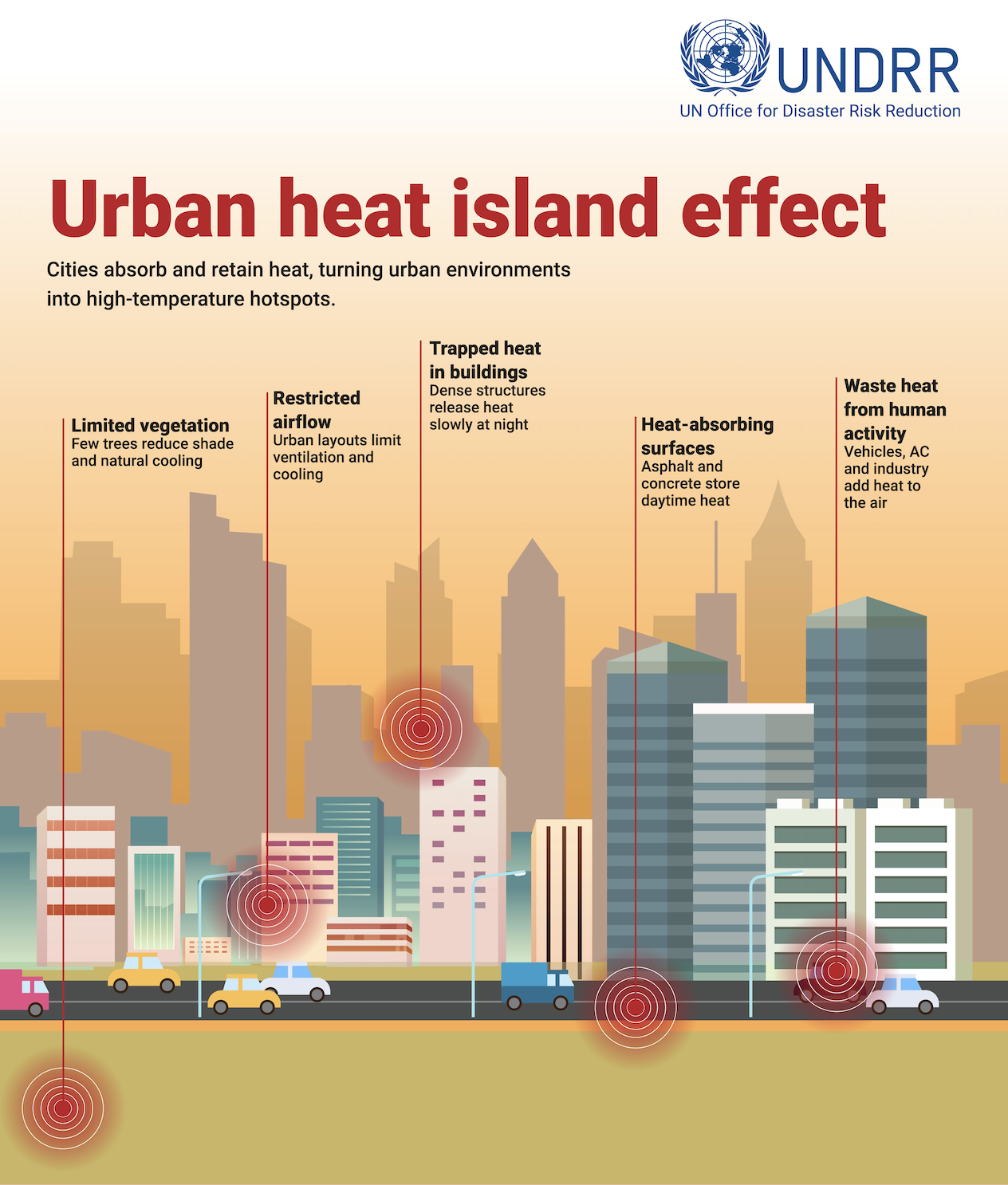
New analysis from Ordnance Survey has found more than eight in ten cities in Great Britain are already highly vulnerable to urban heat islands, and almost two thirds are set to reach severe heat vulnerability by the turn of the century.

Ordnance Survey
Divergence between physical and emotional heat resilience in Chinese cities thumbnail
Documents and publications

Using social media and meteorological data, this study quantifies the mismatch between physical heat exposure and public emotional responses from 2010 to 2024 in China.

Nature Climate Change
heat-action-plan-hap-toolkit_june-2026_v2.pdf thumbnail
Documents and publications

This toolkit provides a practical, step-by-step framework to support cities, urban local governments, planners, practitioners, and community stakeholders in developing and implementing Heat Action Plans (HAPs) to address the growing risks of extreme heat.

Sustainedge
Update

Three cities are learning from each other about how to protect residents. These climate policies are also public health measures.

Guardian, the (UK)
People walking on a hot day
Update

As heat overlaps with other intensifying climate events, scientists are uncovering how they compound each other – and how cities can adapt

Dialogue Earth
Update

Contemporary transportation infrastructure is not designed for the extreme levels of heat as the frequency and severity of high temperatures increases. Those in charge must respond to increased stress on infrastructure systems, with mitigation techniques

Eno Center for Transportation
Green roofs onbuildings in a city.
Update

Long-term maintenance plans, clear ownership responsibilities and funding for stewardship may prove as important as the installation. Climate adaptation isn’t just about building infrastructure, but ensuring it continues to thrive for years to come.

Conversation Media Group, the
Canal Lock, Grand Union Canal A classic English canal lock on the Grand Union Canal at Berkhamsted, with water cascading gently over the worn wooden gates.
Research briefs

Researchers found that canals cool their immediate surroundings during the day, typically extending 20–50 m from canal banks. Cooling effect is greater during spring and early summer and is noticeable during heatwaves, with cooling of more than 2°C.

Conversation Media Group, the
Uploaded on