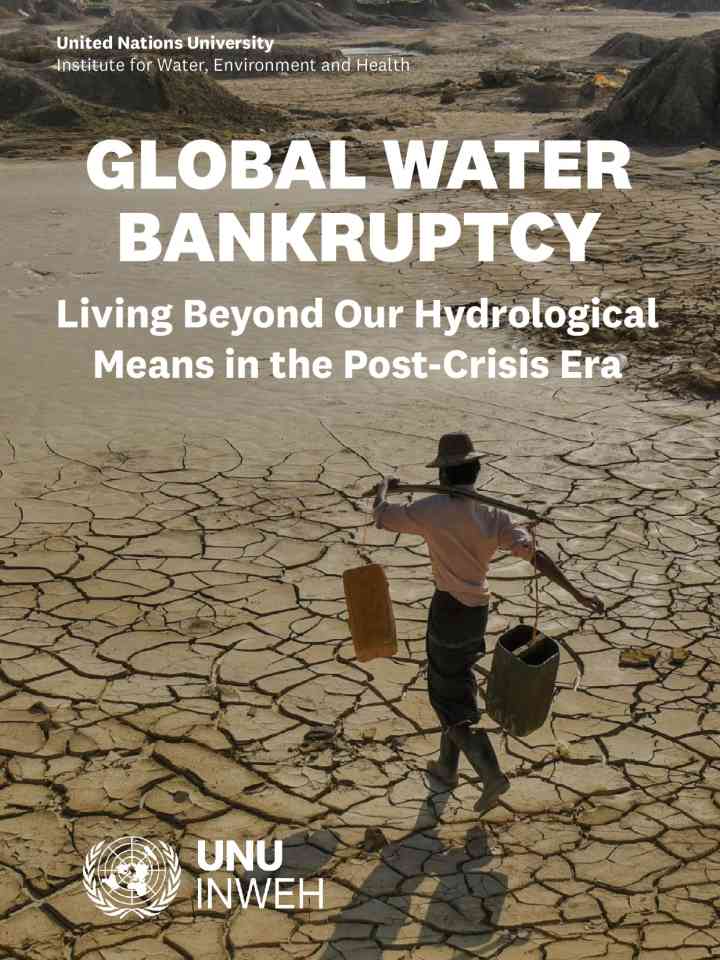
Global water bankruptcy: Living beyond our hydrological means in the post-crisis era
This flagship report by the UNU-INWEH aims to offer a new, more precise diagnosis of the escalating "water crisis" and provide recommendations for a new governance agenda fitting the water realities of the Anthropocene in the 21st century. Their findings can be summarised by the manner in which temporary water supply shocks are becoming chronic in many places, signalling a post-crisis condition that the report calls "water bankruptcy".
The report makes the case for a fundamental shift in the global water agenda—from repeatedly reacting to emergencies to “bankruptcy management”. In practical terms, the report details that this means confronting overshoot with transparent water accounting, enforceable limits, and protection of the water-related natural capital that produces and stores water—aquifers, wetlands, soils, rivers, and glaciers—while ensuring transitions are explicitly equity-oriented and protect vulnerable communities and livelihoods. Lastly, the report argues that water should not only be framed as a growing source of risk, but also as a strategic opportunity in a fragmented world. It argues that serious investment in water can unlock progress across climate, biodiversity, land, food, and health, and serve as a practical platform for cooperation within and between societies.
Explore further