Items: 20
The workshop will focus on communicating risk, uncertainty, and potentially difficult messages associated with hazardous natural phenomena and their impacts.

When the devastating magnitude 7.9 Wenchuan Earthquake struck central China in May 2008, it triggered more than 60,000 landslides, reshaping the slopes of the Longmen Shan mountains.
The annual UKADR conference will this year take place 4-5 September 2025 at Durham University and is titled “Pathways to Practice and Resilience: UK Interdisciplinary Hazard and Disaster Research on the National and Global Stage”.
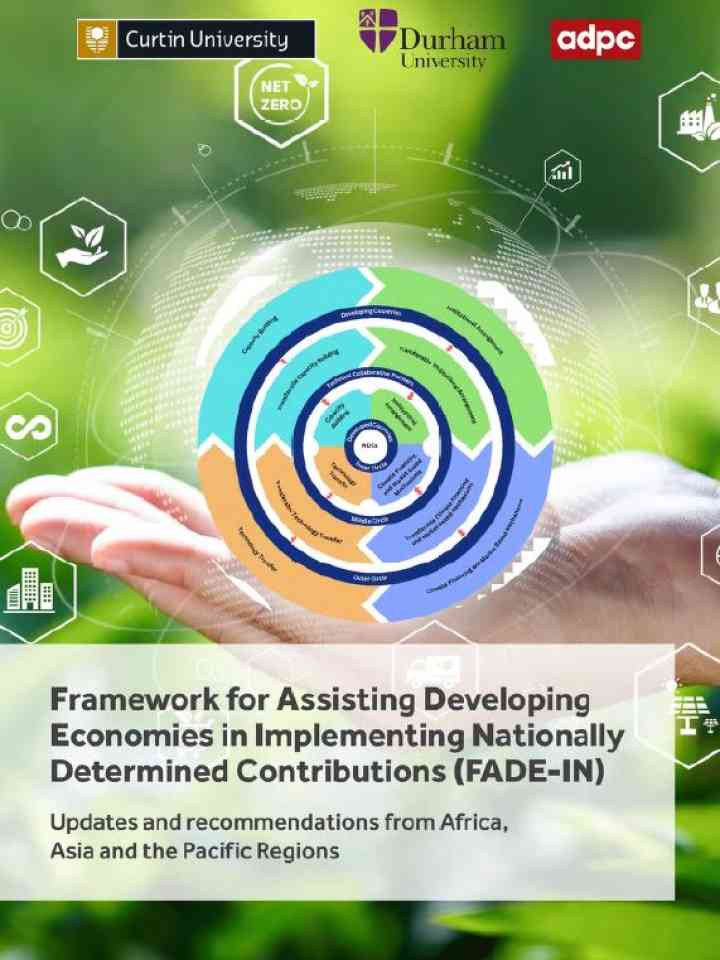
ADPC developed the Framework for Assisting Developing Economies in Implementing Nationally Determined Contributions (NDCs) to support developing nations in achieving their climate commitments.
Researchers have developed a methodology that assesses seismic risk by looking at multiple earthquake scenarios and identifying impacts that are common to multiple scenarios. This approach allows researchers to estimate whether particular impacts are specific to certain earthquakes, or occur irrespective of the location or magnitude of an earthquake.
According to a study of the three earthquakes that struck Italy in 2016, several smaller faults prevented a single massive earthquake from occurring and also acted as pathways for naturally occurring fluids that triggered later earthquakes. The findings could enable scientists to better understand potential earthquake sequences following a quake.
According to new research, marshlands in the south east of England could start to disappear from the year 2040 due to rapid sea level rise. This could prove detrimental to disaster management efforts, as salt marshes protect coastal areas from erosion by acting as a buffer for waves in storms and reducing flooding by slowing and absorbing rainwater.
Resilience in the Rubble: Reconstructing the Kasthamandap and its past after the 2015 Nepal earthquake
A photographic exhibition hosted by the Oriental Museum: 28 September 2017 to 28 January 2018.
Voluntary Commitments
The organization has no registered commitments.
The Sendai Framework Voluntary Commitments (SFVC) online platform allows stakeholders to inform the public about their work on DRR. The SFVC online platform is a useful toolto know who is doing what and where for the implementation of the Sendai Framework, which could foster potential collaboration among stakeholders. All stakeholders (private sector, civil society organizations, academia, media, local governments, etc.) working on DRR can submit their commitments and report on their progress and deliverables.