United Nations Children's Fund (UNICEF)
Mission
UNICEF, originally called the United Nations International Children's Emergency Fund in full, now officially United Nations Children's Fund, is an agency of the United Nations responsible for providing humanitarian and developmental aid to children worldwide. The agency is among the most widespread and recognizable social welfare organizations in the world, with a presence in 192 countries and territories. UNICEF's activities include providing immunizations and disease prevention, administering treatment for children and mothers with HIV, enhancing childhood and maternal nutrition, improving sanitation, promoting education, and providing emergency relief in response to disasters.
- In January 2024, UNICEF joined the Secretary General’s Early Warnings for All initiative as an Advisory Panel member. Throughout the year, UNICEF supported 41 countries in establishing and implementing inclusive multi-hazard early warning systems (MHEWS), which prioritize marginalized and vulnerable populations, especially children. UNICEF collaborates with governments to adapt and implement MHEWS that ensure hazard monitoring, risk assessments, and warning dissemination are accessible to children in their homes, schools, and communities. By integrating children's vulnerability data, using child-friendly communication formats, and involving children in systems design, UNICEF ensures timely, inclusive, and actionable warnings. For instance, UNICEF is supporting the implementation of a US$35 million GCF project, “Strengthening Climate Information and Multi-Hazard Early Warning Systems for Increased Resilience in Azerbaijan,” in partnership with UNEP as Accredited Entity. Activities include forecasting, climate-risk informed decision-making, strengthening capacities for climate shock-responsive social protection, multi-hazard risk profiling, vulnerability assessments, and providing training and socio-economic empowerment to youth through the UPSHIFT program.
- UNICEF, national stakeholders, and UN agency partners (UNDRR, UNDP, UNITAR) are collaborating on the Children’s Climate Risk Index-Disaster Risk Model (CCRI-DRM). The CCRI-DRM evaluates subnational level risks and provides data on children’s exposure and vulnerability, identifying key child-critical social sectors. It includes a subnational risk assessment model and geospatial platform to inform decision making for child-responsive disaster risk reduction, climate change adaptation, and emergency preparedness. For example, in Kenya, UNICEF in collaboration with the Ministry of Environment, Climate Change and Forestry formally launched the CCRI-DRM as an interactive online platform to enhance understanding of the climate and disaster risks faced by children and their communities at the county level. More than 80 national stakeholders from various sectors, including line ministries, UN agencies and youth networks, participated in the subnational risk model development. As of December 2024, four CCRI-DRM models are in use in Cambodia, Saint Kitts and Nevis, Kenya, and Somalia, with twelve more in progress.
- UNICEF’s Today and Tomorrow Initiative (TTI) is the world’s first integrated climate and disaster risk finance mechanism specifically designed for children. It combines multi-hazard risk prevention and resilience programs with disaster risk transfer financing, through parametric insurance. The TTI offers cyclone insurance coverage for up to 13.5 million people in eight countries. To date, the TTI has generated over US$11.4 million in insurance payouts for rapid response and recovery, paired with investments for disaster risk reduction and climate change adaptation. For example, in Bangladesh TTI has generated US$531,000 in parametric insurance payouts from 2023 to 2024. More than 190,000 families received aid beyond traditional relief efforts. Notably, 8,000 households benefited from shock-responsive social protection including cash transfer delivery, which ensured that pregnant women and new mothers continued to access essential health services during and after cyclones. After its pilot phase (2023-2025), UNICEF aims to expand the TTI approach into a Global Integrated DRR and Climate Risk Financing Platform for Children.
- In April 2024, National Disaster Management Authorities and UNICEF Offices in South Asia hosted a regional knowledge exchange on Child-Centered Disaster Risk Reduction. Its objectives included taking stock of existing national or regional policies and strategies, facilitating learning and knowledge exchange of best practices, and enhancing regional and bilateral cooperation. The knowledge exchange focused on three key Action Areas: Child-centered Risk Assessment and Multi-hazard Early Warning Systems, Inclusion of Children in DRR Policies, and Institutional Leadership and Coordination. The main outcome included the development of a roadmap to enhance disaster risk reduction programming for and with children. This comprehensive plan aims to mobilize targeted actions by government counterparts, with the support of UNICEF offices, to prioritize child-centered disaster risk reduction in the implementation of the Sendai Framework for DRR.
- In 2024, children and youth played a pivotal role in DRR and climate action, including leading to two major declarations at the Regional DRR Platforms: the Call to Action of the Road to Resilience for Europe and Central Asia’s Children and Youth, and the Children & Youth Call for Action in Asia Pacific. These declarations, presented at the platform ministerial sessions, emphasize the need for meaningful youth participation in climate and DRR efforts. They call for targeted policies addressing child- and youth-specific vulnerabilities and greater inclusion in decision-making processes. The Europe and Central Asia statement includes 15 key recommendations, urging governments to allocate resources to youth-led DRR initiatives, form advisory councils, and integrate youth into climate policy decision-making. The East Asia and Pacific statement urge actions such as promoting school safety through disaster education, building resilient communities, and prioritizing investment in child- and youth-led initiatives, ensuring no child or youth is left behind in DRR efforts.
Disaster risk reduction has long been a priority for UNICEF, in light of the organization’s dual humanitarian and development mandate. In the 1990s, UNICEF supported the International Decade for Natural Disaster Reduction and in 2005 endorsed the Hyogo Framework for Action 2005-2015. UNICEF supports the implementation of the Sendai Framework for DRR (2015-2030) as well as the 2015 Paris Climate Agreement and the Sustainable Development Goals (SDGs).
UNICEF's DRR Goals are:
- DRR for children and women, including those with disability, is a national and local priority
- Different risks faced by girls, boys, and women are identified and addressed
- Safer and more resilient conditions for girls, boys, and women are promoted
- Humanitarian Preparedness, response, & recovery is strengthened through the capacity development of stakeholders at all levels
Policies and Programmes in DRR
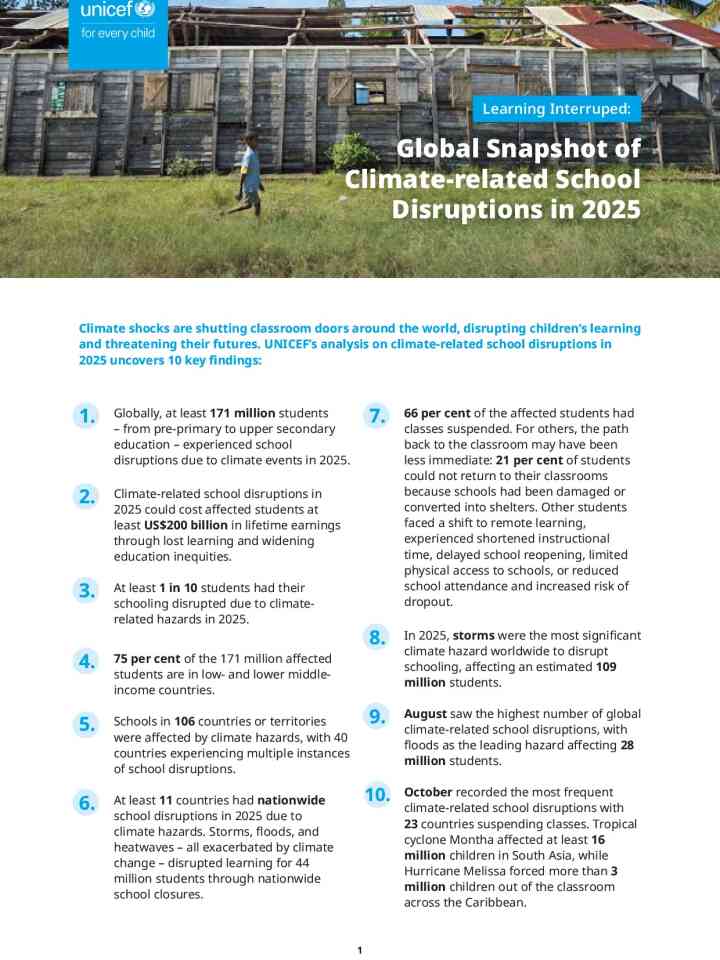
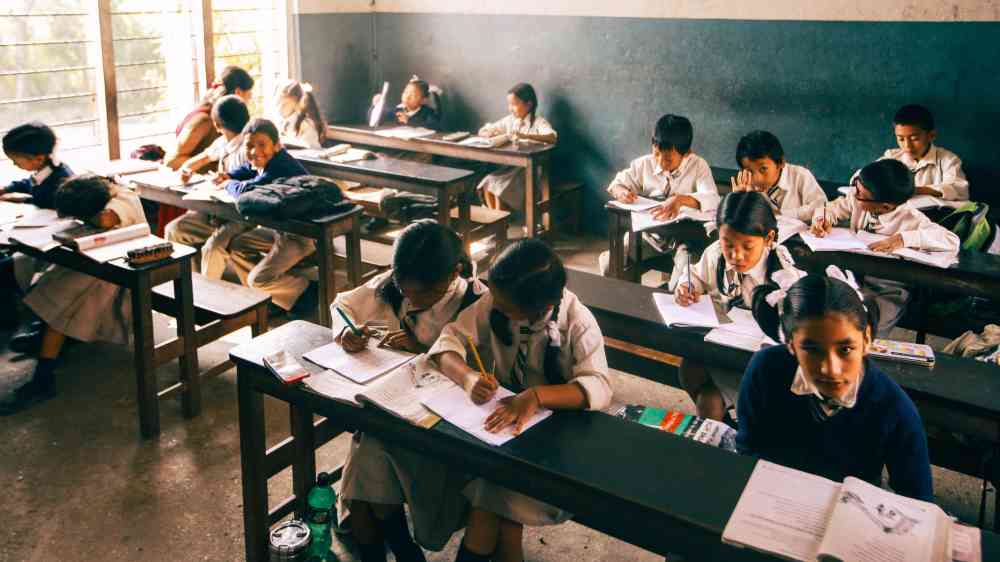
UNICEF is working to integrate DRR into its programming across all sectors and to support governments in the implementation of the Sendai Framework. Capacities to implement child-centered disaster risk assessments have been strengthened in a number of regions. Progress has been made in strengthening the capacity of health and nutrition systems to deal with major causes of mortality and morbidity at local level; water systems have been protected and adapted to continue to function during different types of disasters; school safety has been strengthened and evacuation plans confirmed; and child protection reinforced to deal with displacement, separation and violence against vulnerable children in regions of high vulnerability and chronic crises.
Making Cities Resilient Campaign Activities
UNICEF is an active partner in disseminating and sharing information related to Disaster Risk Reduction activities. UNICEF has committed to support UNISDR campaign through all his network of partners. UNICEF has facilitate and take part on many events along with UNISDR opening venues and strongly supporting efforts in building community resilience with emphasize in children and women playing an active role in DRR.





Voluntary Commitments
The Sendai Framework Commitments (SFVC) online platform serves to incentivize stakeholders to inform the public about their work, to provide a vehicle for sharing commitments and initiatives and for motivation toward the implementation of the Sendai Framework. In turn, UNDRR can monitor and take stock of the progress and impact.
United Nations Children's Fund (UNICEF) is involved in the following commitments: