
Resilience, real and lived: Lessons on strengthening Caribbean MSMEs

Work on micro, small and medium-sized enterprise (MSME) resilience often centres on frameworks, tools and systems. Yet resilience is ultimately about people and the realities businesses face every day.
Lizra’s journey into this space was shaped by the aftermath of Hurricane Maria in Dominica in 2017. Preparedness had long been familiar territory, but stepping into a private sector leadership role during the recovery period brought a different level of responsibility. The experience was immediate and personal, working alongside businesses trying to navigate uncertainty with limited resources.
Across the island, operations came to a halt. Businesses of all sizes were ready to move forward but had lost access to electricity, water, financing and supply chains. The question quickly shifted from growth to survival: how do you continue when the systems you rely on are no longer functioning?
Cheryl’s professional experience in Barbados added another dimension to this journey. When the company she had worked with for more than 19 years relocated, she found herself navigating major change firsthand. Drawing on her Certified Business Continuity Professional (CBCP) qualification and International Organization for Standardization (ISO) 22301 training in business continuity management, she transformed that transition into an opportunity to support small and medium-sized enterprises (SMEs), many of which lacked the resources to develop continuity plans of their own.
Both Lizra and Cheryl have been tangibly supporting MSMEs in Barbados through a dedicated United Nations Office for Disaster Risk Reduction project. Their experiences shaped several lessons that continue to guide their approach to MSME resilience across the Caribbean.
Resilience strategies must reflect business realities
Resilience efforts are most effective when they begin with how businesses actually operate. A small retailer, tourism operator and financial services provider do not experience disruption in the same way, and their continuity plans should not look the same.
The most successful approaches came from working directly with business owners to understand their daily realities and operational pressures. When continuity measures reflect real business practices, they are more likely to be used, tested and maintained over time.
Simple actions can build momentum
For many MSMEs, business continuity planning initially felt overwhelming. Breaking the process into manageable steps helped businesses gain confidence. This included actions such as:
- identifying emergency contacts;
- backing up critical records;
- reviewing alternative suppliers; and
- considering temporary operating arrangements.
These practical measures gave businesses a sense of control and created momentum for longer-term planning.
Investing in people strengthens long-term resilience
Training resilience coaches proved to be one of the most valuable investments. These coaches understood the local business environment and were able to guide MSMEs in practical and accessible ways.
What began as a targeted intervention evolved into a wider support network across sectors. This local capacity-building approach helped extend the impact of the initiative beyond the lifespan of the project itself.
Stories can shift mindsets
Peer learning also played an important role. When businesses heard directly from others that had taken steps to prepare for disruption, resilience became more tangible and achievable.
In many cases, one business sharing its experience encouraged several others to begin their own resilience journey. Stories helped move the conversation from theory to action.
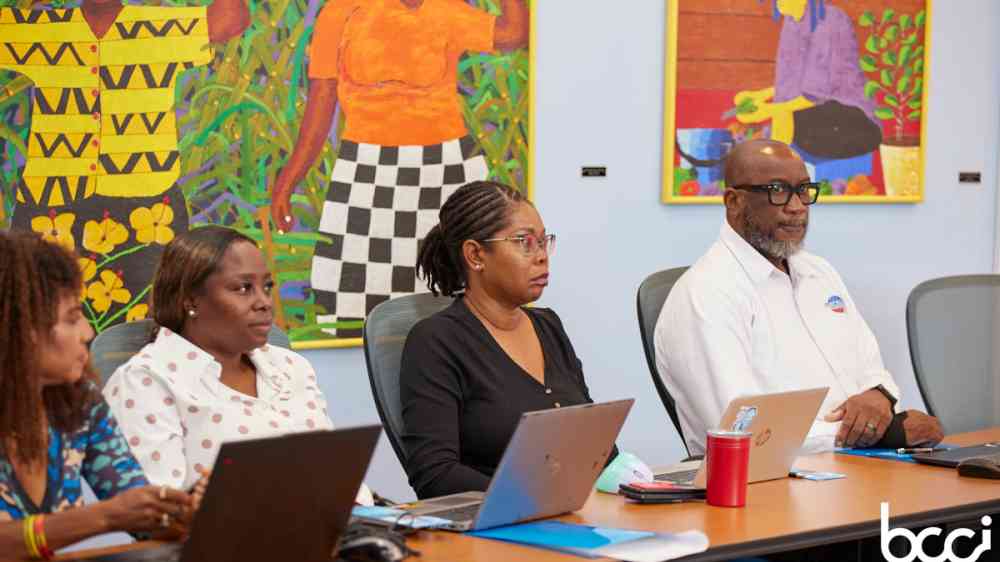
Capacity building activity for Barbados businesses.
Case study: Barbados Bottling Company Ltd.
One example from Barbados illustrates how practical support and hands-on testing can transform how businesses approach resilience.
Before joining the UNDRR project, Barbados Bottling Company relied on a series of disaster-specific procedures required by its international brand, covering hurricanes, product quality incidents, cyberattacks and other disruptions. While these procedures supported individual response actions, the company lacked a single, integrated business continuity plan (BCP) that connected them into a coordinated resilience framework.
With support from the project, and using the UNDRR Resilience Maturity Assessment tool and BCP templates, the company developed a comprehensive resilience plan addressing staff safety, continuity of customer supply, asset protection and long-term business viability. During the simulation exercise, the team tested the plan and identified gaps in capacity, policies and governance. This process helped transform fragmented procedures into a clear, actionable and adaptable BCP.
The company now has a “living blueprint” for managing disruptions, a stronger understanding of its vulnerabilities, and an institutional shift towards proactive preparedness. This has strengthened business continuity, competitiveness and long-term resilience.
Regional cooperation adds value
The regional dimension of the initiative brought additional insights. Larger companies offered broader perspectives on continuity planning, particularly regarding supply chains that operate across borders.
This helped smaller businesses understand how their preparedness contributes to wider economic stability and resilience throughout the Caribbean.
Moving from projects to long-term resilience
Keeping MSMEs at the centre of the work remained essential throughout the initiative. Practicality guided every step. Tools and approaches needed to be clear, accessible and flexible enough to fit different business contexts.
In Barbados, sustainability became a major focus. The leadership of the Barbados Chamber of Commerce and Industry, combined with trained resilience coaches working directly with businesses, helped create continuity beyond the project cycle. The work shifted from a time-bound initiative to an evolving system of support.
Opportunities through risk-related incentives
Looking ahead, there is an opportunity to strengthen private sector engagement further through incentives that demonstrate clear value to businesses. These may include insurance-related benefits, recognition mechanisms such as resilience seals, and targeted fiscal measures that encourage wider adoption of resilience practices.
There is also a growing need to take a broader view of risk. Hurricanes remain a defining feature of the Caribbean context, but businesses are increasingly navigating overlapping disruptions, including climate-related hazards, supply chain shocks and economic pressures. Business continuity planning must reflect this reality through stronger multi-hazard and interconnected risk approaches.
Resilience is everyone’s responsibility
Working together through this initiative, alongside colleagues from UNDRR and the Barbados Chamber of Commerce and Industry, reinforced the importance of collaboration. Progress came through shared effort, open dialogue and a willingness to learn from one another.
At its core, this work is about continuity in the fullest sense. When MSMEs are better prepared, employees are more secure, essential goods and services remain available, and communities can recover more quickly. The impacts extend far beyond the businesses themselves.
The work, however, is far from complete. Momentum is building across the Caribbean, but the next phase depends on how intentionally resilience is integrated into everyday decision-making — in how businesses plan, invest and operate.
This responsibility does not belong to a single sector or institution. Business owners, public leaders, customers and communities all have a role to play in strengthening the systems on which we depend.
The real shift happens when resilience is no longer viewed as something external, but as part of everyday practice. The question is simple but important: what am I doing today that will make a business stronger tomorrow?
Cheryl Griffith is a Barbadian Business Continuity expert and the Managing Director of Business Continuity Management Services Inc.; the boutique consultancy she founded in 2018 to strengthen resilience across Caribbean enterprises. A Certified Business Continuity Professional (CBCP) with more than two decades of experience, she specialises in helping organisations anticipate risks, protect critical operations, and build practical, ISO 22301-aligned continuity strategies. Cheryl has led major resilience initiatives with regional and international partners, including UNDRR, the Barbados Chamber of Commerce & Industry, the Development Bank of Jamaica, and businesses in Barbados. Her work spans MSME capacity building, sector-wide resilience programs, business impact analyses, emergency planning, and the design and implementation of full Business Continuity Management Systems.
Known for her hands-on approach, strong stakeholder engagement, and ability to translate technical concepts into accessible, actionable tools, Cheryl has supported organisations across finance, tourism, government, and development sectors. She is also a member of the Business Continuity Institute (UK), the Disaster Recovery Institute International (USA), and the Barbados Chamber of Commerce, and is a recipient of the DRI Program Leader of the Year Award. Driven by a passion for empowering businesses to thrive despite disruption, Cheryl continues to champion a culture of resilience throughout the Caribbean.
Lizra Fabien is devoted to private-sector development and disaster resilience with over a decade of experience strengthening businesses and institutions across the Caribbean. She currently serves as a Technical Advisor with the United Nations Office for Disaster Risk Reduction (UNDRR), supporting business continuity and private-sector resilience initiatives in the region. Lizra has held regional leadership roles within the private sector, including as Executive Director of the Dominica Association of Industry and Commerce, and continues to work closely with chambers, MSMEs, and international partners to drive sustainable development and resilience. Through her work, Lizra champions bold leadership, collaboration, and the economic empowerment of women and youth to shape resilient and thriving societies.