1. Home
  2. Hubs: tools and knowledge
  3. Wildfire Portal

Evacuation and displacement

Wildfires can force people to leave their homes with little notice, leading to both short-term evacuations and longer-term displacement.

Beyond the immediate challenges of moving people to safety, affected communities may face prolonged disruption, loss of housing, impacts on livelihoods and difficulties returning or rebuilding. Planning, timely warnings and clear communication are essential to ensure evacuations reach and support everyone, particularly those most at risk. Explore the latest research, insights and resources on wildfire evacuation and how communities can strengthen preparedness and response.

Explore the latest research, insights and resources on wildfire-related evacuation and displacement, and the measures needed to support safe, inclusive and resilient recovery.

Uploaded on
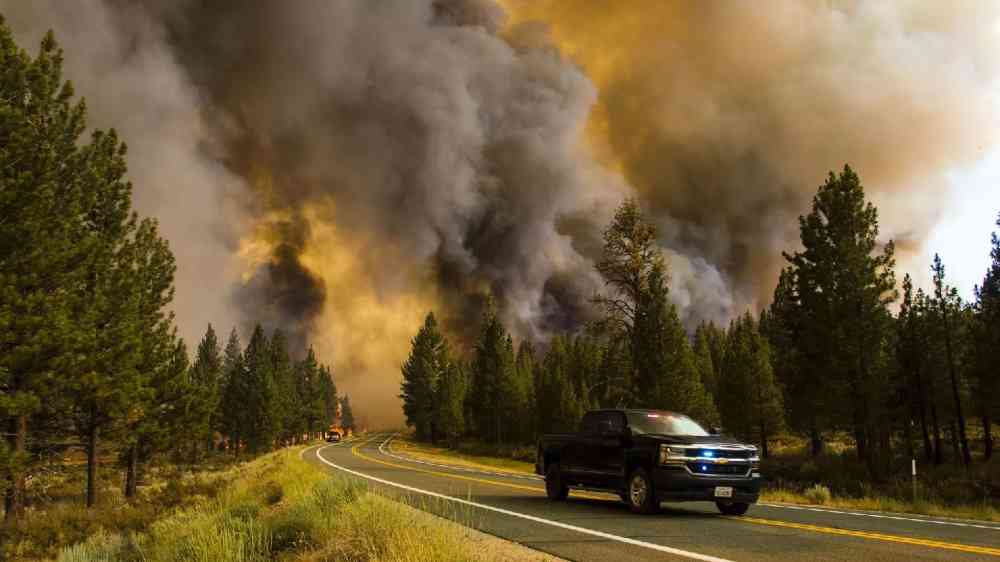
California wildfires, July 2021
Update

The impacts of climate change are escalating, compounded by urban expansion into fire-prone areas. Eight cutting-edge technologies have the potential to revolutionize wildfire risk reduction strategies.

United Nations Office for Disaster Risk Reduction (UNDRR)
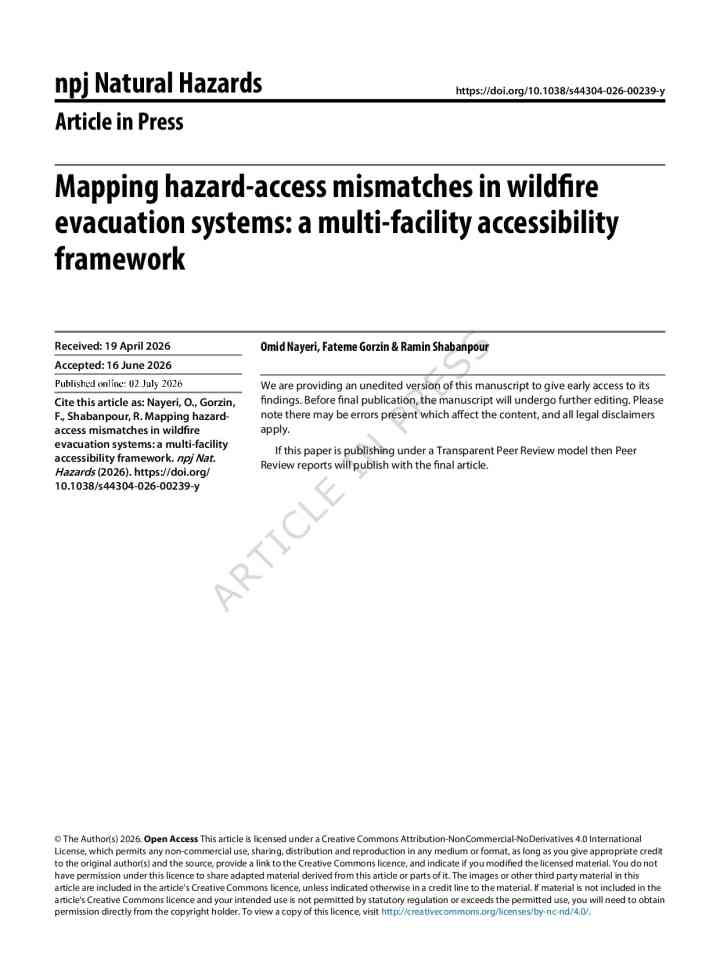
Mapping hazard-access mismatches in wildfire evacuation systems: a multi-facility accessibility framework thumbnail
Documents and publications

This study proposes a Wildfire Evacuation Resource Index (WERI) quantifies census-tract accessibility to emergency shelters, hospitals, lodging, gas stations, and EV charging stations within a three-step floating catchment area framework.

npj Natural Hazards (Nature)
Update

Some have migrated from the Valparaíso region, but others have organised to remain in the face of advancing forest fires

Dialogue Earth
Update

Research shows that delaying evacuation during wildfires increases risk, with driving conditions and social behavior making late evacuation particularly dangerous.

Wildfire Today
Update

Indigenous communities face disproportionate wildfire impacts due to limited resources, jurisdictional gaps, and evacuation challenges. The article urges long-term funding, better coordination, and stronger prevention and mitigation efforts.

Conversation Media Group, the
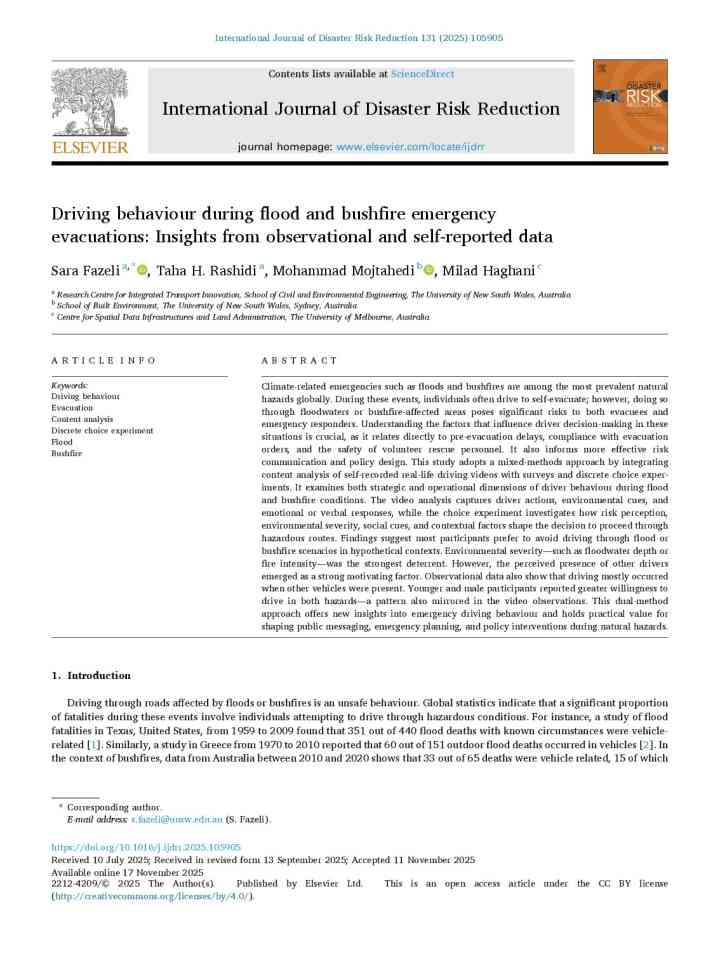
driving-behaviour-during-flood-and-bushfire-emergency-evacuations_insights-from-observational-and-self-reported-data.pdf thumbnail
Documents and publications

This study adopts a mixed-methods approach by integrating content analysis of self-recorded real-life driving videos with surveys and discrete choice experiments.

University of New South Wales
Update

Late evacuation during bushfires and floods is often the most dangerous moment, as rapidly changing road conditions make driving far riskier than many people expect.

Conversation Media Group, the
Hand on a keyboard with images of an AI-powered programme
Research briefs

Scientists at Johns Hopkins and the University of Florida simulate and predict human behavior during wildfire evacuation, allowing for improved planning and safety measures.

Johns Hopkins University
Uploaded on